






TMTPOST -- China's publicly traded Zhejiang TaoTao Vehicle Co. Ltd has filed a second listing application with the Hong Kong Stock Exchange.
The funds raised this time will be used to expand production capacity, build out its global sales network, and supplement working capital, among other purposes. If successful, TaoTao Vehicle will make history as the “first stock for ‘elderly scooters.’”
Everyone knows that Chinese new-energy vehicle makers like BYD and Geely have been taking new shares in global markets, but few people realize that Chinese low-speed vehicles—represented by TaoTao Vehicle—had long since established a near-monopoly in markets such as the United States and Western Europe. Those “elderly scooters” that are looked down upon at home have become European and American users’ “white moonlight”—their go-to mobility tool.
TaoTao Vehicle’s Hong Kong IPO not only puts this “invisible world champion” under the spotlight, but also feels like the MVP end-of-season highlight of the wave of Chinese low-speed vehicles going global.
TaoTao Vehicle's Dominance in Overseas Market
“Please watch out while reversing.” “Please watch out while reversing.” “Please watch out while reversing”… Whether in mature North American neighborhoods or on Europe’s relatively narrow city streets, you can hear that all-too-familiar alert. Chinese-made tricycles and mini four-wheelers—the classic “elderly scooter” models—have come to dominate overseas short-distance outdoor mobility.
And among these Chinese “elderly scooter” brands, the best-selling—and the most expensive—is TaoTao Vehicle.
According to Frost & Sullivan research data: in 2025, in the global low-speed electric vehicle market, TaoTao Vehicle’s market share was about 10.9%. In the United States, it captured an 18% share—meaning that for every five low-speed EVs sold in the U.S., one was from a TaoTao Vehicle brand.
It’s fair to say TaoTao Vehicle’s low-speed EVs have kicked off an overseas wave of “budget-friendly alternatives” for short-range travel.
In the United States, TaoTao Vehicle’s “elderly scooters” can carry passengers, haul tents, and even generate electricity—meeting suburban middle-class families’ needs for short camping trips. In the South, rednecks use them to haul feed, replacing higher-consumption pickup trucks and bringing costs down…
In Europe, after the EU brought “elderly scooters” under the L6e/L7e low-speed quadricycle categories, the driving threshold dropped to as young as 14. As a result, TaoTao Vehicle has become the first car in life for many 14–16-year-olds;
In Southeast Asia and across Africa, Taotao Vehicle’s “laotoule” is not just a short-distance runabout. Many people modify it into a money-making tool for street vending and hauling goods, supporting an entire family’s livelihood;
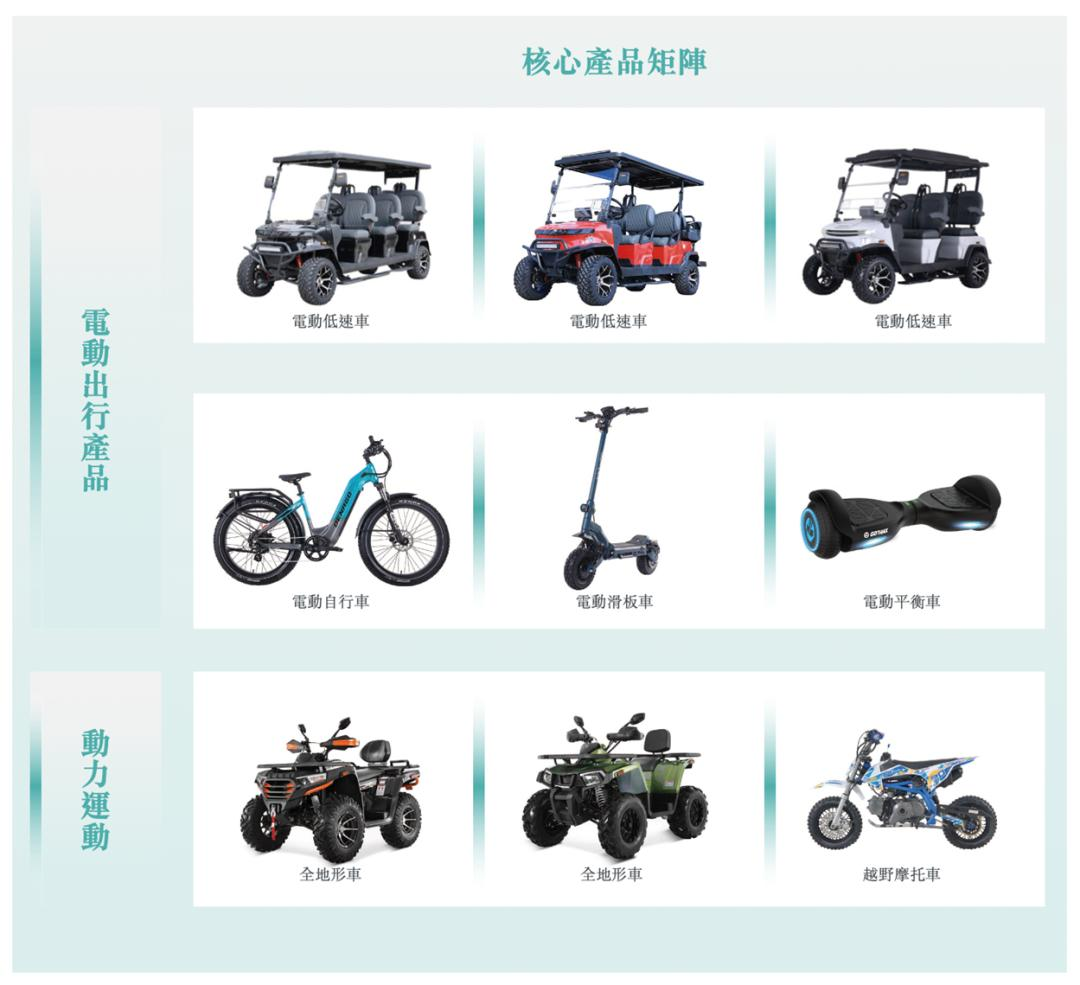
(Source: prospectus)
In a sense, the “laotoule” can fit the everyday needs of different regions and different groups of people around the world—and that has delivered excellent financial returns for Taotao Vehicle:
From 2023 to 2025, Taotao Vehicle’s revenue grew from RMB 2.144 billion to RMB 3.941 billion, a CAGR of 35.6%; net profit attributable to shareholders jumped from RMB 280 million to RMB 816 million, a CAGR of about 70.6%. Gross margin even reached 41.3%, with overseas markets contributing 97% of Taotao Vehicle’s revenue.
Among A-share manufacturing companies, that kind of performance growth was undeniably a solid report card.
What Powers Taotao Vehicle’s Growth
In fact, compared with Taotao Vehicle’s financial results, what deserves more attention is this company’s growth story.
Taotao Vehicle was founded in September 2015. But in just a short decade, why was it able to thrive globally—and even in the U.S. market?
In Sikucj’s view, the main reasons Taotao Vehicle was able to capture overseas markets come down to three points:
First, strategic foresight. Back in 2015, China’s new-energy vehicle sector was seeing a wave of startups. Many people jumped in, but after conducting research, Taotao Vehicle founder Cao Matao found that “low-speed electric vehicles better match what I want to build—and overseas markets also have strong demand for this product.”
So from day one, Taotao Vehicle pursued differentiated competition—bringing China’s mature low-speed vehicle production capabilities and product know-how to overseas markets.
Second, Taotao Vehicle was not exactly a grassroots startup. It started out on the shoulders of “giants.” Founder Cao Matao’s family had long been in the motorcycle and parts business, and he is a textbook “third-generation wealthy” heir. For example, in the early days of the venture he received strong family backing, including but not limited to RMB 28.5 million in seed funding, 25 patents, and multiple automated production lines.
This startup capital and technology enabled Taotao Vehicle to develop products quickly.
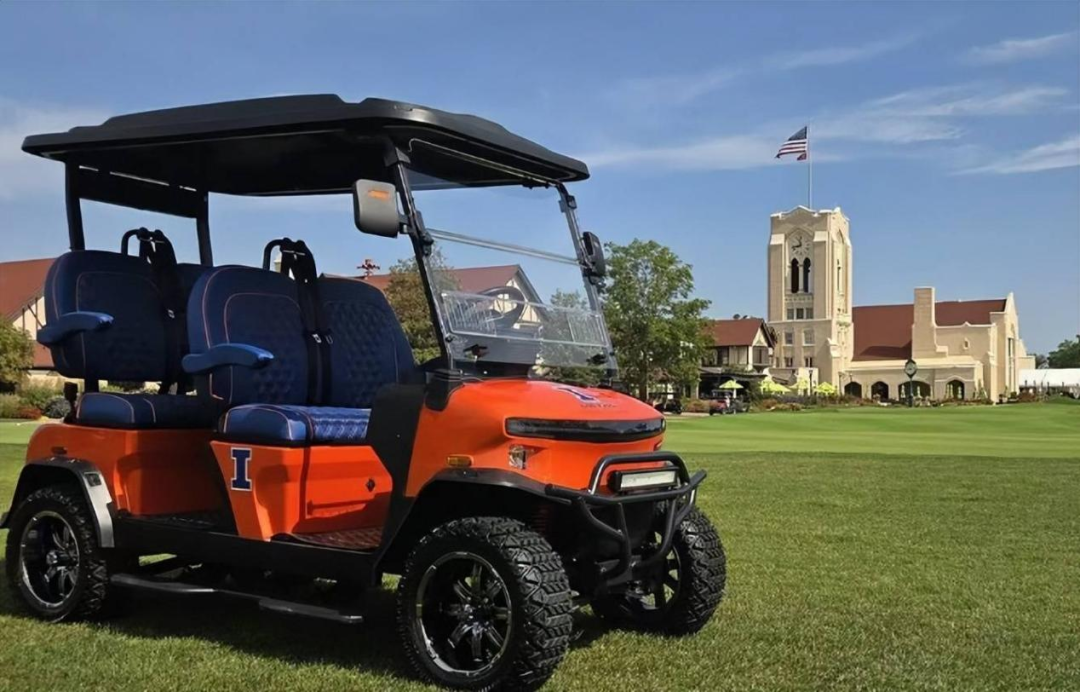
Finally, it comes down to having the right playbook for the U.S. market. Contrary to the common domestic assumption that “foreigners don’t have three-wheeled vehicles” or “old folks’ mini EVs,” the overseas low-speed EV market is already quite mature and nothing unusual—brands likeGaria, Star EV, and Polaris GEM…… are all U.S. homegrown companies.
TaoTao Vehicle broke into the U.S. market on price. Reportedly, in 2015, low-speed EVs in the U.S. generally sold for US$12,000–15,000, while TaoTao Vehicle priced its products at US$7,000–10,000. For models with the same specs, that was 30%–40% cheaper than American competitors.
More importantly, TaoTao Vehicle is backed by China’s well-developed EV supply chain. Whether in terms of cost or iteration speed, it far outpaces U.S. peers.
Once a brand shows up with stronger specifications, lower prices, and more innovative features, those overseas low-speed vehicle companies have virtually no way to respond.
With products that could truly compete, TaoTao Vehicle established a firm foothold in the U.S. and other overseas markets, ranking No. 1 in shipments both globally and in the U.S. market.
First-Mover Advantage
If it is already so strong overseas, why does TaoTao Vehicle still need to raise money through an IPO? Wouldn’t it be better to just keep a low profile and quietly make money? The truth is, it’s not that it doesn’t want to—it’s that seizing the opportunity leaves it little choice.
When people talk about mature markets such as Europe and the U.S., they often describe them as countries “on wheels.” But as living costs—including car prices—have risen, many people’s rigid mobility needs haven’t changed. As a result, they have had to start looking for lower-cost substitutes for large-displacement vehicles.
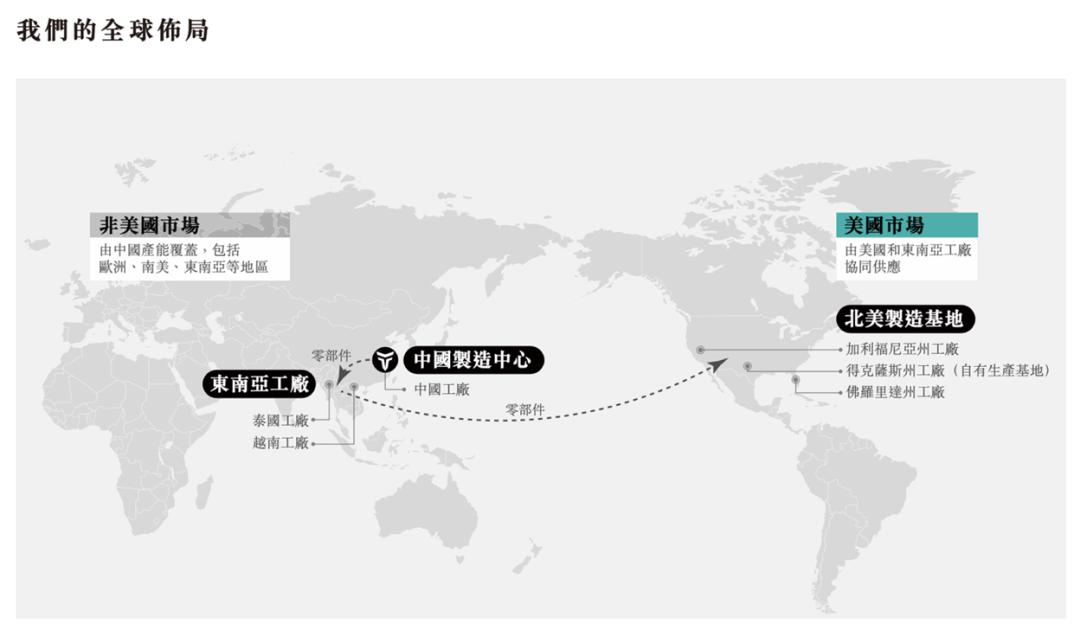
Taotao Vehicle's global footprint
Prices for both new and used cars in the United States have surged sharply. Data shows that in 2025, U.S. new-car prices rose for a full year in a row, with the average transaction price breaking through the $50,000 mark; as for used cars, compared with 2019, U.S. used-car prices were up as much as 48.7%, with the average price reaching $27,600.
The relentless rise in passenger-vehicle prices has created room for market growth for low-speed electric vehicles. The opportunity isn’t lost on Taotao Vehicle—domestic two-wheeler brands, and even automakers, are also eyeing it closely:
First are domestic electric two-wheeler companies. Manufacturers such as Yadea and Aima have all made globalization a core strategy for the future—and these companies don’t only build two-wheelers; they also have the R&D and manufacturing capabilities to produce low-speed four-wheelers.
Take Aima’s A05 low-speed electric four-wheeler, for example. Although this model in China can only be used inside industrial parks and isn’t allowed on public roads, it could readily be shifted from domestic sales to exports. Aima has also publicly stated that it will develop four-wheeled models for the U.S. market; e-bike maker Mowei Technology has likewise said it will roll out low-speed electric four-wheelers for regions such as Southeast Asia, Africa, and Latin America……
Beyond pressure from two-wheeler companies, Taotao Vehicle is also facing a “dimension-reduction strike” from China’s new-energy vehicle makers.
Compared with low-speed four-wheelers, Chinese NEV automakers such as Wuling and BYD have begun launching microcars overseas. BYD and Chery each introduced K-Cars (Kei cars, Japan’s distinctive microcar category) customized specifically for the Japanese market; models such as Wuling’s Hongguang MINIEV and Wuling Bingo sold strongly in Southeast Asia, with exports reaching 95,000 units in 2025.
Compared with Taotao Vehicle’s traditional low-speed four-wheelers, the microcars from Chinese NEV makers are relatively more expensive, but in areas such as range and features, they create differentiated competition that puts Taotao Vehicle under pressure.
For Taotao Vehicle, the rivals it faces aren’t U.S. local companies, but domestic peers that have long been battle-tested at home—peers with technology, capacity, and实力 to match.
As a result, Taotao Vehicle has to speed up. By laying out overseas production capacity and sales networks in advance, it needs to turn its “first-mover advantage” into a “scale moat.” For instance, in this IPO fundraising plan, Taotao Vehicle is allocating 50% of the proceeds to expand capacity at its U.S. plant, and 15% to broaden its presence in Europe and South America.
Going forward, the overseas low-speed EV market may be heading into a brutal reshuffling. Only, the fight won’t be Taotao Vehicle versus local overseas manufacturers, but rather an “intra-China” battle among Chinese companies such as Taotao Vehicle, Yadea, Wuling, and BYD.
From “the old folks’ buggy that no one in China took seriously” to “a must-have mobility tool that overseas buyers snapped up,” the so-called “laotoule” reflects the progress of China’s manufacturing sector. Thanks to supply-chain advantages and flexible market strategies, Chinese makers delivered a decisive, dimension-reducing blow to overseas competitors in the low-speed electric vehicle segment. (Reporting by Proton and Editing by Jiajia)



 快报
快报
根据《网络安全法》实名制要求,请绑定手机号后发表评论