





NextFin News -- Liu Hao hasn’t had a weekend off in three months.
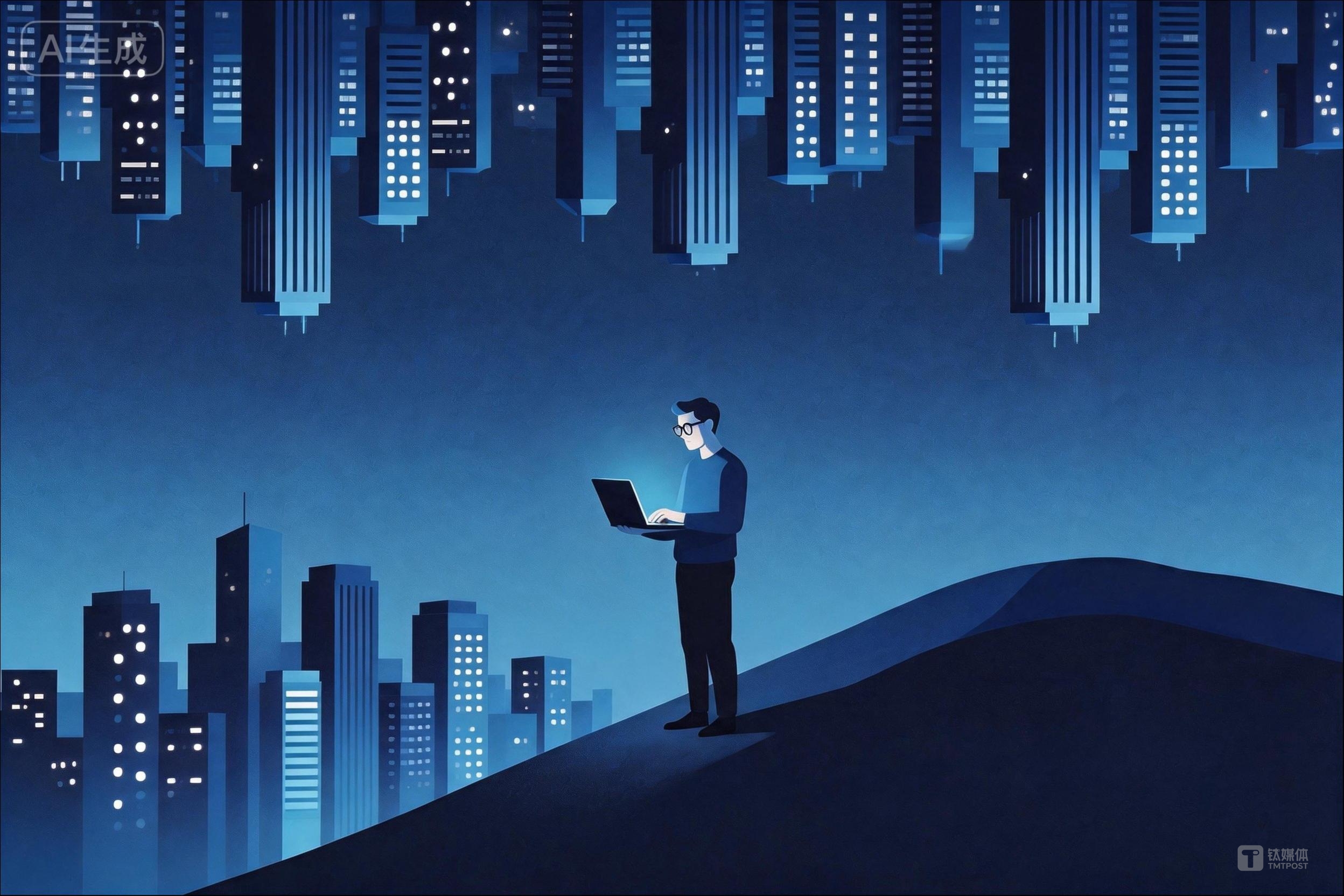
He’s a senior backend engineer at a major internet company. Three months ago, he was still just an ordinary developer. The toolchain project he was leading got handed off midstream to another team, and in the end he was reassigned to work on an internal efficiency-optimization system with little hope of success. But a chance experiment during the Spring Festival led him to discover a different way to work—using a single sentence to have AI finish, in two hours, what used to take seven days of development; turning a two-week requirement into something deliverable in two days. The feeling was like the shiver you get as a kid when you first get your hands on a game console: the world suddenly becomes boundless, and you’re the only one holding the controller.
In the month after the Chinese New Year, he went on a frenzy, stuffing more than 600 parallel tasks into his own Agent, spanning over 20 vertical scenarios across both work and daily life, and racking up more than 100 skills.
He spends more than 16 hours a day in front of his computer. His monthly token bill runs above RMB 10,000—and that number is still climbing fast.
A tech VP at a big company went to great lengths to get in touch with Liu Hao, hoping to have him lead a team for an internal AI transformation. In the end, they couldn’t even meet—Liu Hao’s calendar was already jam-packed by his agent, with every hour chopped into fifteen-minute slices.
Over the past few months, this kind of fervor has fallen like dominoes—from star players in the circle and engineers in critical roles, spreading to a much broader base of ordinary programmers. Whether by choice or by force, whether exhilarated or anxious, they’ve been scrambling to keep up with the shifts in AI coding, tracking the constant stream of breakout projects. Many can’t sleep at night, yet still can’t stop.
But in the very same office building, another group is moving with equal conviction in the exact opposite direction.
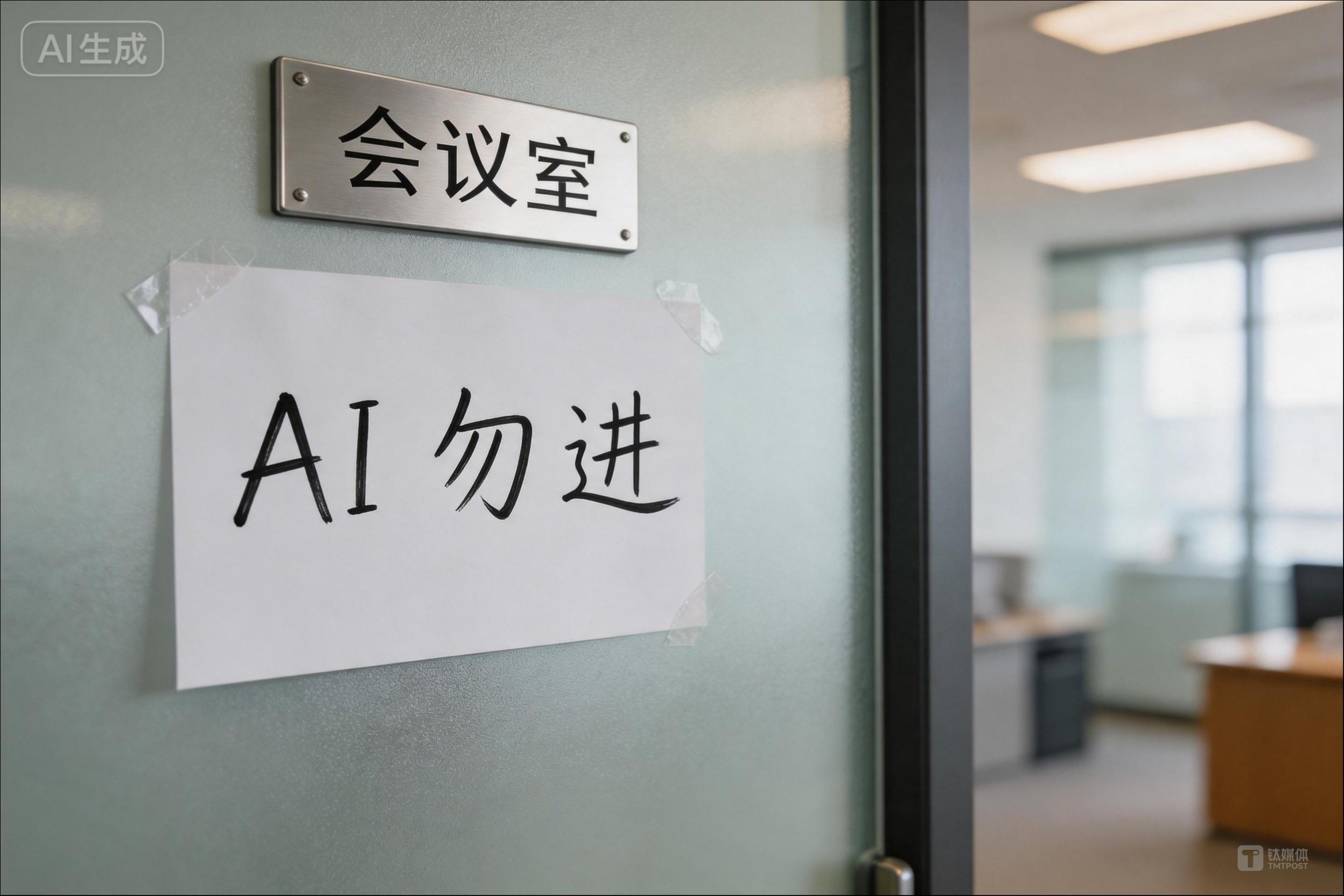
A veteran programmer who has been with the company for more than a decade said he’s strongly resistant to AI—so much so that he strictly forbids his team from using AI coding. In his view, great programmers treat code as their own work; you can see their thinking, understanding, and style in it. But now, AI-written code looks like a patchwork essay, potentially mixing five different styles at once—like some kind of stitched-together monster.
And in fact, the vast rift standing in front of programmers goes far beyond that.
In the spring of 2026, programmers at the big tech giants came down with a severe kind of “split personality.” On the one hand, they firmly believe AI is a staircase to godhood; on the other, they complain that AI is a steaming pile of spaghetti code that keeps getting piled higher. On the one hand, their companies demand that they chase the newest technological waves; on the other, their managers restrict them from using the best development tools. Trapped inside the very systems they built with their own hands, they feel lost and stuck, searching for a way out. What they don’t realize is that the “way out” they think they see is only the beginning of another loop.
The Ones Who Walked Out of the Cave
After the Spring Festival, many programmers realized they no longer had to write code themselves.
This shift brought a strange sense of contradiction. In the past, what you could do depended on what you knew; now, it depends on how much budget you have to buy tokens.
In the first few days, Liu Hao spent 80% of his energy “teaching” the AI. But soon, the only things left for him to do were: state the requirements, look at the results, and nod or shake his head.
But a surge in efficiency doesn’t bring only ease.
“Now I just want to feed it more new tasks and new scenarios. I want to know exactly how far it can go. What’s its ceiling? Where are the boundaries? Programming isn’t shrinking—it’s exploding.”
This kind of fervor wasn’t unique. A group of early-awakened programmers, represented by Liu Hao, were all immersed in the excitement and restlessness that this wave of AI brought, fighting like mad to stand at the crest and see where the giant swell was headed.
Twenty-eight-year-old Zhou Mo is a key technical contributor at a major short-video company. He leads a three-person team responsible for developing and optimizing the toolchain. After the Spring Festival, he too “awakened” his own “agent army” under OpenClaw’s influence. In the first week, his workday shot up from 10 hours to 16. He kept more than ten chat windows open at all times; his work consisted of prompt tuning and manual re-testing. By the third week, his output hit its peak—but his sleep was brutally squeezed down to just four hours a day. In an extremely overstimulated state, he had no appetite; even when he met with us, he needed a cup of full-sugar milk tea just to steady his slightly trembling hands.
“Sleeping is too much of a waste of time. Eating too.” His bloodshot, slightly bulging eyes made you worry about his body. But in his view, the limits of human physiology had already become a brake on the speed of AI’s evolution. The AIs were all waiting for him—and he was their biggest bottleneck.

They were the first people to “step out of the cave”—like primitives suddenly handed the gift of fire. What drove them wasn’t a carefully thought-out strategy, but a reckless surge of adrenaline—an instinctive fear that “if you don’t keep up, you’ll be left behind.”
This AI-ignited state is anything but rare in geek circles. OpenAI co-founder Andrej Karpathy is widely regarded as a legend, and the term “vibe coding” came from him. On the No Priors podcast, he described a kind of “AI psychosis”—saying that since last year he’d felt like he was living in a constant state of mental disorientation. With AI and agents in the mix, the number of things you can do suddenly skyrocketed, but so did the number of new things showing up. Add in a complete overhaul of how work gets done, and people started scrambling just to keep up—more frantic, more chaotic. Code generation used to be an 80/20 split between writing by hand and using AI; starting in December 2025, it flipped to 20/80, and he even gradually stopped writing code himself.
That anxiety has trickled down—from the big names in the community and engineers in key roles, layer by layer—to a much broader population of everyday programmers.
Ding Yang is a senior architect at a multinational tech company in Singapore. Moderately well-known in geek circles, he also has a child who has just turned two. But the AI wave hit his life hard.
In May 2025, Anthropic officially opened access to its AI coding tool, Claude Code. From that point on, Ding Yang became a heavy user—and as his productivity grew exponentially, he started staying up late more and more often, even spending far more time talking to Claude Code than with his wife and child.
A year on, Claude Code had become stronger and stronger, with more and more skills; new gadgets and tricks kept emerging. Ding Yang felt like his “novelty and excitement still hadn’t worn off,” but his wife felt like “life was becoming impossible to get through.”
Mars, who works in tech at a domestic SaaS company, likes to call himself laid-back. But in reality, he has barely missed any of the successive waves of new AI “drops.” Not long after OpenClaw started trending, he dug out an older MacBook Pro he had bought years ago and left idle for a while, and put it back to work to “raise shrimp.” Before long, though, the old machine’s battery was worn out from the constant load. In the end, he still went ahead and bought a Mac mini.
But the truth is, most of the time his “lobster” is really just for chatting. Mars feels he’s a long way from the geek world—he doesn’t have that engineering- and tech-first habit of understanding and solving all kinds of problems. Nor is he particularly worried about being replaced by AI. Yet in the environment he’s in—whether at work or in his personal life—the anxiety of “not keeping up with the times” still puts a lot of pressure on him, pushing him to keep spending money and energy to chase the latest AI developments.
This group of people seems to be driven along by some invisible force. They may not necessarily know what they want, but they know exactly what they can’t go without—they can’t go without AI, can’t go without staying at the cutting edge, and can’t go without that sense of control where “whatever I say goes.”
But is the world outside the cave really what they imagine?
Numbness and Resistance
Liu Hao’s first setback came in March.
His manager assigned him to give an internal sharing session at the company. Brimming with enthusiasm, he carefully prepared a wealth of examples, hoping to show everyone how AI had opened the door to a whole new world for him.
But once the session ended, aside from a few perfunctory thumbs-up in the comments, most of what he got was ridicule. “Lobster cult leader,” “grindset king,” “lunatic,” “why don’t you start a bootcamp and fleece people”…… Those labels were like a bucket of cold water dumped over someone who had just been set alight.
He could hardly believe it. It reminded him of the Allegory of the Cave in The Republic—the one person who first walks out of the cave and sees the light, then returns to tell everyone what he saw, only for no one to believe him, and for them to even put him to death. Turns out humans haven’t changed much in a few thousand years. “You can see the tsunami is about to hit, and my colleagues are still like this.” But after the disappointment, he also came to terms with it—he wasn’t obligated to drag everyone along as he ran.
The same cohort of early “awakeners” is going through similar experiences.
Thirty-year-old Tian Ming works at the same tech giant as Liu Hao. His team is responsible for developing internal tools. Both are seasoned programmers, but when it comes to AI, their attitudes couldn’t be more different.
Tian Ming is strongly opposed to AI-generated code—if it’s just a simple feature, AI can indeed get it done. But in his view, AI doesn’t take structure or scalability into account, which plants huge hidden risks for later bug fixing, feature iteration, and product expansion. “People generally call this kind of code a ‘shit mountain.’ If you want AI to write code with solid structure and clear logic, the effort and tokens you’ll burn would be better spent just doing it yourself.”
In fact, programmers pushing back against AI isn’t anything new. On all kinds of developer forums, many programmers discuss how, once they start using AI, they’re no longer really programmers so much as QA inspectors.
Behind this resistance lies a deeper fear: if AI can write code, are programmers still programmers?
A paper released by Anthropic this past January revealed that in a randomized controlled trial for a task involving “learning a new programming library,” programmers using AI-assisted tools scored, on average, 17% lower than those who “coded purely by hand.” The participants who relied most heavily on AI—acting like hands-off managers and blindly trial-and-erroring with AI—scored the worst.
This has been seen as a form of “skill deterioration.” The paper defines this deterioration as “cognitive offloading”—programmers hand off core tasks like understanding and debugging to AI, losing the chance to build cognition, capability, and habits through errors and friction, and as a result their coding muscles atrophy.
People want to use AI to submit more thinking and more solutions, but the reality is that what AI can do may not be merely incremental—the way humans “use their brains,” along with their habits, may already have changed.
Ding Yang said that, whether for work or out of interest, the amount of code he generates has exploded; but as AI takes on more and more of the work, he’s increasingly found himself wanting only to make requests, and not to “get his hands dirty” anymore.
Some voices argue that this could lead to “AI dependency.” Some programmers worry that the more dependent they become, the easier it will be for AI to replace them. Others look at it purely from the standpoint of self-awareness and skill-building, feeling that “if I only want to read code and give up writing it, I’m no longer whole,” as if “a part of me has already slipped away.”
For those still willing to “stay in the cave,” the anxiety of unemployment does indeed linger like a shadow—but it may not be caused by AI at all: “Even without AI, a company has ten thousand reasons to get rid of you. Nobody ever fantasized about working at a big tech firm for life. The odds of being ‘optimized out’ for other reasons are much higher than the odds of being replaced by AI,” Tian Ming said.
For a moment, it was hard to tell whether they were numb—or wise.
Those who resist AI carry another, more hidden fear: will AI devour the time people once had—and even their cognition?
In Ding Yang’s view, he has to come up with good ideas, issue instructions to Claude Code, and then go through repeated rounds of communication, review, and debugging. There’s simply nowhere near enough time.
Has this reshaped life? Ding Yang thinks it has—so much so that he feels he has to relearn how to live in this new state. He and his wife set some rules: bedtime is family time and can’t be given over to AI; when they go out or have meals, don’t keep staring at the AI back at home; plan ahead to talk about sleep schedules, and so on.
This AI-driven state is not uncommon among programmers. Greptile’s annual AI coding report, released this past January, showed that developers’ monthly code commits rose by 76% over the previous year. The irony is that tech companies often realize earlier than employees do—and plan for—what a “reasonable workload” looks like in an AI coding world. And that workload not only far exceeds past levels; for many programmers, it has also outpaced the speed at which their efficiency is improving.
Programming efficiency across the industry has indeed risen sharply. Based on data disclosed by Google, Anthropic, Opsera, and others, over the past year AI cut the average time developers spent submitting PRs (pull requests, code review/merge requests) by at least 30%. But in the end, the time saved still has to be “paid back.”
Karpasiy also described a kind of “OCD” around subscription quotas on the podcast. He said that now, once he’s finished running Codex, he immediately switches to Claude, trying to maximize throughput across platforms—and the moment he sees there are leftover tokens in his AI coding subscription, he becomes extremely anxious. He also revealed that this has become a “new normal” in Silicon Valley: engineers treat token utilization like a KPI, and see failing to use up their quota as a sign of inadequate capability.
As AI coding becomes mainstream, whether as “programmers” in the workplace or “developers” in their personal capacity, people are all going through a redefinition of their roles. After the initial thrill of “trying something new,” confusion about career prospects and a crisis of personal understanding are gradually coming to the surface.
Ding Yang found that many of the things he built in his excitement don’t seem to have much value—or even be very interesting—when he looks back now. They don’t even feel like what he actually wanted to make; they feel more like, after suddenly being granted a certain ability, he had no choice but to show it off for a while.
After Seedance 2.0 went viral earlier this year, a film-and-TV professional told us—roughly speaking—that “casual dabblers” will mindlessly applaud every new tool, while people who truly know what they want will never feel satisfied. But they are the core users of AI and the producers of high-quality content—and they will also be the ones pushing AI to evolve again.
Big Tech’s Stance
And within big tech companies, this split is being amplified.
From public information, all major tech giants have taken a very firm stance in embracing AI. Internally, almost all of them have put in place incentive mechanisms for programmers to use AI.
The most aggressive of the bunch was Kunlun Tech. In February this year, Fang Han sent an internal email mandating that all technical R&D staff (including the CTO) must use OpenAI Codex or Claude Code, and that developers’ daily token usage would be included in the H1 performance review. Employees who fail to meet development requirements will face bottom-tier elimination at a rate of 5%–20%.
By comparison, the incentive mechanisms at other tech giants look relatively more tactful. Tencent, Alibaba, Baidu, ByteDance, and others have encouraged employees to use AI more through internal training, selecting and recognizing “AI role models,” token subsidies, and other measures. At the same time, these companies have also been racing to showcase the results of their internal AI transformations on various occasions.
In May 2025, Alibaba Cloud announced publicly that AI-assisted code generation already accounted for nearly 40% of its internal coding. A month later, Baidu disclosed that the share of AI-generated code inside the company had risen to 43%. In February 2026, Tencent also said in a media interview that, across the company, 50% of developers were already using AI-assisted coding, and 50% of newly written code was generated by AI.
Another moment that directly reflects how the big tech firms view AI is hiring. Nearly all of them were actively writing AI coding capabilities into the recruitment criteria for technical roles. In 2026, Ant Group’s spring recruitment written test already included questions that required candidates to use AI coding; interviews at ByteDance and Baidu also featured prompts asking candidates to share their experience using Copilot or Claude.
Judging by the evidence above, the major tech companies do appear unequivocal and charging full steam ahead on the road to “AI-ification.” But in practice, once you get down to day-to-day execution, the picture can be much quieter.
An employee at a major company that has publicly said it would embrace AI said, “From start to finish, we haven’t received any instructions to ramp up the use of AI tools. Not just our team—many peer teams haven’t seen much movement either.” He explained that there were organized trainings and selections, but those were just routine activities run by the internal developer community, and “we don’t really take part in them in our daily work.”
In fact, in many specific situations, managers at big companies were still, in a sense, “stuck in the cave.” The employee observed that leadership’s stance was often cautious—valuing AI on the one hand while opposing its use on the other: “It’s almost a blanket ban, especially on third-party coding tools. They’re worried about code leakage, and they even issued a notice about it.”
For big tech, AI may still largely be an organic exploration driven by product and engineering teams themselves.
Several programmers shared similar feelings——their companies had not really provided incentives or guidance for using AI tools. This stands in stark contrast to the firm, pro-AI posture that these tech giants project to the outside world.
“The PR moves are mostly about keeping the company’s brand positioned as cutting-edge,” one programmer speculated.
This disconnect points to a deeper question: What kind of programmers do big companies actually need?
The latest 2026 Developer Survey Report released by Sonar, a globally renowned code quality platform, shows that 72% of developers use AI coding tools every day. AI-generated or AI-assisted code already makes up 42% of output—an enormous jump from 6% in 2023. At the enterprise level, adoption of AI coding assistants had reached about 90% by the end of 2025, and teams using AI-assisted workflows shortened pull-request cycle times by 48% to 58%.
But a trend report Anthropic released in February 2026 offered a more sober figure: developers use AI in roughly 60% of their work, yet the tasks they can “fully delegate” to AI account for only 0–20%.
What does that mean? Probably that AI is still a tool that assists rather than a replacement. Yet the posture of big tech companies looks as if they’re laying the public-opinion groundwork for “AI replacing programmers.”
There’s a historical parallel here.
In early 19th-century Britain, the textile industry was among the first to feel the shock of the Industrial Revolution. The spinning jenny and water-powered spinning machines boosted the productivity of hand-spinning women by dozens of times. But factory owners didn’t reduce working hours or raise wages as a result—on the contrary, they demanded that workers run more machines and produce more yarn. In the end, the intensity of textile women’s labor not only failed to drop but actually rose, and their skills gradually eroded under the machines’ standardized operations, turning them from craftsmen who needed expertise into “attachments to machines” who only had to repeat motions.
Will today’s programmers become the new textile women?
But another number is even more unsettling.
According to data from Qianzhan Economist, nearly 700,000 graduates in China majored in computer-related fields in 2024, while the total number of college graduates nationwide that year was 11.79 million—meaning that roughly one out of every 16 graduates came from a computer-related background. The number of institutions offering the Computer Science and Technology major has already reached 995, ranking first among all majors—far ahead of the rest.
But the job market has reacted in a completely different way. According to statistics from an education research institute, more than 500,000 students graduate each year with computer-related degrees, yet there are only around 300,000 matching positions on the market. This supply–demand imbalance has forced half of them to switch careers. In August 2025, nine provinces including Shandong and Henan issued warning lists covering 178 undergraduate majors, with Computer Science and Technology, Data Science and Big Data Technology, and similar programs repeatedly appearing on the lists. Data from one provincial education department showed that the placement (destination-confirmation) rate for computer science graduates stayed below 70% for two consecutive years.
Universities—this machine—are funneling an ever-growing number of computer science graduates into the market at a pace of 600,000 a year. Meanwhile, AI is squeezing demand for entry-level programmers by cutting development time by more than 30% year after year.
On the other hand, based on the data we’ve learned, the competition ratio for junior development roles has already reached 5,000:1, and at some tech giants the acceptance rate is under 1%.
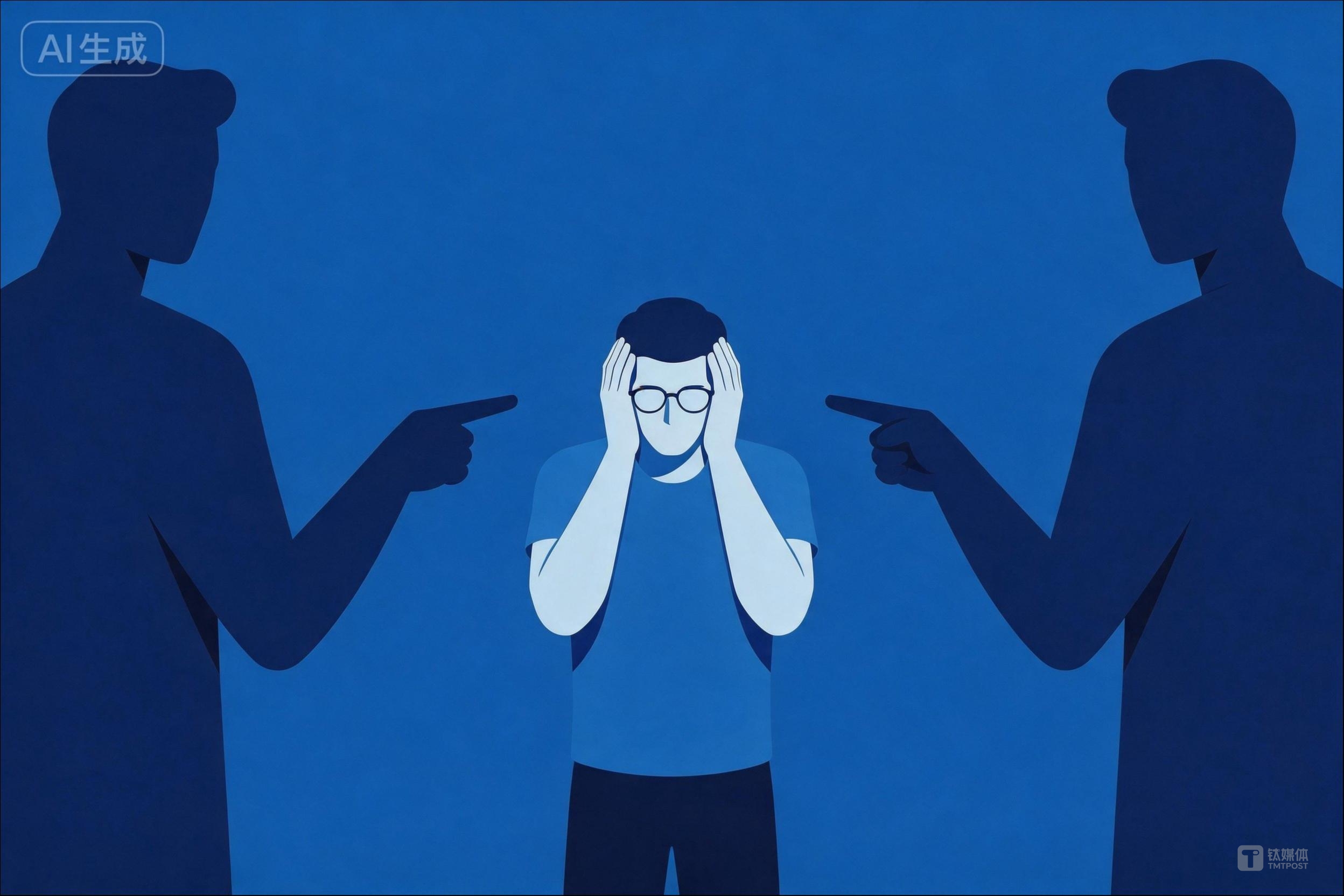
Big tech companies are going all-out in recruitment by demanding AI coding skills, yet inside the company they layer restriction upon restriction on the use of AI tools; universities are expanding enrollment in computer-related majors while still using outdated curricula to train students who are out of sync with the market. Caught in the middle is a generation of programmers going through an identity crisis.
Departure
In March 2026, Liu Yang left the big tech company where he had worked for three years, taking with him his “Claw”-like marketing Agent project, and quickly secured a seed round of nearly RMB 10 million from a solo angel firm.
This may be the biggest opportunity of this era. A group of people can go very far—and right now, speed matters even more.
Jason made the same choice for much the same reasons. After nearly eight years at a major video platform company in Beijing, he also resigned decisively in March and, on the strength of a short-video Agent he developed independently, landed an investment in the million-RMB range.
He now needs to quickly round out feedback from vertical scenarios: “As long as I’m fast enough, with AI’s current development efficiency, no one should be able to catch up.”
According to internal monitoring statistics from an investment firm, around the Spring Festival in 2026, in Beijing, Shanghai, and Hangzhou alone, the number of Agent entrepreneurs who resigned from core technical roles at big tech companies was close to 200. Most of them were going through a similar awakening: stirred awake by OpenClaw, suffocated by the “numb” and “conservative” ecosystem inside big companies—convinced that once they strike out on their own, they’ll gain an absolutely free R&D environment and a first-mover advantage.
Venture capital’s hype machine only makes that choice look even more enticing. Across the industry, there’s a widespread sense that funding for AI Agent projects has been moving at breakneck speed in 2026—“one week’s worth of work equals an entire quarter in previous years.” The media is also awash with “one-person unicorn” narratives, with several new Agent projects reportedly landing funding almost every week. And founders who come from core technical roles at big tech companies are precisely the ones capital is most eager to chase in this wave.
The reasons they leave may look, on the surface, like a pursuit of technical freedom. In reality, it’s a deeper kind of fear: if they’re destined to be people controlled by AI in the future, then they’d rather be the ones who write the rules first.
This mindset is extremely common among the “awakened.” Liu Hao didn’t quit to start a company, but he shared similar anxiety with us: if you’re merely the person giving AI instructions, how are you any different from an operator on a production line? But if you can build a better AI, then at least you’re still the one making the rules.
That psychology has driven wave after wave of big-tech programmers to step outside the walls. They leave with coding chops and engineering confidence, believing that once they break away from big tech, they can finally escape those hands that “want it both ways.”

But outside, the crushing comes faster.
Liu Yang’s Agent product had been live for a week when its user count climbed to 2,000. Just as he was planning how to roll out subscriptions in the next version, his investor called and told him to consider a new direction. The reason: a big tech company had just released an “intelligent assistant 2.0” embedded in its own ecosystem—its features fully covered what Liu Yang’s Agent did, and its foundation model was the company’s latest in-house version, with token costs far lower as well.
What’s truly frightening is the big-company stamp of approval. When there isn’t a meaningful gap in features or real-world results, users are simply more inclined to trust big-tech products for their security and stability.
Jason ran into the same predicament soon after. The release of Seedance 2.0 steamrolled past his carefully designed video-optimization Agent. “I honestly didn’t expect the base model to iterate this fast. When I saw the Seedance 2.0 demo, it was like the lights just went out.”
Wu Haiyan, managing partner at Huachuang Capital, believes that foundation models are still iterating at an extremely fast pace. Right now, most innovation at the application layer, if it lacks deep scenario-specific data and domain understanding, is likely to be swallowed up by foundation models.
Zhou Wei, founding partner at Genesis Partners, spotted this problem early on. In his view, the OpenClaw boom seemed to create a lot of new agent-startup opportunities, but in reality it significantly raised the bar for AI entrepreneurship. Throughout the internet era, founders talked about one story: lead time—the first-mover advantage. Today, that advantage has been erased by AI-driven development efficiency.
That’s why he rarely looks at new agent projects—unless they are built around a deeply vertical scenario and involve highly complex workflows.
Liu Yang hasn’t given up. He has already kicked off development on a brand-new agent product. And when we got in touch with Jason again, he had already stepped away from entrepreneurship and joined another big tech company.
Although there are no relevant statistics, some investors told us that many agent projects founded by engineers who left major tech firms quickly stalled once similar products from those big companies were released.
This isn’t a simple “startup failed” story. Some engineers are finally realizing that they aren’t being replaced by AI; they’re trapped in a system that can’t make sense of itself—one they can neither defeat nor escape.
What makes the spring of 2026 so brutal is that programmers saw AI’s capabilities earlier than anyone else, and they also understand organizational inertia better than anyone else.
Where do they go from here? That question may not have a hopeful ending, and no one can tell them where these cracks will ultimately lead the industry. But everyone can vaguely sense that some things are already beyond recovery. (All names in this article are pseudonyms.)
(Authors: Tao Tianyu and Hu Jiameng; Editor: Yang Lin)

 快报
快报
根据《网络安全法》实名制要求,请绑定手机号后发表评论