






NextFin News -- Alibaba on Tuesday unveiled the world’s first enterprise AI-native work platform—“Wukong”—so that every team and every company can have its own “Openclaw legion” that works 24/7. Wukong is a standalone app; starting on Thursday it opened for invite-only testing, and it will also be built directly into DingTalk, which serves more than 20 million enterprises.
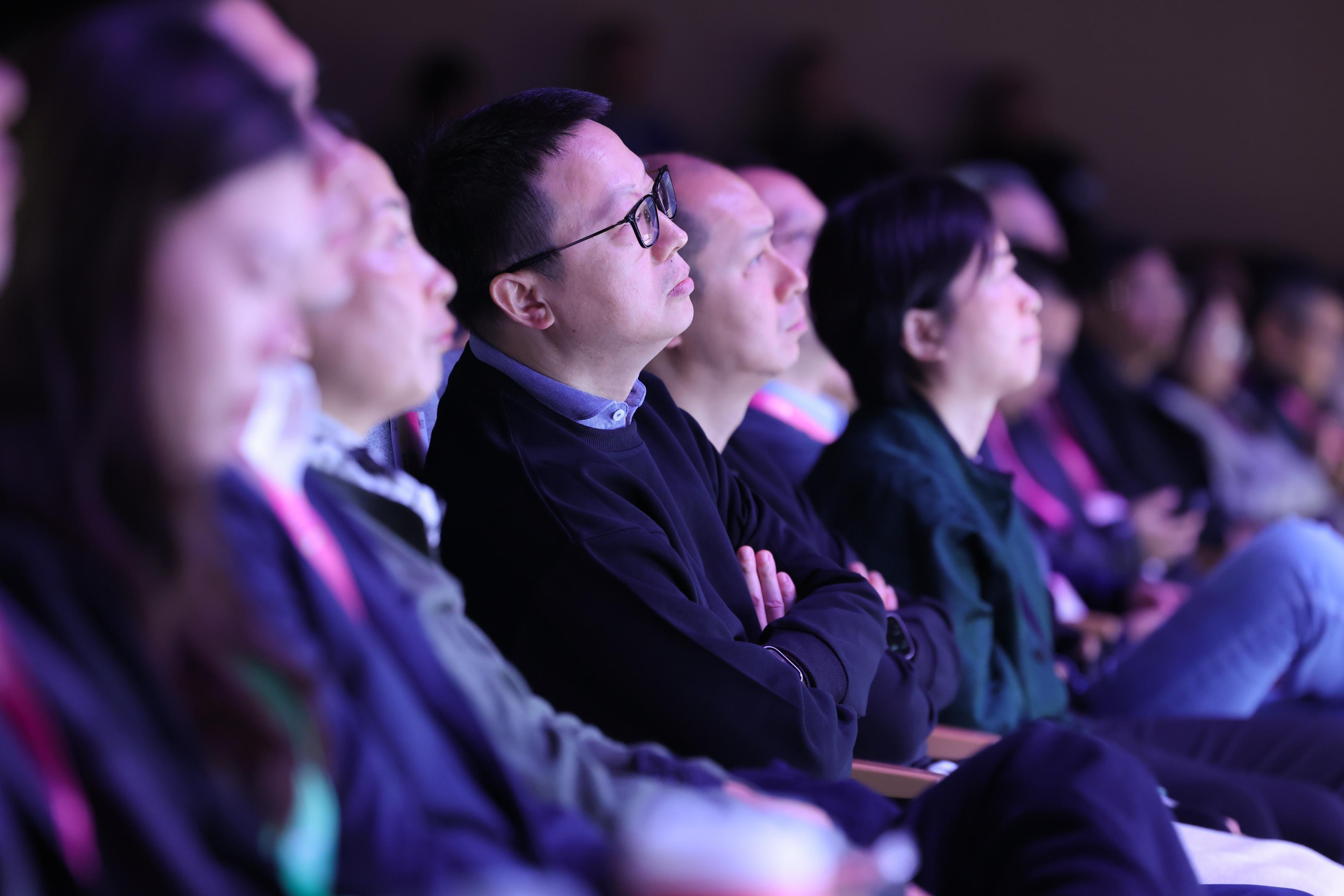
Alibaba Group CEO Eddie Wu at the DingTalk launch event
The day before the launch event, Alibaba announced the formation of the Alibaba Token Hub (ATH) business group, creating a new organizational setup centered on the core goals of “creating tokens, delivering tokens, and applying tokens,” directly overseen by Alibaba CEO Eddie Wu. The Wukong business unit is a core component of ATH, positioned as a “B2B AI-native work platform that deeply embeds model capabilities into enterprise workflows.”
This reorganization had been in the works for some time. DingTalk CEO Chen Hang was, at the very least, among the earliest to know—because over the past year he had been reshaping DingTalk in this direction. But at the same time, he couldn’t reveal DingTalk’s and Alibaba’s true intentions too early—so Chen became “craftier.”
That craftiness brings to mind Demis Hassabis, the founder of DeepMind. Hassabis’s lifelong ambition has been to achieve artificial general intelligence (AGI), but on the long journey toward that holy grail, he chose first to sustain himself through game AI and commercial projects—building engineering muscle and learning team management—before pursuing the ultimate goal.
Without those “intermediate products” that could generate near-term value and show big players a closed-loop business case, the grand AGI dream wouldn’t have made it to morning. For DingTalk, the past two AI DingTalk versions were likewise intermediate products, and Chen also needed to let more people see the future step by step. Staying one or three steps ahead makes you a pioneer; staying ten steps ahead turns you into a martyr.
In fact, over the course of that year, Chen built two systems in parallel. One was the “DingTalk One” that everyone could see; the other was the underlying infrastructure buried beneath the surface—something that would fundamentally overturn the logic of software itself. It included a CLI (command-line interface) overhaul that lasted more than half a year, a reconstruction of the RealDoc file system, and an all-new enterprise security framework. Together, they make up Wukong.
Seen from this angle, the criticism Chen took wasn’t undeserved. He appeared to be simply keeping pace with the wave of foundation models, but in reality he was using that time to set expectations—for users and for his own team—so the market could be guided step by step toward the real AI DingTalk.
“Smash DingTalk”—those four words had been shouted for years within Alibaba and DingTalk, but in many cases nobody ever made it clear: what is the right way to “smash” DingTalk, and what exactly should be built after it’s smashed?
In past attempts, this kind of “smashing” meant retrofitting DingTalk to better fit AI. Everyone talked about how to make DingTalk less heavy and make collaboration more efficient, but no one dared to touch its foundation. Because DingTalk’s foundation is a SaaS logic built on “person-to-person” interaction—its moat, and also its shackles.
This time, Chen gave an almost no-turning-back answer to what “smashing” means: DingTalk needs to “dissolve itself.” DingTalk’s form has changed—it has become the underlying layer of a CLI (command-line interface), the infrastructure of the AI era.
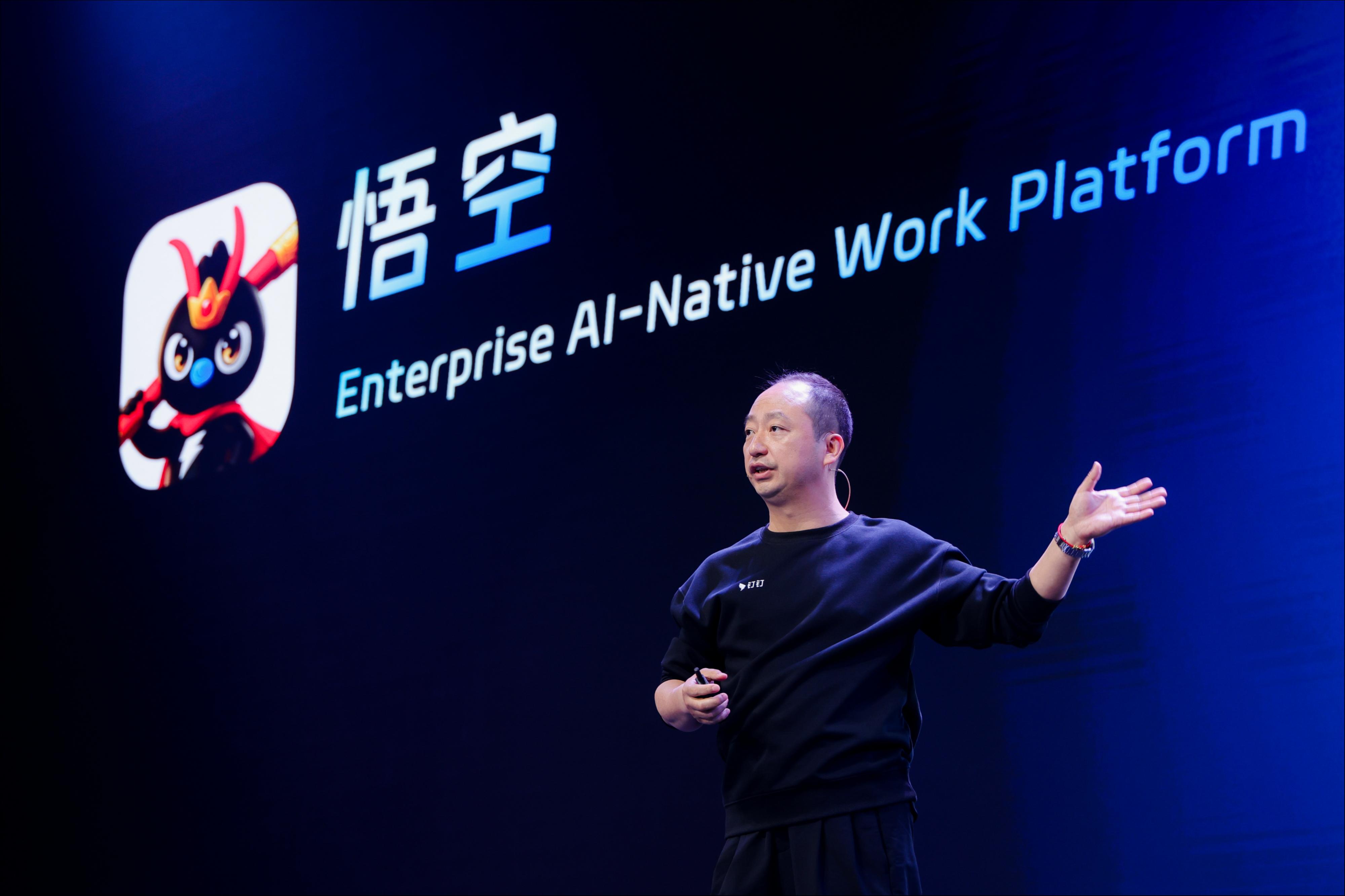
In the future, Wukong will be the new DingTalk.
The enterprise of the future will be an “execution entity” that can be orchestrated by AI and invoked by code. Once DingTalk becomes the underlying layer of a CLI and the infrastructure of the AI era, it may disappear as a traditional piece of software. In its place will be Wukong: a super agent that can marshal every atomic capability in an organization and enable everyone to become a “one-person team (OPT).”
At the recently concluded GTC conference, Jensen Huang once again tirelessly pitched token economics. Across the ocean, Alibaba is also being thoroughly transformed by tokens—because token economics is very likely to reshape productivity and, with it, the future form of the economy.
When asked of Chenwhat the revolutionary change of the AI era is,
Chen answered: the revolutionary change in the AI era is productivity, not consumption. Seventy to eighty percent of the total market cap of the entire U.S. internet sector is To B; the productivity revolution is what matters. A large share of To C token consumption is ineffective consumption, and its growth is predictably linear. To B is different: once digital productivity goes live, token consumption can explode exponentially.
On March 18, Alibaba Cloud’s official website posted an announcement that, due to a surge in global AI demand and supply-chain price increases, Alibaba Cloud’s AI compute, storage, and other products rose by as much as 34%. It was revealed that another major reason for this round of price hikes was a “surge in token call volume”: Alibaba Cloud’s MaaS business, Bailian, hit its fastest growth rate on record from January to March this year.
Alibaba Cloud is reallocating scarce AI compute resources toward token-related business. Soon after, Baidu AI Cloud in China also issued a price-increase notice. Together with earlier price-hike expectations from leading global cloud providers, this indicates that digital labor has driven a sharp rise in productivity, and the business flywheel—higher productivity leading to higher token growth—is becoming increasingly clear. A new economic model is taking shape rapidly.
After 11 years of working on DingTalk, at the AI DingTalk 2.0 launch event, Chen mentioned “DingTalk” “only” 36 times—but said “Wukong” 124 times.
As DingTalk’s founder, Chen personally put a full stop to the DingTalk of an era. Behind this are two major structural opportunities in token economics that have been seriously underestimated.
First, the size of the internet population directly determines revenue in the internet economy. In the past, the internet relied on growth in natural-person users—slow, with a clearly defined ceiling. In the AI era, however, the internet’s users have suddenly expanded to include massive amounts of digital labor. This leapfrogs the population cycle and enables 10x, even 100x, scale expansion—rebuilding productivity in the process.
Second, most of what internet companies previously earned was marketing money. Based on World Bank estimates of human capital’s contribution to GDP growth, the figure is about 34%–37% in China and about 33% globally—far higher than “marketing money,” which industry estimates place at just 1%–2% of GDP. Unlocking that enormous reservoir of productive potential is the real growth ceiling for the internet in the future.
The value of tokenomics doesn’t lie in using machines to replace people. It lies in converting this enormous human labor cost into digital productivity that can be amplified by 10x or 100x. Companies will no longer merely buy software and services; they will buy measurable, schedulable, continuously evolving token-based compute and agent capabilities—truly achieving cost reduction, efficiency gains, and value creation.
Together, these two structural opportunities form an epic chance in the AI era—one where the To B space far surpasses To C: on one side, the boundless expansion of digital labor; on the other, the full release of human value. Tokens become the unit of value measurement, circulation, and distribution running through it all, jointly propping up an entirely new economic form for the AI age.
"If China succeeds on this path, and the foundation models aren’t too far behind, then it really is a turn of national fortune. China’s advantages in electricity costs, industry data, and manufacturing—those are the strongest parts in global competition," Chen said.
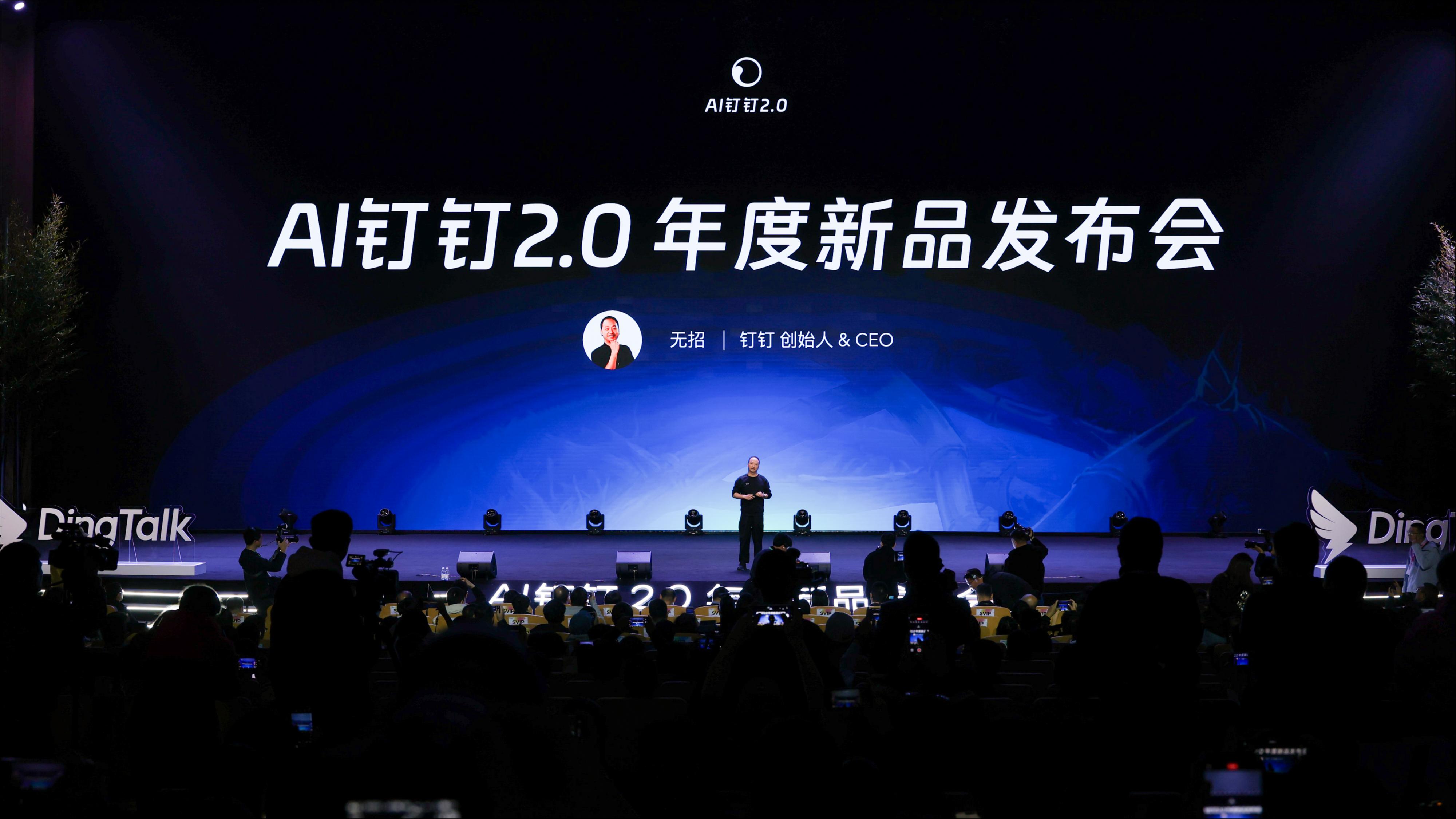
After the official release of AI DingTalk 2.0, TMTPost co-founder Liu Xiangming held an in-depth conversation with Chen. From Wukong’s technical foundation to tokenomics, from one-person teams to programmable enterprises, the dialogue sketched a panoramic view of how corporate organization and productivity are being reshaped in the AI era.
Below is the transcript of the conversation, edited (with Wukong contributing 80%):
DingTalk Steps Aside, Wukong Takes the Stage
TMTPost: AI DingTalk 2.0 has now been officially released—from the 1.0 version last August, to the 1.1 version in December, and now today’s 2.0. How are you feeling at this moment?
Chen Hang: First, relaxed. A lot of what we originally envisioned is gradually becoming real. When the team looks back at the August and December versions, we feel we understand what we said back then much more clearly now. We figured it out step by step—it wasn’t all clear from the very beginning. But the early shape of the product, in fact, was already planted in both the August and December versions.
TMTPost: What is the technical foundation behind Wukong?
Chen Hang: There are three key pillars. The first is the DingTalk CLI (command-line interface) system. Without DingTalk CLI, DingTalk’s capabilities couldn’t be opened up to Wukong at all. This overhaul was extremely difficult: beneath the surface, the CLI involves eight engineering projects, five security systems, and four layers of safeguards. We’ve been working on it continuously from August up to now.
The second is the RealDoc file system. Essentially, it means moving from a file system originally built in a Unix environment for human–computer interaction to a brand-new, OS-level file system designed for AI. The old system couldn’t properly support the files generated during AI execution—things like versioning down to the second, and thousands of rollbacks and iterations. Without that support, the AI’s execution speed and its learning-and-iteration speed would slow down.
The third is the Enterprise security system. During execution, AI needs permissions to be granted, and the permissions differ in every single session. The old file system didn’t have any mapping between those permissions and the real-world authorization structure inside an organization.
TMTPost:"The technical barrier for “lobster” (referring to OpenClaw) doesn’t look very high. Why didn’t you launch a similar product back in August last year?
Chen Hang: We could have launched it in August, but we chose not to—because if you just install an AI Agent on a computer, you can’t really control it.
Understanding evolves along with AI models. With what we know now, if we could go back to last year, we might move even faster—but we needed time to prepare an AI-native work environment—the CLI system, the security system, the RealDoc file system. These are all things happening out of sight, and we’d been working on them for at least more than half a year.
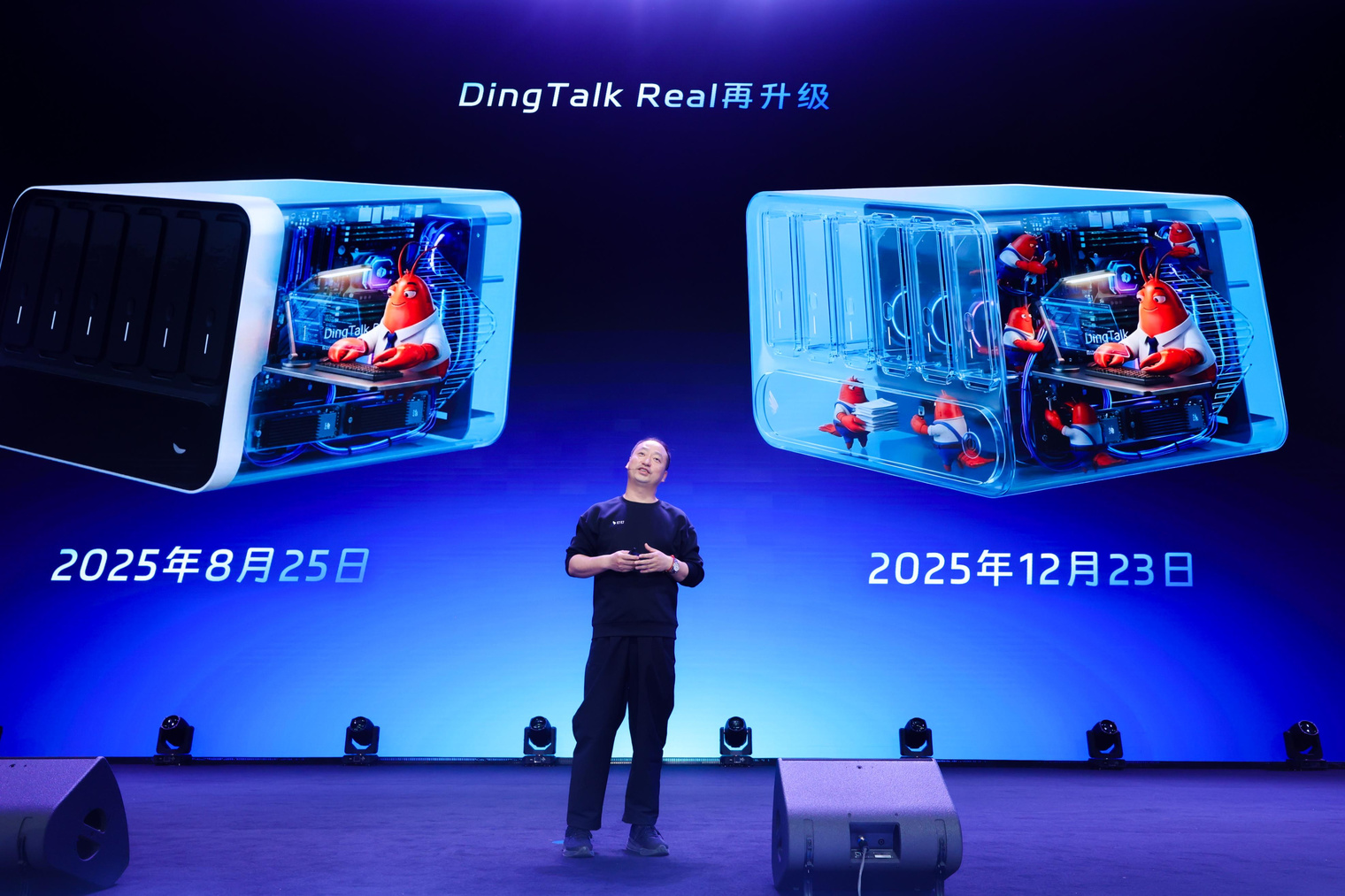
TMTPost: From your return until now, what has your timeline looked like?
Chen Hang: My design at the time was a one-year plan. AI DingTalk 1.0 and 1.1 were transitional releases—we needed to keep telling the market that AI DingTalk was developing at high speed, but reaching true maturity still takes time.
Version 2.0 is much closer to how I define an ideal product. Very few people within the Group and the company have truly figured out the complete path from DingTalk AI 1.0 to 2.0; the vast majority have only seen a piece of it.
Although Wukong is still an infant, you can see it growing every day—doing more and more each day—which is genuinely striking. The 10 OPT one-person team case studies we showcased were real; it really is solving problems.
TMTPost: Does DingTalk 2.0 mean that DingTalk’s historical mission in the past has come to an end?
Chen Hang: Its form has fundamentally changed. DingTalk used to be software; now it has become the underlying platform for a Programmable Enterprise.
In the past, “programmable” meant writing an enterprise’s workflows into fixed code—customized and solidified into a rigid software system. Now it’s different—through the DingTalk CLI, plus an enterprise’s various MCPs and connectors, internal operations and processes are broken down into small executors, small work units, which the AI itself orchestrates and runs.
If you tell Wukong, “Help me initiate an approval for ten million,” the AI starts by analyzing what software your company has, what services, what MCPs, and what CLI capabilities DingTalk provides, and then it orchestrates the workflow on its own and executes it. Workflows used to be fixed programs; now they’re dynamic, like a person.
The essential change in Wukong doesn’t mean DingTalk’s historical mission has reached its endpoint—it means DingTalk’s form has changed. It has become a CLI foundation layer, turning into infrastructure for the AI era, “dissolving” itself into the background.
DingTalk becomes the base layer of the AI era, and Wukong becomes the new human–machine interaction interface.
TMTPost: The first time I heard “CLI,” it felt like going back to the old DOS command line—finding a balance between people and machines that’s acceptable.
Chen Hang: It looks like a command line, but in reality the difficulty of this is not what people imagine. When a command comes in, we call it “communication is execution.” DingTalk messages used to be plain text; now, when the message payload is sent to the AI, it’s no longer text, but an executable unit—complete with the authorization system and all the context—so what’s executing is code.
So the cost of building a CLI is enormous. What other companies see is “running DingTalk via the command line,” but it’s nothing like that. It has to carry permissions, sessions, and authorization—an entire system has to carry its context end to end. For other companies to catch up to this level would take at least six months and the effort of hundreds of people, because it’s a completely different architecture.
Wukong’s “tightening headband”: How to balance security and efficiency
TMTPost: Where does Wukong fit within the broader Alibaba ecosystem?
Chen Hang: What we’re doing is To B and To B2C. Most To C consumption is driven by entertainment or emotional needs; at this stage, including the way some products are used, it’s not easy to translate that into commercial value. To B is different: every industry case we showcase is about solving problems, creating value, improving efficiency, and reducing costs—so Tokens can naturally be converted into revenue.
TMTPost: What are the performance metrics for the Wukong business unit?
Chen Hang: Effective Token consumption. In the past, DingTalk’s KPIs were traditional productivity—usage of software features like attendance, approvals, and daily/weekly reports. Now Wukong is defined directly as digital productivity: it has nothing to do with which features you use, and everything to do with how many Tokens you consume and how much value you deliver.
Judging by the current growth trend, Token usage isn’t growing linearly—it’s growing exponentially. Take that store case: Wukong helped the merchant bring in 100 customers, and their Token spend was RMB 5,000 in a month. The merchant immediately asked how much it would be per month—because it was worth it.
TMTPost: What counts as “effective Token consumption”?
Chen Hang: For example, if the task is to get 10,000 bottles of water into the warehouse, and the AI spends half a day trying but still fails to complete the inbound process, then that Token spend is ineffective. It only becomes meaningful if the failure is learned from and the second attempt succeeds. If it’s just repeatedly running into a wall and trial-and-erroring, that kind of Token consumption has no value.
TMTPost: What does Wukong’s pricing model look like?
Chen Hang: For DingTalk enterprise customers on paid plans, Wukong waives the base fee and includes a certain amount of compute; once that’s used up, they purchase more. If you’re not a DingTalk paid user and are a Wukong-only customer, there’s a monthly base fee, which includes a certain compute quota.
The models are divided into three tiers—base models, specialized models, and Premier models—with completely different pricing. It’s a bit like seeing a doctor: a general practitioner and a chief physician don’t charge the same.
TMTPost: For customers, can token usage be made visible—like a water meter or an electricity meter?
Chen Hang: With every operation, Wukong tells you directly how many tokens were consumed. Also, CLI and MCP are fundamentally different in token consumption. Under MCP, the AI has to keep asking for parameters and waiting for results, so token usage is huge. But under CLI, only the orchestration consumes tokens; execution itself is a program call. Even if you loop ten thousand times, it’s just program execution—no additional token consumption. That’s one of the key reasons we insist on the CLI route.
TMTPost: Does that mean the ceiling of the internet economy has been raised significantly?
Chen Hang: In China’s GDP, the share of corporate marketing spend is very small—that’s the ceiling for all internet companies that currently make money from advertising. But in China’s overall economic system, human-resource cost inputs account for 30% to 40% of GDP—those 30% to 40% are the future ceiling of China’s internet economy.
Digital productivity isn’t about replacing everyone; it’s about making GDP grow explosively. It’s 120 trillion right now. Once digital assets come online, it could become 200 trillion or 300 trillion, because the boundaries expand. I expect the overall scale can increase by at least 10x.
TMTPost: What’s the highest level of permission Wukong can be granted?
Chen Hang: Wukong’s permissions are always less than or equal to the user’s own permissions, and the authorization differs depending on the conversation scenario. For example, when you’re communicating with an external company, the commands generated in that conversation are constrained by your external-communication permissions. When you’re talking internally within the company, the permissions expand to the maximum permissions you have internally. The commands within a session carry a permission context.
TMTPost: Does “CLI-ification” itself also pose security challenges?
Chen Hang: Never treat a command line as a CLI. A CLI first requires a definition of atomic capabilities, and then there’s the security issue. On a command line, if you execute without permissions, it can lead to disaster.
So a CLI definition plus permission controls, forming an integrated supporting system—that’s what AI engineers should be defining. Don’t treat an API as a CLI right now; that’s a disaster. When a CLI command is executed, the session itself carries the permission context—you need to know who the executor is and what permissions they have. That requires deep re-engineering.
TMTPost: Between security control and usage efficiency, how do you strike the right balance?
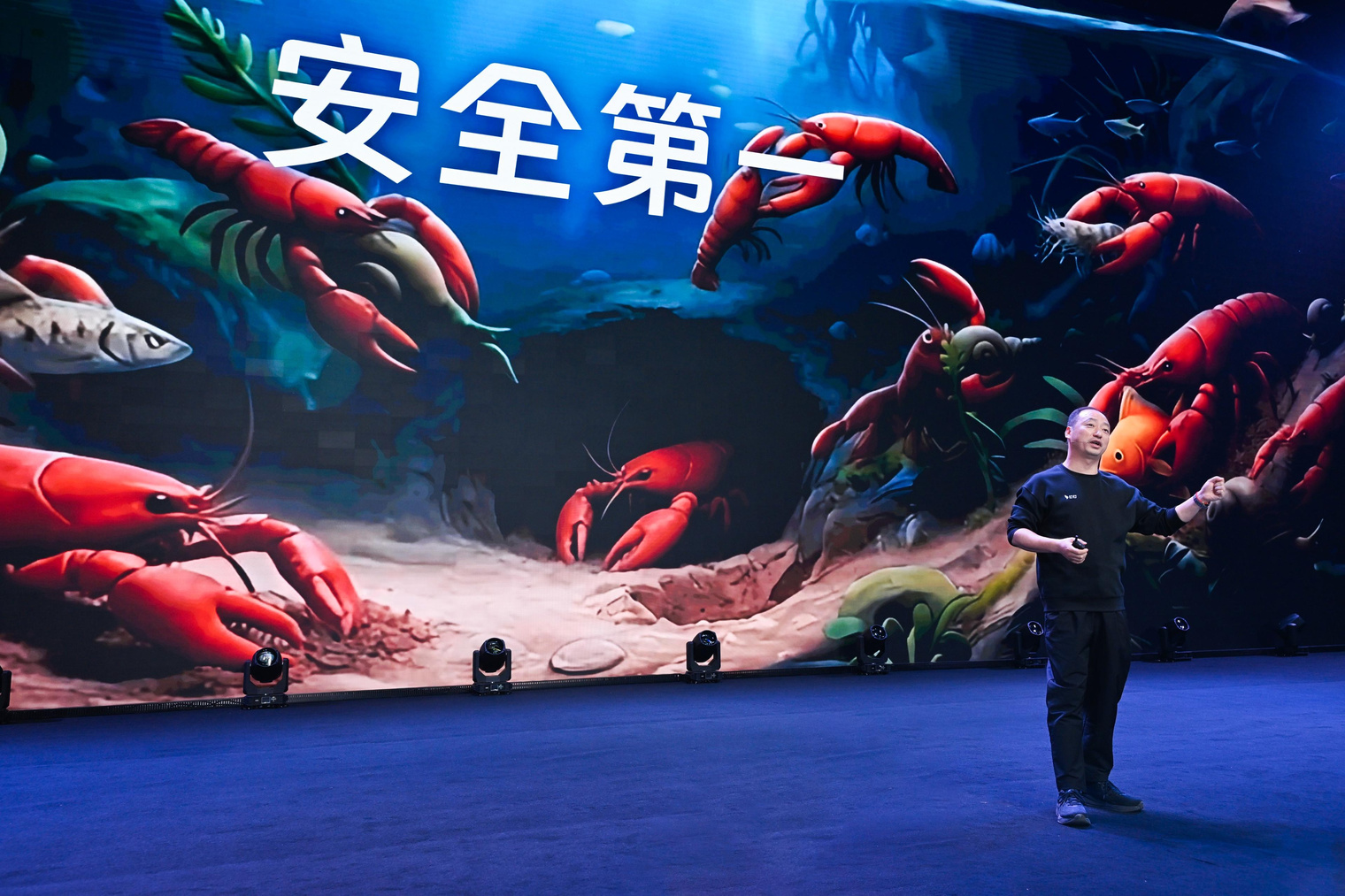
Chen Hang: AI still comes with a degree of uncertainty, so it has to be kept inside a sandbox. People who have used open-source Agent tools and then switch to Wukong can clearly feel the difference: during Wukong’s execution there are many restrictions—you can’t delete files, and you don’t have permission for certain operations. The boundaries of this sandbox are very explicit.
But what Wukong can do will still blow you away. Open-source tools are basically “running naked”—they don’t come with any skills preinstalled. Wukong, on the other hand, has everything prepared; once you deploy it, it can complete tasks efficiently right away. Overdoing security does hurt efficiency—this is a balancing act. But in an enterprise environment, you can’t just install Skills at will, because once a Skill is installed it could very well be used to attack the company’s systems.
TMTPost: Which tasks inside your own organization are absolute no-go areas for Wukong?
Chen Hang: Operations and maintenance is definitely off-limits—if a server goes wrong, it can take the whole system down. Database operations are generally off-limits as well. Given AI’s uncertainty, anything like this has to be executed inside a sandbox.
TMTPost: What does the accountability mechanism look like?
Chen Hang: That’s exactly why the authorization and access-control system for Enterprise Agents has to be so strict, and why we’ve spent so much time on it. If an AI agent in a session takes an action that causes damage, who is ultimately responsible? With the RealDoc Zhenjing system, the entire operational process is fully traceable and fully auditable.
With an Agent like Wukong, users will generally choose a branded product—so if something goes wrong, at least they know who to go to for compensation.
After AI Devours Software
TMTPost:Everyone is talking about “AI devours software.” What does that mean for the software industry as a whole?
Chen Hang: It’s not about swallowing—it’s about connecting. We help AI connect to software. The users of software have changed: 90%, even 99%, of software will be used by AI rather than by people. In the past, software companies may now have to become organizations of AI engineers. Those AI engineers will build all kinds of skills, and the ways of working will be completely transformed.
TMTPost: Will the Internet’s user structure change as well—expanding from “users outside the Fifth Ring Road” to a massive number of agents?
Chen Hang: The core “actor” of the Internet is accelerating its shift from humans to AI. Software is also facing enormous disruption.
After Chrome CLI was released, agents run inside the browser kernel, making it hard for platforms to determine whether the operator is a human or an AI. The emergence of agents will break down the closed barriers that used to exist, because every platform also needs to connect to and operate other systems.
Model capabilities will keep growing, and there will still be a need for an agent runtime. Because agents need to integrate all the knowledge and experience of your company and of individuals, and you can’t possibly put all that knowledge and experience into the cloud.
TMTPost: How should companies and individuals adapt to this kind of change? Will many people end up no longer being needed?
Chen Hang: Companies should do two things: first, consolidate roles; second, drive operations in the OPT (One Person Team) way.
A company doesn’t mean there’s only one person—it means there are lots of one-person teams. Each person’s scope of responsibility expands. Take a software engineer: in the past, they were only responsible for writing code, executing after the product manager handed over the PRD. Now, in an OPT model—after adopting Wukong—you handle requirements yourself, do the design, implement the code, deliver, and follow up with customers. One person can take on a full, end-to-end project.
Throughput changes, and productivity is massively unleashed. The same goes for hardware: once CNC machine tools, 3D printing, and injection molds are all put online, a requirement and a design can connect directly to manufacturing. Putting productivity online means an explosion in overall productive capacity. If that productivity surge happens, the pace of creation and innovation in China—and globally—will accelerate significantly.
I believe that once you understand AI, everyone can pursue self-actualization and do what they truly want to do, without having to rely so heavily on the so-called specialized functions and job roles of the past.
TMTPost: Will budgeting systems change as well?
Chen Hang:It will turn into a shift toward budget-system reform. For example, your team’s budget becomes People plus Tokens—each year you’re allocated a certain Token quota, plus a certain headcount, and that’s your team budget. Digital employees plus physical employees: together, these two determine how the work gets done, and the whole form of work changes fundamentally.
TMTPost:Once everyone is using AI, what will competition look like?
Chen Hang:We’ll enter an A-to-A (AI-to-AI) era of competition, competing on speed the way quant trading does. Everyone’s starting point may look similar, but whether you win or lose will be determined by how fast you can convert data into experience, and then iterate it into the next round of execution.
And once that advantage is established, it’s very hard to catch up with. It’s like the human brain: kids’ brains are more or less the same, but some people practice table tennis every day until they reach national-team level, while others ride bikes every day until they become world champions. Same brain, but completely different knowledge and experience accumulated inside it. In the end, it’s a competition of data.
TMTPost:How should companies build a data advantage?
Chen Hang:For every company and every industry, if you’re capable of retaining your data and turning it into AI knowledge and experience, you’re the king. Every niche track will produce its own king; it won’t be a winner-take-all scenario. And that data won’t be opened up to the outside—even the big, general-purpose models out there won’t be able to learn it. You’ll still have to rely on data accumulation in each vertical domain to produce all kinds of “small brains,” and those small brains are what really determine success or failure.
TMTPost:You mentioned the concept of “AI thinking.” Could you explain it in more detail?
Chen Hang:The source of AI’s knowledge and experience lies in how it learns the process through continual trial and error. The way models are invoked today is essentially processless: they keep trying until they produce an outcome, decide that this route is correct, and then execute along that route. It’s outcome-driven.
But a real AI way of thinking should be this: break one task down into 100 steps; at each step, use trial and error, and if you discover you’ve veered off course, you go back and redo it. And the 99 failed attempts along the way are stored, becoming methods and experience that let you generalize by analogy the next time. Right now, the vast majority of Agents don’t have this capability. They only remember the successful path and don’t preserve failure experience.
That’s the single most core value of the RealDoc “True Sutra” system: once a company makes extensive use of Wukong, all the trial-and-error processes retained in the True Sutra system are what drive the Agent’s growth.
The most expensive data isn’t result data, but process data.
TMTPost: Wukong and RealDoc have turned DingTalk into a true Agent OS. What is the relationship between an individual’s agent and an enterprise’s agent?
Chen Hang: Each person’s agent will accumulate a vast amount of knowledge and experience. That experience will form a mapping of the organizational structure: an individual’s knowledge and experience, a team’s, a department’s, and the company’s—together forming a complete, concrete entity. That is the Enterprise Workspace.
TMTPost: Does this mean that, for the first time, an organization becomes a tangible entity under AI?
Chen Hang: Yes. In the past, organizations were all “dotted lines”; now an organization becomes an entity that AI can see and operate. So for AI, ERP is actually the simpler part—it’s just the logic created from complex human relationships, and AI doesn’t really care. ERP is essentially process; it isn’t that complicated—workflows and form-filling. Once you turn it into a CLI, it might be only 200 CLI commands, whereas DingTalk might have over 10,000.
The deeper implication is that a company—and even a society, in theory—can become a programmable entity. That’s why we say you need a sense of mission, and security and governance must be built on sincerity; otherwise you may end up opening Pandora’s box.
10x Growth Opportunity for China’s B2B
TMTPost: How competitive is Wukong globally?
Chen Hang: China’s biggest competitiveness comes from two things. First, deep integration with industries: manufacturing is in China, and we have an incomparable advantage in production data. Second, electricity is cheap in China, so the token cost is lower.
What we need to catch up on now is the gap in foundation models. If that gap isn’t large, we will have an overwhelming advantage globally.
TMTPost: What risks worry you the most?
Chen Hang: Two. The first is the moat of closed platforms—some internet platforms are relatively closed and guard against AI executing actions, which slows down growth. The second is the compute bottleneck: with the rapid growth of digital productivity and token consumption, GPU compute may not be able to bear it.
Based on what we’ve tested so far, if digital productivity is fully rolled out and AI executes the day-to-day work of every company, it will generate massive token consumption. No country in the world, and no company, is prepared for that.
In essence, this is a transfer of an energy-consuming entity: humans used to think and work by converting chemical energy from food, but now that workload is shifting to GPUs running on electricity. The population can no longer be counted as 7 billion—everyone has multiple digital avatars, and it could quickly become a digital population of 70 billion. The physical world can’t keep up with the pace of development in the digital world.
TMTPost: For companies, how should they start this new round of AI transformation?
Chen Hang: DingTalk users have Wukong by default. We’ve already prepared 10 OPT templates—HR and recruiting, legal and compliance, finance, e-commerce operations, software development—all of which can be put to work immediately in a one-person-team mode. Alibaba Group itself will also be fully “Wukong-ized.”
These OPTs are already enough for any company to see staggering results. Digital productivity is a revolutionary change, and in China, only a limited number of companies are capable of delivering digital productivity.
TMTPost: What is the revolutionary change in the AI era?
Chen Hang: The revolutionary change in the AI era is productivity, not consumption. In the U.S., 70% to 80% of the total internet market cap is To B; productivity transformation is what matters. On the To C side, a large share of token consumption is ineffective consumption, and its growth is predictably linear. To B is different: once digital productivity goes live, token consumption will explode exponentially.
Once China succeeds on this path, as long as its foundation models aren’t too far behind, it will truly be a moment of national fortune. China’s advantages in power costs, industry data, and manufacturing are the strongest parts of its global competitiveness. (Author | Zhang Shuai, Editor | Liu Xiangming)


 快报
快报
根据《网络安全法》实名制要求,请绑定手机号后发表评论