






TMTPOST -- Chinese augmented reality startup Rayneo has secured more than $140 million in a new funding round, led by funds affiliated with China Mobile and CITIC Capital, with additional participation from China Unicom’s innovation fund and other institutional investors.
The move marks the first time China’s main telecom operators have jointly invested in the smart glasses sector, signaling growing interest in augmented reality (AR) devices as a strategic extension of national communications infrastructure.
The new round, which follows several previous financings throughout 2025, comes as Rayneo also signs a long-term strategic cooperation agreement with the telecom operators. The partnership covers eSIM integration, retail distribution channels, bundled device-and-data plans, and cloud service deployment, aiming to accelerate market adoption of AR eyewear. Rayneo said it expects international revenue to surpass domestic revenue in 2026 as it expands its global presence.
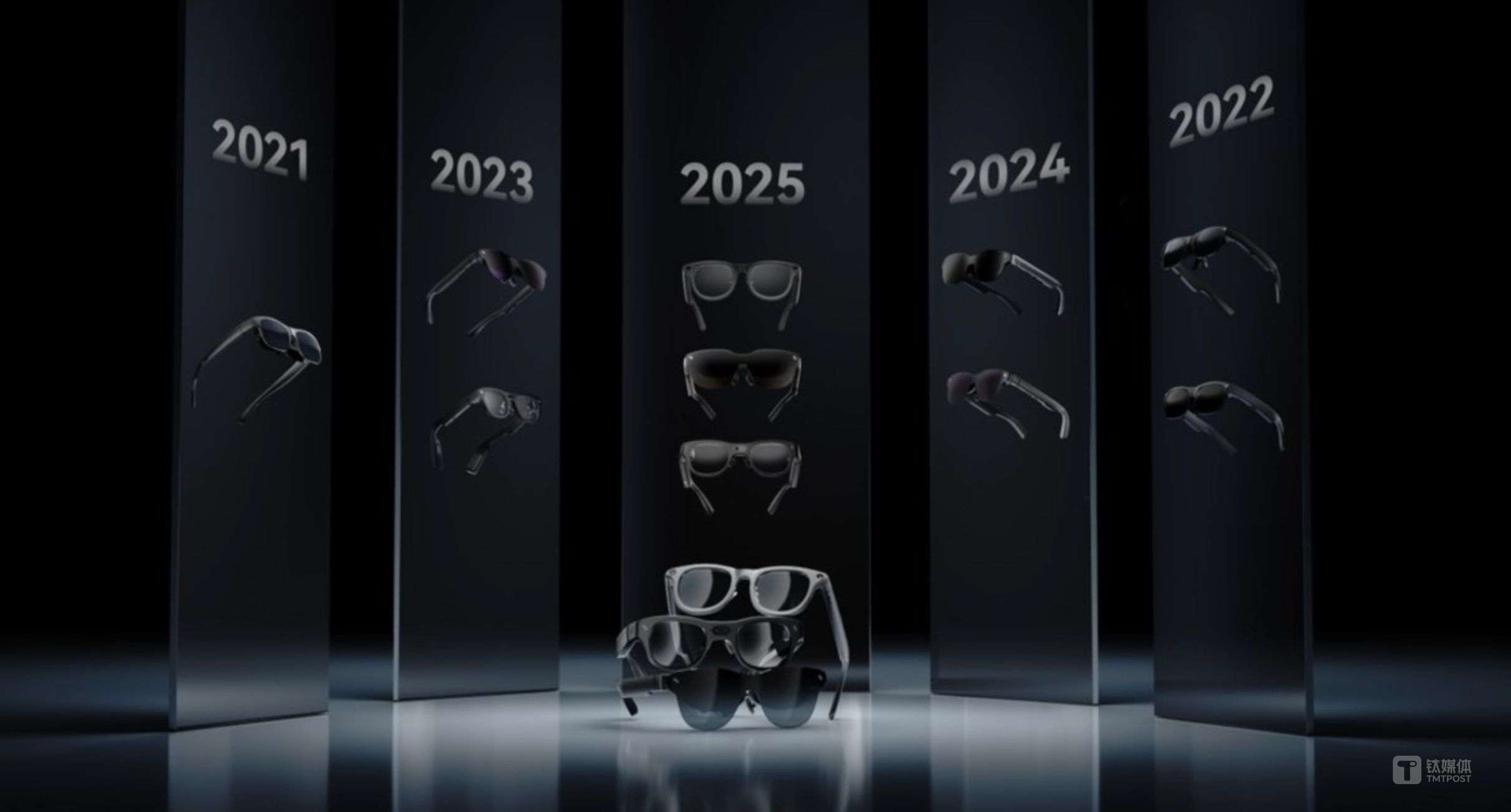
Founded in October 2021, Rayneo has focused on near-eye display optical design, proprietary AI algorithm development, and multimodal human-computer interaction. Its product portfolio includes the AI+AR X series glasses, media-focused Air series, and AI camera-enabled V series. The company claims it is the only firm to have achieved mass production of full-color Micro LED AR glasses, positioning itself at the forefront of hardware innovation in the sector.
Rayneo’s chief executive, Li Hongwei, highlighted the convergence of AI and AR technologies as a key driver for the emergence of smart glasses as a potential next-generation computing interface, comparable to the role smartphones have played over the past decade.
According to Li, advancements in optics, AI, spatial computing, and chip design are central to the development of intelligent eyewear capable of interacting with the physical environment.
Despite the growth in financing and product development, the AI+AR glasses market remains relatively small, with only a few companies, including Meta, achieving sales exceeding one million units. Analysts note that in the early stages of new hardware adoption, distribution channels and user experience are critical to wider market penetration.
Ten years ago, telecom operators were instrumental in driving the adoption of smartphones in China. Industry observers see a similar dynamic emerging for AR glasses, as China Mobile and China Unicom leverage their retail networks and infrastructure to support the rollout of Rayneo devices. The telecoms’ investment also reflects confidence in smart glasses as a potential “next-generation smartphone,” capable of serving as a central interface for AI-powered services.
Government policy is also supporting AR adoption. A recently released notice on large-scale equipment upgrades and consumer electronics trade-in programs for 2026 includes smart glasses for the first time, offering subsidies of up to 15% of the retail price, with a maximum of 500 yuan (around $70) per device. Officials expect these measures to further stimulate demand and accelerate market expansion.
Rayneo said its new eSIM-enabled AR glasses, the X3 Pro Project eSIM, will be launched at the CES 2026 exhibition. The device features a dual-eye full-color display, a 2-gram increase over its predecessor, and an integrated eSIM module compatible with 4G networks. The company said the glasses can operate independently of a smartphone, enabling voice calls, AI-assisted multimodal interactions, online media streaming, cloud-based photo and video storage, and real-time translation services.
As of mid-2025, Rayneo products were available in over 25 countries, with a cumulative user base exceeding 500,000. Market data from Counterpoint Research indicated that Rayneo captured a 24% share of the global AR glasses market in the third quarter of 2025, ranking first in shipments.
In addition to Rayneo, other Chinese technology giants have entered or are preparing to enter the AI+AR glasses market. Alibaba and Baidu have launched devices in the sector, while ByteDance is reportedly planning its first AI-enabled glasses release in 2026. The increasing number of competitors has led some media to refer to the market as a “hundred-glasses battle,” although Rayneo’s CEO described such portrayals as exaggerated, noting that industry consolidation is likely to favor early leaders.
Li emphasized that the development of a commercially successful AR glasses ecosystem requires a combination of hardware, software, and channel integration. Rayneo has focused on building its proprietary ACE research framework, which integrates environment-based data collection, AI-driven world modeling, and multimodal embodied interaction, to improve device intelligence and enable more realistic interaction with physical surroundings.
Li said that Rayneo is investing in cultivating cross-disciplinary talent, combining expertise in AI, robotics, optics, ergonomics, and human-computer interaction. The company aims to integrate this talent into both its product development and long-term educational partnerships with universities, drawing on China’s established research capabilities and manufacturing base.
The company’s funding and strategic partnerships are seen as part of a broader effort to accelerate the commercialization of AR technology, expand international markets, and position China as a potential leader in next-generation computing interfaces.
Analysts note that the success of Rayneo and similar ventures could determine the trajectory of smart glasses adoption worldwide, with implications for both hardware design and software development in AI-enhanced spatial computing.



 快报
快报
根据《网络安全法》实名制要求,请绑定手机号后发表评论