






TMTPOST -- Google's latest artificial intelligence (AI) image model addresses longstanding industry challenges in text accuracy and professional-grade editing capabilities. Powered by the tech giant's most advanced reasoning system, the rollout signals intensifying competition with OpenAI as both companies race to monetize generative AI technology.
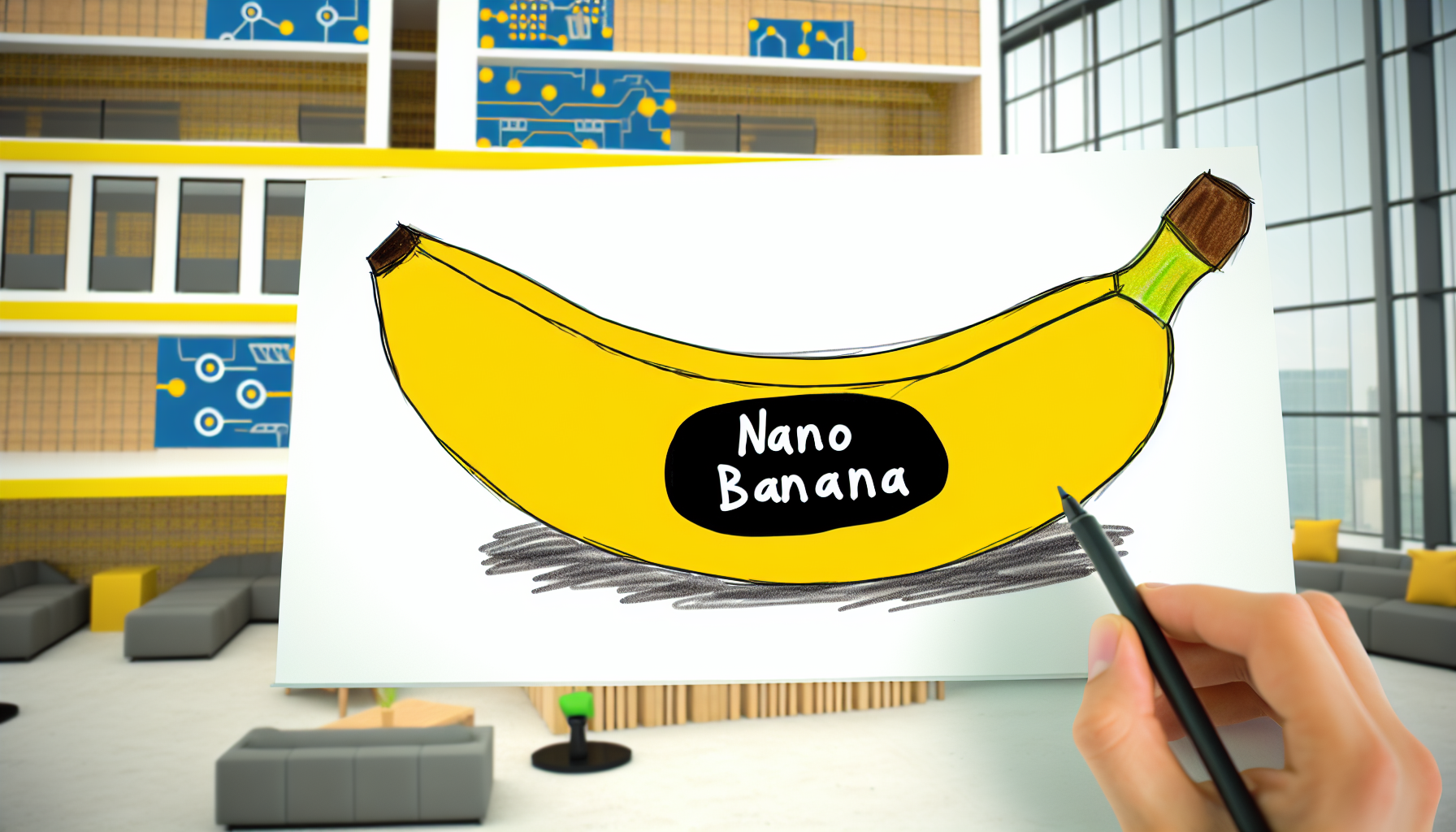
AI Generated Image
The search giant unveiled Nano Banana Pro on Thursday, built on the Gemini 3 model released just two days earlier. The new image generation and editing tool offers enhanced text rendering, higher resolutions up to 4K, and expanded control over visual elements—features designed to appeal to both consumer users and professional designers. Google said the update addresses AI's persistent "spelling problem," where models frequently produce distorted text or typos in generated images.
Nano Banana Pro is immediately available across Google's product ecosystem, with free Gemini users receiving limited quotas before reverting to the older model. Paid subscribers to AI Pro and Ultra plans will access higher generation limits. The model integrates with popular design platforms including Canva, Figma, and Adobe Inc.'s Firefly and Photoshop, positioning Google's technology within existing professional workflows.
The announcement follows strong market reception to Tuesday's Gemini 3 launch, which pushed Alphabet shares to record highs on Wednesday. Google's Gemini app currently has over 650 million monthly active users, though it trails OpenAI's ChatGPT, which reported 800 million weekly users in October. The competitive dynamic intensified last week when OpenAI updated its GPT-5 model for more conversational interactions.
Studio-Quality Control for Professional Applications
Nano Banana Pro delivers what Google describes as "studio-quality levels of precision and control" through enhanced planning of text placement, font characteristics, and spatial relationships. A Google spokesperson said the model maps these elements before rendering the final image, enabling applications from transforming recipes into illustrated flowcharts to visualizing real-time data like weather or sports information.
The tool supports generation at 1K, 2K, or 4K resolution, addressing previous limitations where models capped at 1024 x 1024 pixels. Users can specify camera angles, depth of field, color grading, and aspect ratios through text prompts, mimicking professional photography controls. The model can maintain consistency of up to five characters and incorporate up to 14 reference objects in a single workflow—capabilities particularly relevant for brands developing marketing campaigns with specific design assets.
Josh Woodward, vice president of Google Labs and Gemini, told CNBC that internal users have experimented with inputting code snippets and LinkedIn resumes to create infographics. "This ability to visualize things that were previously maybe not something you would think of as a visual medium tends to be one of the magic things people are finding with it," he said.
The original Nano Banana, launched in late August, added 13 million new Gemini app users in four days after going viral for creating hyperrealistic 3D figurines from photos. Nano Banana Pro extends those capabilities with multi-language text generation, translation of text within images, and the ability to generate localized content for international markets.
Pricing Structure and Platform Integration
Google disclosed Nano Banana Pro costs $0.139 for each 1080p or 2K image, , and $0.24 for every 4K image, compared to $0.039 per 1024px image for the original model. The company acknowledged the new model is slower and more expensive but emphasized enhanced quality justifies the premium for professional applications.
The model is accessible through the Gemini API, Google AI Studio, and the company's new IDE, Antigravity. Workspace customers can use it within Google Slides and Vids. Ultra subscribers will gain access in Flow, Google's AI filmmaking tool. The widespread integration reflects Google's strategy to embed AI capabilities across its product portfolio rather than offering standalone tools.
Developers and enterprise users can tap Nano Banana Pro immediately, while consumer access varies by subscription tier. Woodward said demand for Gemini's subscription plans has grown as users seek "higher limits with some of these advanced models," adding that high demand represents "the best problem to have."
Limitations and Watermarking Safeguards
Google cautioned that Nano Banana Pro retains limitations despite improvements. The company said users should verify data-driven outputs, as the model's real-world knowledge "is extensive but not infallible" and may produce factually incorrect results in infographics or annotated diagrams. Advanced features like masked editing, dramatic lighting changes, or blending multiple images may sometimes yield unnatural results or visual artifacts.
The model can struggle with grammar, spelling, cultural nuances, and idiomatic phrases in non-English languages. Small faces, accurate spelling, and fine details in images remain challenging, and character consistency, while improved, is not yet fully reliable, Google acknowledged.
As part of Thursday's announcement, Google embedded SynthID technology in the Gemini app, allowing users to upload images and determine if they were generated by Google AI. The company plans to expand this capability to audio and video. Google embeds imperceptible digital watermarks on all AI-generated media, with visible watermarks on images created by free and Pro tier users. Ultra subscribers receive content without visible watermarks.
The company did not indicate whether it will support other watermarking standards such as C2PA, which has gained industry backing for authenticating digital content provenance.
 快报
快报
根据《网络安全法》实名制要求,请绑定手机号后发表评论