






TMTPOST -- The United States and Saudi Arabia signed a Strategic Artificial Intelligence (AI) Partnership on Wednesday, marking the latest in a series of landmark agreements announced following President Donald Trump's meeting with Crown Prince Mohammed bin Salman. The partnership establishes a framework for advanced semiconductor supply, AI infrastructure development, and expanded investment flows between the two nations.
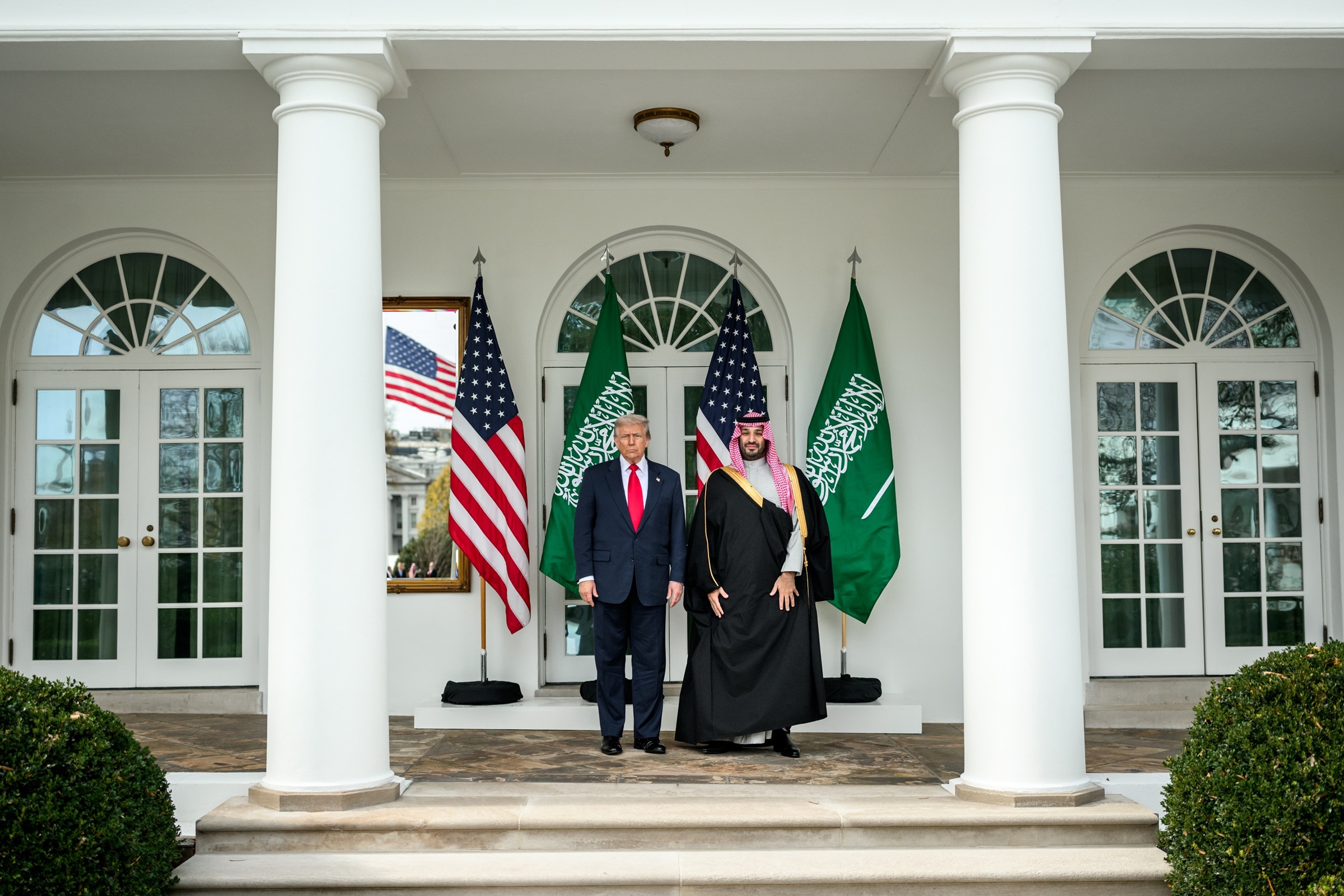
Credit:the White House
The Strategic AI Partnership encompasses advanced semiconductor supply, AI application development, infrastructure construction, and capability building. According to the joint statement, the partnership capitalizes on Saudi Arabia's available land, energy resources, and geographic location to build AI technology clusters serving local, regional, and global demand for AI and cloud computing services.
The agreement leverages the United States' technology ecosystem as an engine for economic growth. Both sides highlighted the partnership's potential to strengthen economic relations between Saudi and American companies in developing solutions across critical industries including health, education, energy, mining, and transportation.
The AI pact was unveiled by U.S. Secretary of State Marco Rubio and Saudi Foreign Minister Prince Faisal bin Farhan bin Abdullah Al Saud one day after Trump and the crown prince met in Washington. During Tuesday's Oval Office meeting, Mohammed bin Salman pledged to increase Saudi investment commitments in the U.S. to $1 trillion, up from $600 billion promised in Trump’s trip to Riyadh in May, though the scale and timeline of the commitment remain unclear.
The $1 trillion investment figure equals Saudi Arabia's entire gross domestic product (GDP), raising questions among economists about feasibility and enforcement mechanisms. Experts noted that similar pledges have become regular features of international diplomacy without clear implementation paths.
Signage at a Saudi-U.S. investment summit in Riyadh placed the cumulative total of actual deals at over $300 billion, creating discrepancies with the headline figure. Paul Donovan, chief economist at GBS Global Wealth Management, noted that such pledges have become regular features of the international landscape, even when there's no enforcement mechanism available.
"To put the Saudi pledge in context, that is the equivalent of almost an entire year's GDP for the kingdom," Donovan said Wednesday. "The pledge may not therefore be honored in the near term."
Trump defended the figure, saying "If you take a look at other presidencies, they wouldn't do $1 trillion, sometimes in years. We did this in essentially two months." The president has cast himself as America's dealmaker-in-chief, prioritizing foreign direct investment as evidence of his economic leadership.
The White House on Tuesday released details of multiple deals spanning defense, energy, and technology sectors. These include U.S. defense sales valued at nearly $142 billion, agreements on civil nuclear cooperation, critical minerals collaboration, and the potential sale of F-35 fighter jets to Riyadh. The agreements represent Trump's transactional approach to foreign policy, prioritizing economic ties as a pathway to security cooperation.
Under the deal, several major U.S. technology companies committed to investments. Google, Oracle, Salesforce, Advanced Micro Devices, Uber Technologies, and Saudi-based DataVolt will invest $80billion in transformative technologies in both countries. DataVolt is moving forward with plans to spend $20 billion on AI data centers and energy infrastructure in the U.S., according to the White House.
The investment package includes U.S. defense sales valued at nearly $142 billion, providing Saudi Arabia with equipment ranging from Air Force capabilities to maritime security and communication services from over a dozen U.S. defense firms. The White House announced that Trump approved a major defense sale package, including future F-35 deliveries, though no details were provided on the number of planes or delivery timeframe.
Saudi Arabia reportedly seeks to buy as many as 48 F-35 stealth fighter jets in a multibillion-dollar deal. Israel, currently the only Middle East country with F-35s, has expressed concerns that such a sale would jeopardize its air superiority in the region. Bradley Bowman, senior director at the Foundation for Defense of Democracies, said Washington should address concerns about Riyadh's relationship with China and demand that Saudi Arabia first normalize relations with Israel before receiving F-35s.
Trump and the crown prince signed a Strategic Defense Agreement that strengthens the 80-year defense partnership and includes burden-sharing funds from Saudi Arabia to defray U.S. costs. The president also secured an agreement for Saudi Arabia to purchase nearly 300 American tanks.
Energy deals feature prominently in the package. GE Vernova Inc. will export natural gas turbines and other equipment totaling $14.2 billion. Boeing Co. is set to export $4.8 billion worth of 737-8 passenger aircraft for Saudi Arabia-based AviLease.
The U.S. and Saudi Arabia signed a Joint Declaration on the Completion of Negotiations on Civil Nuclear Energy Cooperation, building the legal foundation for a decades-long, multi-billion-dollar nuclear energy partnership. The agreement confirms that the United States and American companies will be the Kingdom's civil nuclear cooperation partners of choice and ensures cooperation will be conducted consistent with strong nonproliferation standards.
The two nations also signed a Critical Minerals Framework, deepening collaboration to diversify critical mineral supply chains. The agreement aligns with similar deals Trump secured with other trading partners to safeguard America's supply chain resilience for essential minerals.
Additional investments touch other sectors. Saudi Arabia's Shamekh IV Solutions plans to spend $5.8 billion, including on a Michigan plant to produce intravenous fluids addressing global shortages. Investment funds will channel capital into American energy, aerospace, and sports sectors.


 快报
快报
根据《网络安全法》实名制要求,请绑定手机号后发表评论