






TMTPOST -- Robots may still be far from “truly working” autonomously, but their makers are increasingly betting that affordability will accelerate adoption. Across China, a wave of price cuts is reshaping the humanoid robotics market, aiming to bring machines from laboratory demos and exhibition halls into homes, schools, and light industrial settings.
Unitree Robotics, a pioneer in full-size and non-full-size humanoid robots, has been at the forefront of the price revolution. The company first drew national attention with its full-size Unitree H1 robot, which appeared at the Spring Festival Gala and once sold for as much as 650,000 yuan.
Following the H1, Unitree introduced the G1 robot, a non-full-size humanoid priced at 99,000 yuan—a record low for the industry at the time. In July 2025, the company pushed prices further with the release of the Unitree R1, starting at 39,900 yuan, making humanoid robotics more accessible than ever.
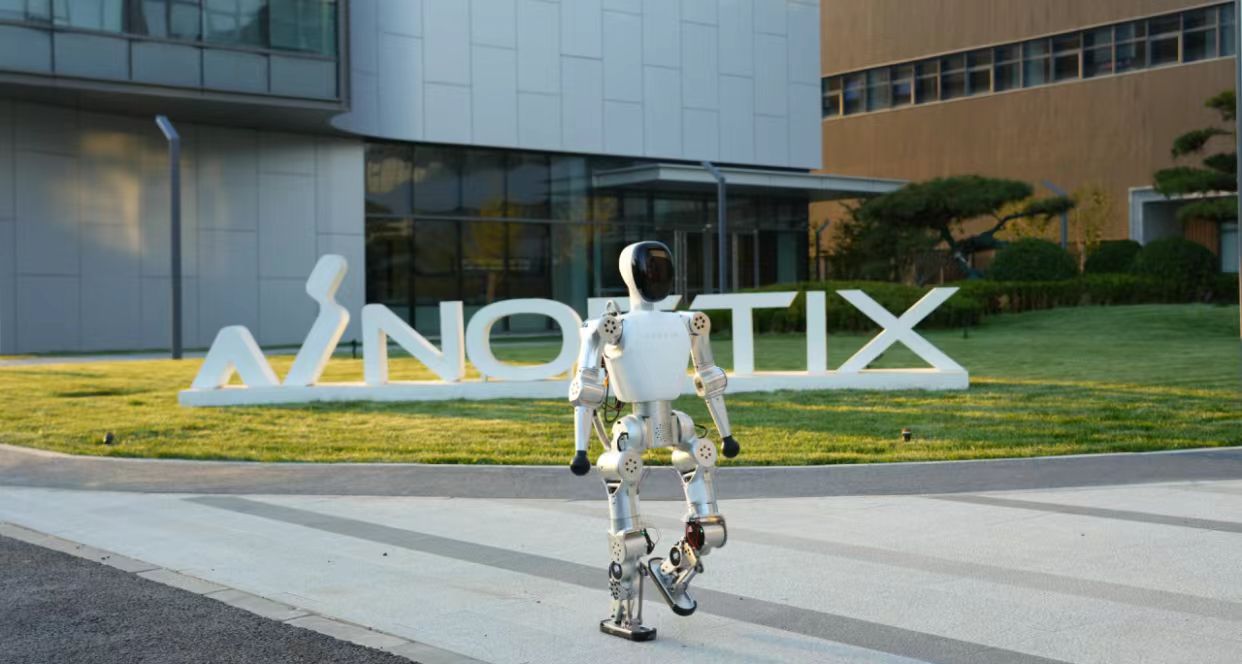
The ripple effect was immediate. In October, Booster Robotics launched the Booster K1 at 29,900 yuan, selling out its first batch in just 20 minutes. Around the same period, Noetix Robotics unveiled the Bumi robot, starting at 9,998 yuan.
Bumi is targeted at tech enthusiasts, young programmers, and home users, while also supporting educational institutions with kits and curriculum solutions. Within three months, price reductions had swept nearly the entire consumer and educational robotics sector.
The push for lower prices is not just about undercutting competitors—it reflects a strategic effort to broaden the market. Jiang Qingsong, partner and Senior Vice President at AgiBot, recalled that two years ago, nearly all robots were full-size models around 1.7 meters tall, with prices often exceeding 400,000 yuan. Such cost barriers kept most potential users out of reach.
Today, the market is stratified by size and function: robots under 1 meter are typically priced below 100,000 yuan; mid-sized robots around 1.3 meters range from 100,000 to 300,000 yuan; and full-size robots above 1.7 meters remain in the 300,000 to 500,000 yuan range.
Functionality scales with price, but the segmentation has created a perception that robots are becoming more affordable. “From a practical perspective, the cost of robots entering factories and households has not actually decreased,” Jiang said.
Noetix Robotics' Bumi illustrates the trade-offs. Standing 94 cm and weighing roughly 12 kg, the robot has 21 degrees of freedom and is designed primarily for educational and companion scenarios.
Noetix Robotics founder Jiang Zheyuan explained that Bumi’s low price is achieved through a combination of lightweight composite materials, in-house development of key components, and tight control over gross margins. “When the industry maintains high gross margins for long periods, it’s unhealthy. Price reductions will support wider adoption and public understanding of humanoid robots,” he said.
Unitree’s R1, priced above the Bumi, offers more advanced functionality. Weighing 25 kg with 26 joints, it integrates multimodal voice and image models, supports development and customization, and demonstrates agile movements including somersaults, running, punching, and walking on hands. Its limitations—about one hour of battery life and a 3 kg payload—make it suitable for demonstration, education, and interactive scenarios rather than industrial labor.
Beyond price cuts, companies are innovating business models to accelerate adoption. AgiBot, in partnership with Hangzhou Feikuo Technology and Shanghai Electric Financial Group, launched China’s first robotic leasing ecosystem. It offers flexible financing, including zero-down payment and interest-subsidized leasing, enabling users to access robots for performances, store greetings, and guided tours without upfront costs.
AgiBot has also built two developer platforms: Lingchuang and Lingxin. Lingchuang, a zero-code content creation platform, allows users to convert video of human movements into robot actions without programming skills. Its group-control feature supports synchronized performances across multiple robots, enabling complex choreographies.
Lingxin focuses on “personification,” allowing robots to exhibit human-like personality traits, emotions, and expressions. Together, the platforms aim to make robots more interactive, engaging, and adaptable to real-world environments.
Unitree Robotics is pursuing similar accessibility innovations. In November 2025, the company unveiled a full-body teleoperation platform that enables robots to replicate complex human actions, from soccer kicks to staff twirling and boxing, as well as everyday tasks like washing dishes, cleaning, folding clothes, and delivering water.
While these operations currently rely on real-time human control, they provide a bridge to autonomous functionality by collecting data to train the robot’s “brain.” The platform also has industrial applications in hazardous environments, such as nuclear power maintenance and high-temperature steel plants.
Industry observers see 2025 as a turning point for humanoid robots, with annual sales expected to surpass 10,000 units. As production scales and supply chains mature, unit costs are likely to fall further, expanding adoption into homes, schools, and light industrial settings. Price reductions, strategic financing options, and innovations in teleoperation and developer platforms are collectively lowering the barrier to entry for humanoid robotics.
Yet, challenges remain. Current robots still rely heavily on human operators for complex tasks, and limitations in battery life, payload, and tactile feedback constrain broader industrial deployment. For now, the focus is on education, demonstration, and controlled applications. As technology and mass production improve, the gap between experimental demonstrations and practical deployment is expected to narrow.

 快报
快报
根据《网络安全法》实名制要求,请绑定手机号后发表评论