






TMTPOST -- Samsung has once again poked fun at Apple in a new Galaxy Z Fold7 commercial. The ad mocked the iPhone’s inability to stand steadily on a table, contrasting that with Samsung’s foldable, which can sit upright and even split the screen to play two videos at once.
The jab underscores a reality that has long frustrated Apple fans: while every major smartphone brand has already launched foldable models, Apple has yet to respond. That gap won’t last forever. Multiple reports suggest Apple is preparing its first foldable iPhone for a 2026 debut. Analysts say the move could trigger a major reshuffle in the global smartphone market, accelerate adoption of foldable technology, and shift the basis of competition from hardware innovation to software ecosystems.

Six years after they first appeared, foldable smartphones are regaining momentum. According to IDC, global foldable shipments are expected to reach 19.83 million units in 2025, up 6% year over year. By 2029, shipments are forecast to climb to 27.29 million units, representing a five-year compound annual growth rate of 7.8%.
Those numbers may look modest compared to the explosive double-digit growth of early years. But in a smartphone market that has struggled with stagnation, foldables are delivering something the industry desperately needs: growth in the high end, where margins are richer.
“Foldables are no longer just flashy prototypes—they’ve matured into legitimate premium devices,” said IDC Asia-Pacific Senior Research Manager Huang Zixing. “For manufacturers, they are the fastest way to push into higher price tiers and elevate brand positioning.”
Chinese smartphone makers have been particularly aggressive. Advances in hinge design, display durability, weight reduction, and slimmer form factors have improved consumer perception. That, in turn, has fueled higher adoption, especially in markets like China, now the world’s largest foldable smartphone market.
In the first half of 2025, shipments of foldable phones in China reached 4.98 million units, up 12.6% year over year and representing nearly half the global market. IDC projects China will maintain more than 40% of global foldable sales over the next five years.
Two dynamics are driving China’s dominance, according to Huang. “First, Chinese brands need foldables to build premium global images. Second, consumer purchasing power is strong in China’s high-end segment. That’s why China, the U.S., and South Korea are the top three markets for foldables, even though India is larger overall in unit shipments.”
Although the 12.6% growth is slower than previous years, the rebound is notable when compared with the 0.1% growth in late 2024. On China’s e-commerce platform What’s Worth Buying, foldable phone sales topped 30 million yuan ($4.1 million) by mid-July. Larger foldables are especially popular, with average transaction prices holding steady around 7,000 yuan ($960).
The secondhand market is also heating up. Data from Zhuanzhuan shows foldable phone transactions jumped 73% year-on-year between January and August. The most popular used devices were Xiaomi’s MIX Flip, Huawei’s Mate X5, and vivo’s X Fold 3.
Still, Huang cautioned that growth is being led more by manufacturers than by end-user demand. “The foldable market remains closely tied to launch schedules. It’s supply-driven, not demand-pulled, at least for now,” he said.
Huawei vs. Samsung: Leading the Race, Betting on Tri-Folds
While nearly every major brand has a foldable lineup, profitability remains elusive. Honor’s former CEO Zhao Ming has said publicly that the company lost 2–3 billion yuan ($280–420 million) on foldable development, adding that its Magic V Flip would need sales of at least one million units to break even. Vivo executives have also acknowledged continued subsidies for its foldable products.
That leaves Samsung and Huawei as the dominant players—and the only ones consistently launching profitable foldable lines. Combined, they controlled 58% of the global foldable market in 2024, with Samsung at 34% and Huawei at 24%. If not for overseas restrictions, Huawei’s share would likely be higher; the company already owns 75% of China’s foldable market, shipping 3.74 million units in the first half of 2025. Huawei has also surpassed 10 million cumulative foldable shipments, the first Chinese brand to do so.
Both companies are pushing the envelope. Samsung has been focused on making its devices thinner and lighter, while Huawei is experimenting with entirely new form factors. Its tri-fold device, priced above 10,000 yuan ($1,370), shipped nearly 500,000 units in its first six months, proving there is demand at the ultra-premium end. Huawei’s upcoming Mate XTs will extend that momentum.
Samsung isn’t far behind, with leaks suggesting its own tri-fold will launch later this year. Analysts expect the head-to-head battle to push innovation in foldables even further upmarket.
But for now, most competitors remain on the sidelines. “Tri-folds are still very early stage,” said Huang. “Samsung and Huawei lead because they can take the risks. But other brands are prioritizing profitability in uncertain economic times.”
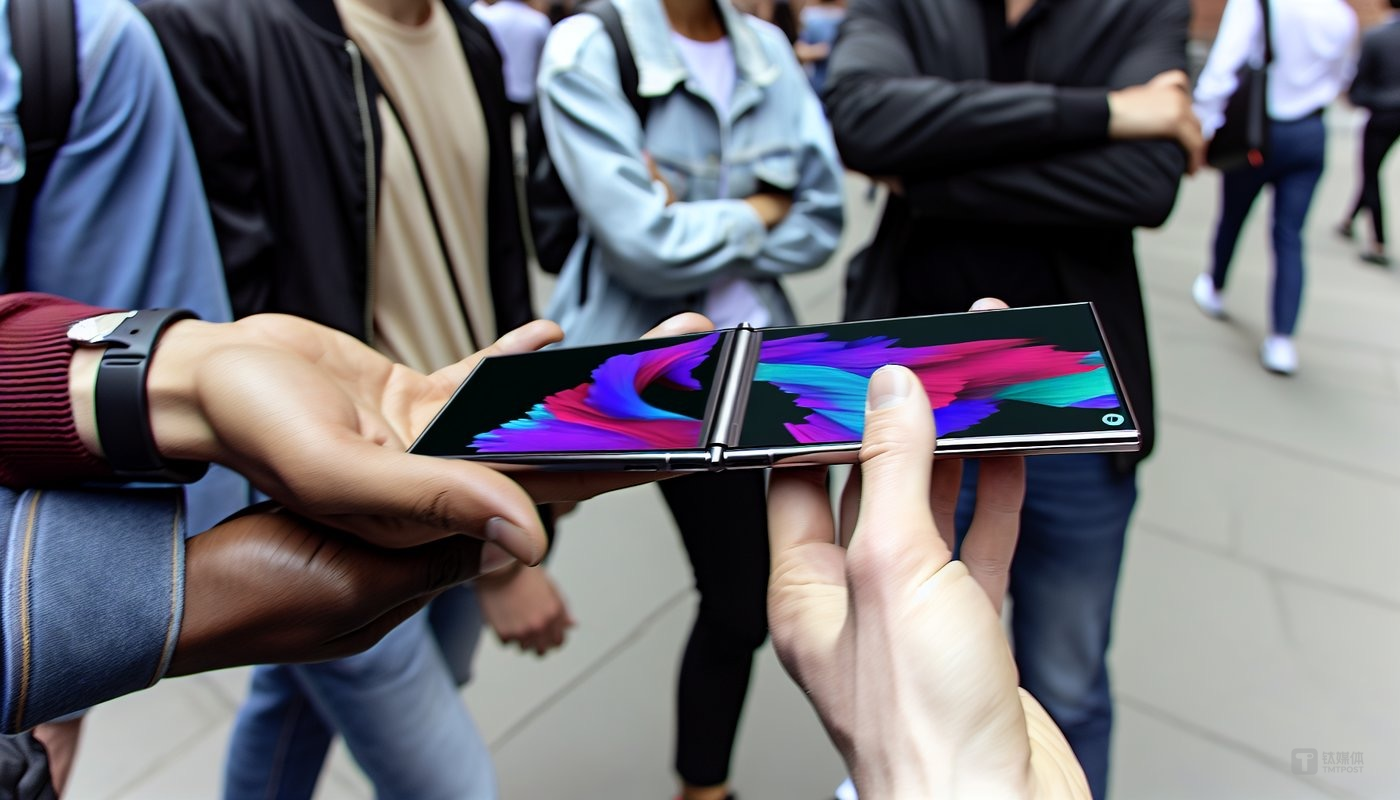
Apple’s Entry Could Redefine the Industry
In the smartphone world, Apple has a unique role: it doesn’t just compete, it defines the market. When Apple finally introduces a foldable iPhone in 2026, it could change the trajectory of the entire segment.
Reports suggest the device, tentatively dubbed the iPhone Fold, will feature a new in-cell touch sensing layer that minimizes screen creases, Apple’s self-designed C2 baseband chip, four cameras, eSIM support, and Touch ID integration. Industry insiders expect Apple to launch in major markets first—North America, China, Japan, and Western Europe—before expanding globally.
Apple’s entry could turbocharge demand. Even at a steep price point, analysts say loyal Apple users will flock to the foldable model. That could immediately expand the global foldable market by tens of millions of units annually.
“Samsung leads in volume, but much of that comes from mid- and low-end models,” said one analyst. “Apple dominates the high end. If it moves into foldables, the segment’s value pool could double almost overnight.”
Despite the hype, not everyone is convinced Apple’s first foldable will be a blockbuster. Some analysts compare it to the Vision Pro headset—more of a technology exploration and ecosystem play than a mass-market device.
“The first generation of Apple foldables is likely to prioritize brand positioning and technology validation,” said Huang. “Whether it reshapes the industry depends on pricing and whether Apple can deliver a killer application.”
Software may be Apple’s ace card. Foldables today still lag traditional smartphones in software optimization. Apple, with its track record of tight hardware-software integration, could close that gap quickly. Reports suggest iOS updates optimized for foldable screens will be unveiled at WWDC 2026, potentially setting a new benchmark.
Industry insiders believe the foldable segment is approaching an inflection point. With hardware advances in hinges, displays, and batteries now delivering “80 out of 100” performance, the next stage of competition will be defined by software.
“Foldables have reached a level where the hardware is good enough,” Huang said. “The differentiator going forward will be how software takes advantage of larger, flexible displays to deliver unique value.”
That dynamic plays directly to Apple’s strengths. As the company enters, the industry may shift to a “software-defined hardware” era—where apps, ecosystems, and user experience determine leadership more than screen creases or hinge durability.
The foldable phone market is small today, accounting for just 4% of smartphones priced above $600, according to IDC. But momentum is building, and Apple’s entry could accelerate it dramatically.
For Samsung, the recent Galaxy Z Fold7 ad jabbing at Apple underscores the competitive tension. Huawei, meanwhile, has proven that ultra-premium tri-folds have real demand. And Chinese brands continue to refine their offerings to climb the value chain.
By 2026, the market could look very different. Apple’s iPhone Fold might not just reshape consumer expectations—it could redefine how software and hardware evolve together in the smartphone industry.
As the next chapter unfolds, one thing is clear: foldables are no longer a sideshow. They are shaping up to be the next major battleground in global smartphones, with Apple preparing to once again set the rules of the game.

 快报
快报
根据《网络安全法》实名制要求,请绑定手机号后发表评论