







TMTPOST -- Chinese ride-hailing giant Didi reported solid growth in its second-quarter earnings, underscoring its push into new businesses beyond mobility as it ramps up investments in Latin America’s fast-growing food delivery market.
Didi said on Thursday that its core platform gross transaction value (GTV) for the second quarter of 2025 hit 109.6 billion yuan ($15.1 billion), topping the 100 billion yuan mark for the first time. International business contributed 27.1 billion yuan ($3.7 billion) in GTV, up 27.7% year over year at constant exchange rates.
The results show that Didi is not only regaining momentum in its core business after regulatory setbacks in China, but also leaning heavily on overseas markets for growth.
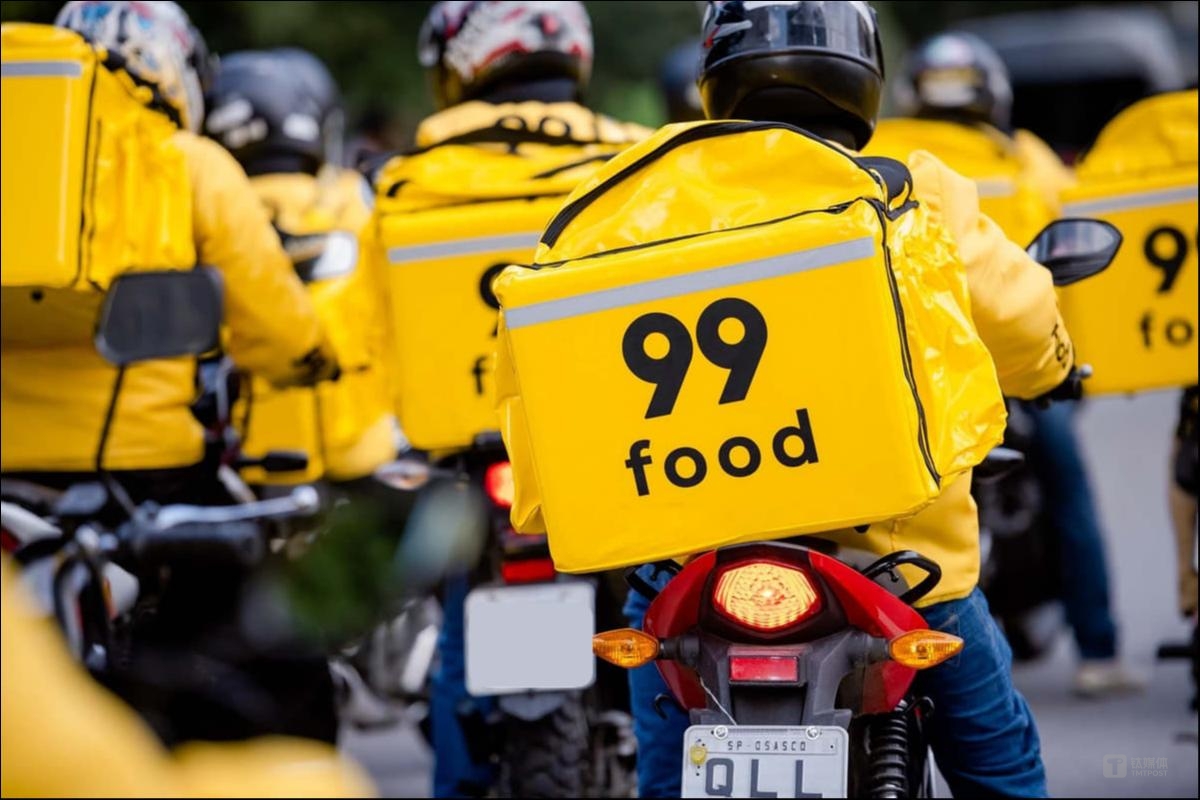
One of the most significant developments for Didi this year has been the relaunch of its food delivery business in Brazil through its subsidiary 99Food. The service, which restarted in April in Goiânia, quickly hit 1 million completed orders within just 45 days. By mid-August, 99Food expanded into São Paulo, Brazil’s largest city and the biggest metropolitan area in Latin America.
São Paulo represents a major milestone for Didi. The company plans to invest 500 million reais ($92 million) into the city, half of the 1 billion reais ($183 million) it pledged in April for Brazil’s food delivery market overall. According to the company, 99Food has already signed up more than 20,000 restaurants and over 50,000 delivery riders in São Paulo alone.
“São Paulo is a critical test for us. It’s the largest city in Brazil and a competitive environment, but also one of the most dynamic consumer markets in Latin America,” a Didi executive familiar with the plans said.
Didi’s entry pits it directly against local champion iFood, which controls about 80% of the market.
Didi’s Latin America expansion isn’t new. The company first entered the region in 2018 when it acquired Brazilian ride-hailing startup 99. Since then, Didi has grown into one of the largest players in Latin America’s ride-hailing and delivery ecosystem.
Today, the company operates in 14 countries globally, 10 of which are in Latin America. Brazil and Mexico remain its two biggest markets.
Didi now claims more than 55 million users in Brazil, with over 1.5 million registered drivers, including 700,000 motorcycle riders. Its dominant ride-hailing network naturally provides a base for building out food delivery services, where drivers can take on both passenger and food orders to improve efficiency.
“Food delivery fits seamlessly into our mobility ecosystem,” the Didi executive said. “We already have the scale, the drivers, and the users. What we’re doing now is connecting the dots.”
Part of Didi’s confidence in Brazil comes from its success in Mexico. Didi launched its food delivery service in Mexico in 2019, going head-to-head with Uber Eats. Within five years, Didi emerged as the market leader, capturing more than half the market.
Today, Didi Food in Mexico operates in over 70 cities, serving 30 million users. The platform has 500,000 active riders and partnerships with 90,000 restaurants.
Crucially, Didi has also bundled its food delivery service with ride-hailing and digital payments, offering membership discounts and cross-platform loyalty programs. That integrated approach has made it the only major platform in Mexico offering all three services.
“Mexico has been our blueprint,” the executive said. “We learned how to scale quickly, how to manage costs, and how to compete directly with Uber Eats. Those lessons are now being applied to Brazil.”

(Photo: 99Food delivery riders in Brazil)
Latin America is one of the fastest-growing food delivery markets worldwide. According to Euromonitor, the market grew 19% in 2023, second only to the Middle East. But at $37.9 billion, Latin America’s market is far larger than the Middle East’s $22.3 billion.
Brazil leads the region with a $20 billion market, followed by Mexico at $7.2 billion. Together, they account for more than two-thirds of Latin America’s food delivery industry.
The sheer size and growth prospects of the sector explain why Didi is pouring resources into Brazil, even in the face of a powerful incumbent like iFood.
Despite the opportunities, the Brazilian food delivery market is challenging. High delivery costs account for about 30% of an order’s value, while platform commissions can reach up to 27%. That has left restaurants, riders, and consumers frustrated with the lack of competition.
Didi is trying to disrupt the status quo with aggressive incentives. Users are being offered limited-time free delivery and discount coupons worth up to 99 reais ($18). Couriers who complete 20 orders, including at least five food delivery orders, are guaranteed a minimum income. And restaurants that joined before the end of June received two years of zero commission and service fees.
By leveraging its ride-hailing infrastructure, Didi also believes it can lower costs compared with pure delivery platforms. Its drivers can switch between passenger trips and food delivery orders, improving utilization and reducing idle time.
Industry analysts say this hybrid model could give Didi an edge, though breaking into São Paulo at scale will be difficult given iFood’s entrenched dominance.
For now, Didi’s second-quarter results underscore that international business is becoming increasingly important to its growth story. With more than a quarter of its GTV now coming from overseas markets, the company is betting that diversification beyond China will pay off.
Its Brazil relaunch will be closely watched not only as a test of its resilience in competitive markets, but also as a signal of how Didi plans to balance its core mobility business with new ventures.
If Didi can replicate its success in Mexico, its food delivery business could become a meaningful growth engine. But in Brazil, it faces a tougher battle—one that could define its place in Latin America’s digital economy for years to come.

 快报

根据《网络安全法》实名制要求,请绑定手机号后发表评论