







TMTPOST -- Nvidia CEO Jensen Huang said Friday the company is in discussions with the Trump administration about developing a new semiconductor for China, as Washington and Beijing seek a fragile balance between trade restrictions and access to critical technologies.
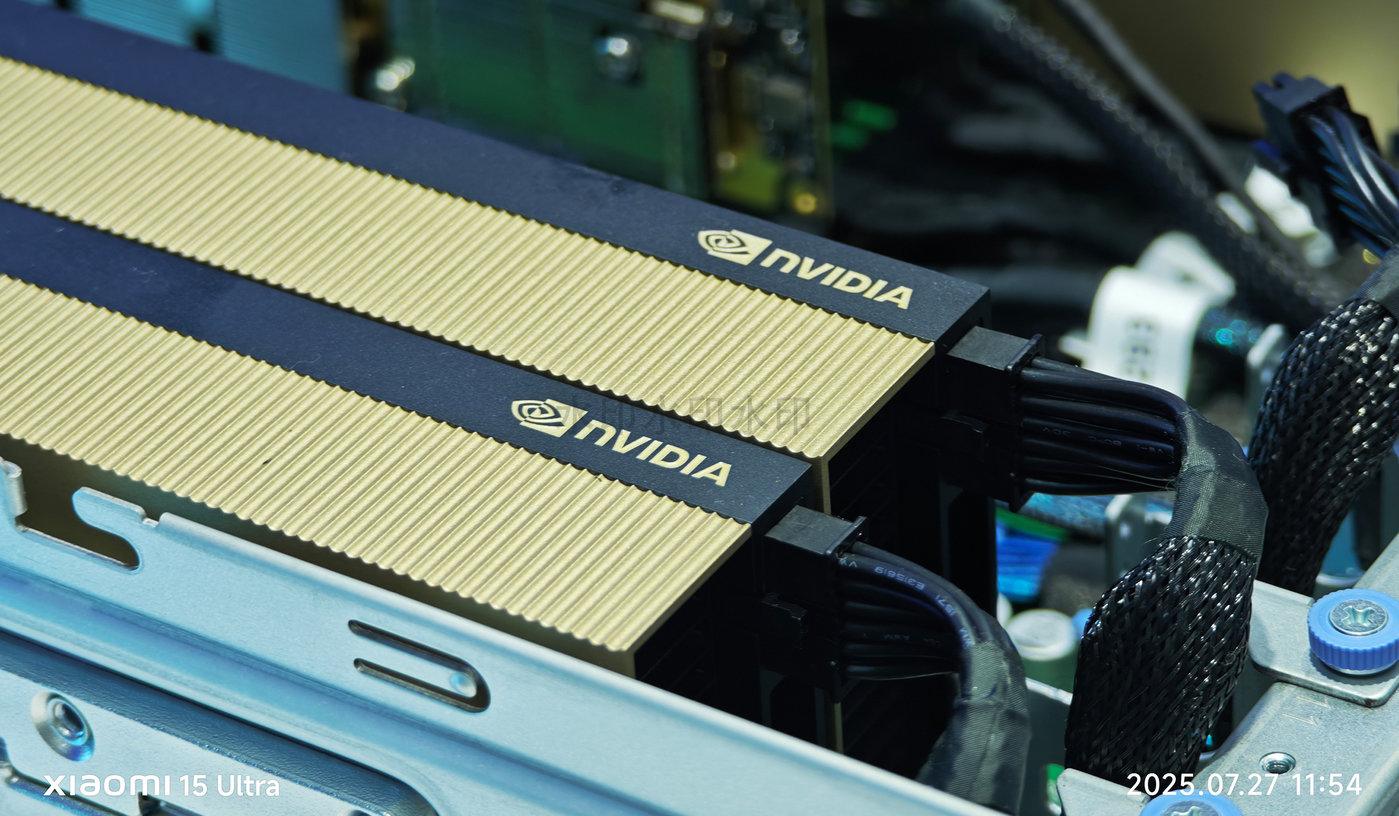
Huang was asked about reports of a potential “B30A” chip designed for artificial intelligence data centers in China, during a visit to Taiwan Semiconductor Manufacturing Co. (TSMC), Nvidia’s key production partner and the world’s largest contract chipmaker.
“I’m offering a new product to China for AI data centers, the follow-on to H20,” Huang said. “That’s not our decision to make. It’s up to, of course, the United States government. And we’re in dialogue with them, but it’s too soon to know.”
The proposed chip would be built on Nvidia’s Blackwell architecture, but would run at about half the speed of Nvidia’s B300 flagship processors, according to reports. Such graphics processing units, or GPUs, are the foundation of today’s AI boom, powering everything from large language models to image generators.
The U.S. has barred exports of Nvidia’s most advanced GPUs to China, citing national security risks, but allowed some lower-performing models to continue being sold.
Huang praised the Trump administration’s recent move to approve sales of Nvidia’s H20 chips to China after months of uncertainty, though the company must now pay a 15% tax to the U.S. government on those shipments. Rival chipmaker Advanced Micro Devices faces the same levy on its MI380 semiconductors bound for Chinese clients.
Huang declined to directly address the tariff but said Nvidia welcomed the opportunity to continue serving Chinese customers. “We very much appreciate the ability to ship H20s,” he said.
The approval came amid broader efforts by Washington and Beijing to stabilize trade relations. In recent weeks, China has granted more permits for rare earth magnet exports to the U.S., while Washington has relaxed curbs on certain chip design software and jet engines. Huang said he personally lobbied U.S. officials to allow H20 exports, describing them as posing no security threat.
“We have made very clear and put to rest that H20 has no security backdoors,” Huang said. “There are no such things. There never has been. And so hopefully the response that we’ve given to the Chinese government will be sufficient.”
Still, tensions remain. The Cyberspace Administration of China recently published a notice citing alleged “serious security issues” in Nvidia’s products. The watchdog claimed U.S. experts had pointed to “mature tracking and location and remote shutdown technologies” embedded in Nvidia’s chips and demanded additional documentation.
Huang said Nvidia was taken aback by the accusation and is in ongoing discussions with Chinese regulators. “As you know, they requested and urged us to secure licenses for the H20s for some time. And I’ve worked quite hard to help them secure the licenses. And so hopefully this will be resolved,” he said.
Unconfirmed reports suggest Beijing’s discontent may have been fueled by recent remarks from U.S. Commerce Secretary Howard Lutnick. In an interview with CNBC, Lutnick said Washington’s strategy was to keep China dependent on American chip supplies by limiting what level of technology can be sold.
“We don’t sell them our best stuff,” Lutnick said. “Not our second best stuff. Not even our third best. But I think fourth best is where we’ve come out that we’re cool.”
China has made technological self-reliance a cornerstone of its national development strategy, but still relies heavily on foreign intellectual property and advanced tools for semiconductor production. Nvidia, meanwhile, derives about a fifth of its revenue from China, leaving it exposed to shifting U.S. export controls and Beijing’s regulatory scrutiny.
As the company pushes to balance compliance with U.S. restrictions and maintain its Chinese market share, Huang signaled that dialogue with both governments remains critical. “We’re working very hard with both sides to find a path forward,” he said.


 快报

根据《网络安全法》实名制要求,请绑定手机号后发表评论