







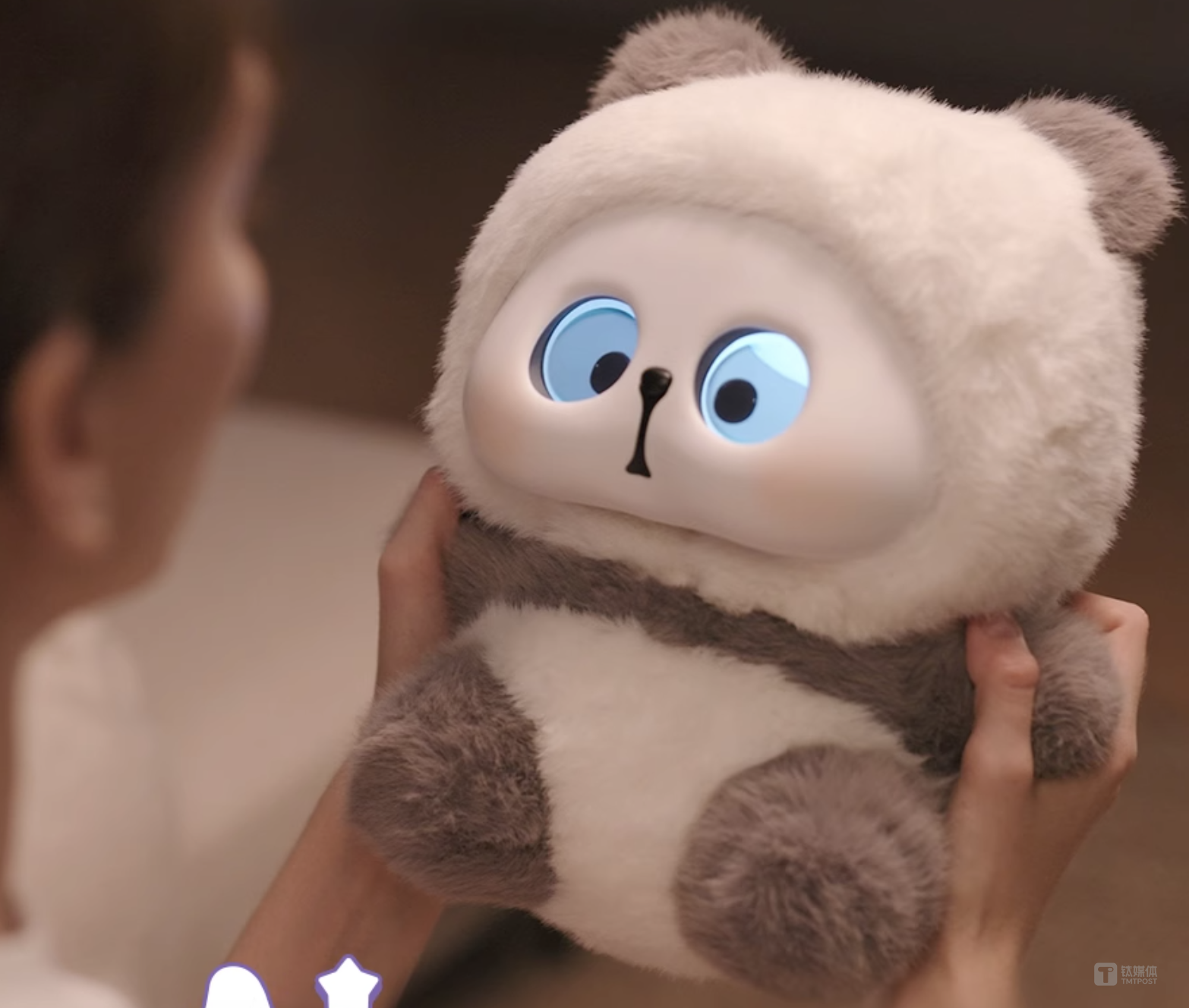
TMTPOST -- In the swelling tide of AI hardware innovation, a quiet revolution is taking root in the world of consumer companionship: AI-powered toys. Once the domain of novelty gadgets, these emotionally responsive dolls, pets, and robots are now at the forefront of a growing industry that’s drawing attention — and dollars — from tech giants and venture capitalists alike.
“This is one of the few AI hardware categories where the barrier to entry remains relatively low,” said one investor focused on the sector. “But make no mistake — 80% of new startups won’t make it past next year.”
At the heart of this surge is a shift in consumer psychology. The growing demand for emotional companionship, especially in the wake of global social shifts, has created fertile ground for AI-enhanced products designed to soothe, listen, and engage — without judgment or care requirements.
According to Ark Invest, the global AI companion robot market is projected to soar from $13.4 billion today to as much as $150 billion by 2030, growing at a staggering 200% to 236% CAGR.
Big Tech Bets on the “Loneliness Economy”
Major players are moving quickly. Elon Musk’s xAI recently launched an AI girlfriend service priced at $30 per month. OpenAI has partnered with Mattel — maker of Barbie and UNO — to infuse its toys with conversational AI. China’s TOYCITY and Ropet are also gaining traction, with the latter surpassing $1 million in crowdfunding sales earlier this year.
In China alone, the AI toy market is projected to hit 60 billion yuan ($8.3 billion) in 2025, accounting for nearly 30% of the global total.
Still, beneath the hype lies a set of thorny challenges. There’s little industry consensus on what an AI toy should do — or even what qualifies as one. Are these tools for education? Emotional support? Digital friends? The answer is still evolving, and many early products are falling short of user expectations.
“From a consumer standpoint, the toys are either too expensive or not ‘smart’ enough,” said Du Yu, an investment director at a Chinese venture firm. “What we’re seeing now is more like collectible toys with AI stickers slapped on — not true interactive companions.”
Return rates echo that reality. Industry insiders say that AI toys are being returned at rates similar to those of AI glasses, a category that has struggled to gain consumer traction despite interest from Meta and Xiaomi.
Despite this, momentum continues to build. Nearly 100 venture firms have already placed bets on the AI toy space, according to IT Juzi. CICC, one of China’s leading investment banks, sees the “loneliness economy” — which includes aging populations, single households, and socially isolated individuals — as a critical tailwind for the industry.
In addition, younger generations of parents are proving more willing to pay premiums for AI-driven companionship products that also serve educational or interactive functions.
The next generation of AI toys isn’t just about novelty. Ropet’s CEO He Jiabin says true breakthroughs will come from designs that evoke life-like presence. “The key is giving robots a sense of life — not just function,” he said.
TOYCITY, a leading designer toy brand, agrees. Their AI-powered Xiaoba doll uses facial expression displays and emotion recognition to create more natural interactions. “Tech must become more human-centric,” said a company spokesperson. “That’s the only way we reach long-term engagement.”
Still, many challenges remain. Hardware makers must balance IP-driven visual appeal with functional AI capable of nuanced emotional response — something far more complex than simple voice commands.
“You need just the right amount of ‘silliness’ in a toy,” said Du Yu. “If it’s too smart, it loses emotional relatability. If it’s too simple, people won’t pay for it. It’s a fine line.”
Bubble or Breakthrough?
Skeptics argue that AI toys are more gimmick than revolution — glorified smart speakers in cuddly shells. But backers say the criticism mirrors early-stage pushback seen in every major tech shift.
“Modern life has intensified emotional needs,” said TOYCITY’s spokesperson. “Unlike real pets, AI toys don’t get sick, don’t die, and don’t violate lease agreements.”
Indeed, AI’s promise of non-judgmental, always-available interaction is compelling — especially for isolated users or individuals with limited social support. China has over 13 million people with autism, and many more facing emotional loneliness. On platforms like Douyin, users describe even a reply to a comment as “life-affirming.”
Yet even boosters admit the market is still in a hype phase. Substandard products have flooded e-commerce platforms. Many are simply leveraging the AI label to capitalize on buzz, with no long-term strategy or technical depth.
Defining product boundaries — and consumer expectations — will be crucial in the years ahead. The market will need to distinguish between trend-driven, IP-focused toys and those that offer meaningful emotional support.
Currently, AI toys fall into three main categories: AI-enhanced collectibles, virtual pets, and interactive robots. Price points range from a few hundred yuan to several thousand, but premium pricing must be matched with real utility or risk becoming a fleeting trend.
For now, toys with embedded AI features — rather than full-blown humanoid robots — are expected to dominate. “We’re still in the early innings,” said Du Yu. “But the toys that strike the right emotional chord — at the right price — will define this category.”
The bottom line: AI toys may not yet have their iPhone moment, but the fusion of emotional intelligence and consumer tech is too big to ignore. And while most first-wave players may fall, the next wave is already lining up behind them — ready to test what comes after the hype.


 快报

根据《网络安全法》实名制要求,请绑定手机号后发表评论