







BEIJING, February 16 (TMTPost)-- The Biden administration is reported to expand its curbs on China from high-tech to the auto industry.
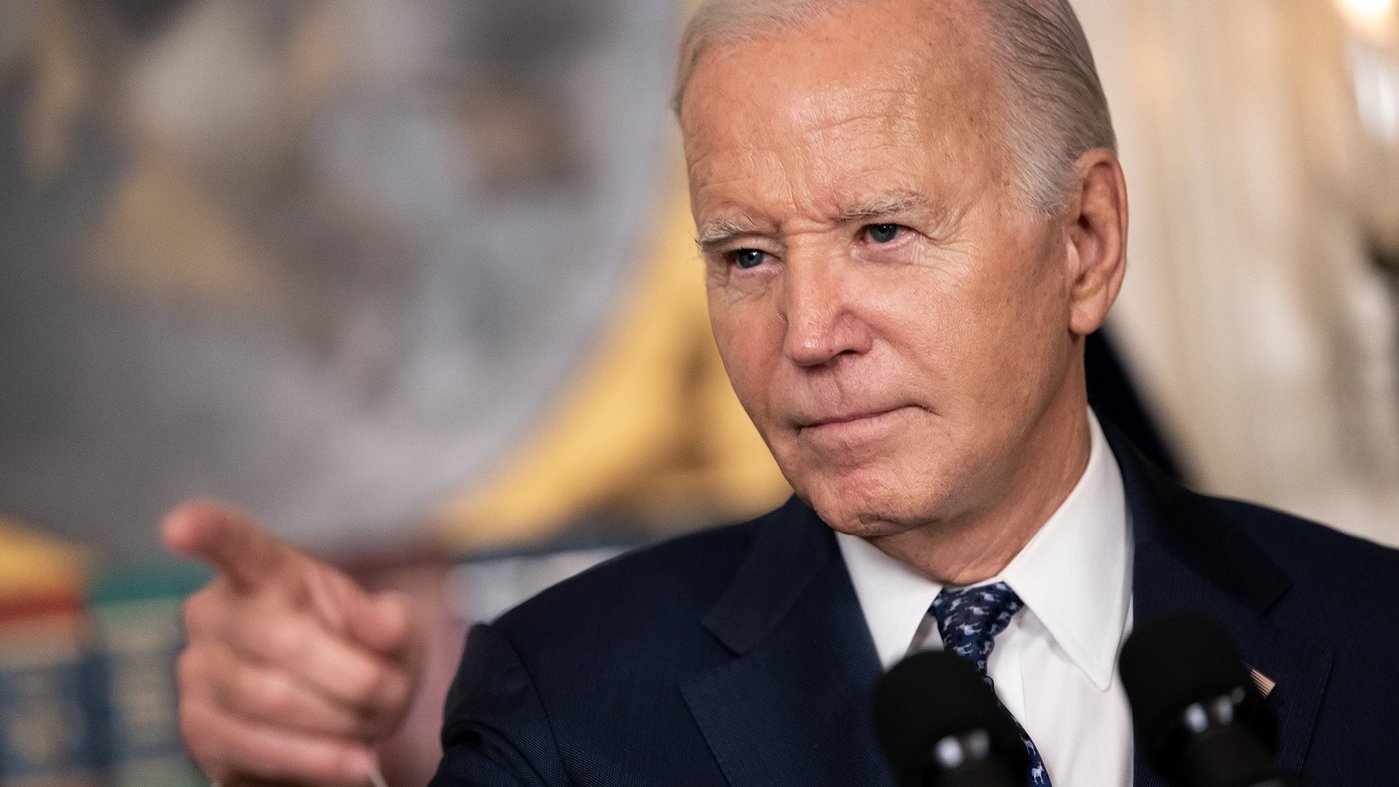
Credit:NBCNews
The U.S. government is weighing import controls on smart cars as officials are particularly concerned about data security of electric vehicles (EVs) and other types of connected and autonomous vehicles, Bloomberg cited people familiar with the matter. The restrictions would be imposed on EVs and parts originating from China, no matter where they are finally assembled, and could apply to other countries about which the U.S. has data concerns, said the people, adding that tariff alone can not address such concern. While offcials are conducting a wide-range policy study and hasn’t made any decision about how to deal with data security concerns, one of possible moves is to leverage existing U.S. Commerce Department authorities to regulate some information and communications technology transaction, the people also said.
The report is a latest sign that the United States is exploring curbs on more China’s sectors. Earlier this month, U.S. President Joe Biden was said to sign an executive order to direct attorney general and the Department of Homeland Security to issue new restrictions on transactions involving data that could threaten national security if obtained by “countries of concern.”
The Wall Street Journal reported last December that a review, launched by the Office of the United States Trade Representative (USTR) more than a year ago, could end up hiking tariff on some of Chinese goods. The U.S. administration could decide to raise tariffs on clean-energy products, like EV, EV batteries and solar products, while lowering those on China-made consumer products, the report cited people familiar with the conversations inside the cabinet.
EVs imported from China are subject to a 25% tariff and any tariff increase would likely have little immediate impact on American consumers. However, U.S. officials grow recetnly concerned about increasing Chinese clean-energy exports and worry domestic companies won't be able to compete with China’s production, even under the protection of tariffs and new subsidies, the report noted.
China is “strongly opposed” to the U.S. unilateral tariff increases, which is “textbook protectionism” and may have violated the World Trade Organization (WTO)’s most-favored-nation principle and national treatment principle, Wang Wenbin, a spokesperson of the Ministry of Foreign Affairs, responded to the report about the possible tariff move. Wang reiterated there is no winner in a trade or tariff war, and called such tariff increases a threat of global industrial and supply chain security as they are against the principles of market economy and fair competition. Beijing urged the United States to adhere to rules, uphold the trade order for fair competition and provide a fair, just and nondiscriminatory business environment for foreign companies, Wang said. He then cautioned China will follow closely about the development and ”do what’s needed to protect our lawful rights and interests”.
The United States has imposed months ago a new export control on AI offerings to China. The U.S. Department of Commerce introduced a rule entitles “Implementation of Additional Export Controls: Certain Advanced Computing Items; Supercomputer and Semiconductor End Use; Updates and Corrections”, on October 18. The department said the rule reinforces the controls launched in October 2022 to restrict China’s both purchase and manufacture certain high-end chips critical for military advantage. The agency believes the rules are necessary to maintain the effectiveness of these controls, close loopholes, and ensure they remain durable. The goal is to limit China’s “access to advanced semiconductors that could fuel breakthroughs in artificial intelligence and sophisticated computers,” said Raimondo.
The rule was supposed to come into effect following a 30-day public comment period. But Nvidia Corporation, the AI chip leader,disclosed on October 25 that the U.S. government informed the licensing requirements of the rule applicable to products having a “total processing performance” of 4800 or more and designed or marketed for data centers, is effective immediately.
TMTPost learned in November month that Nvidia will launch a new set of chips under the name of HGX H20, L20 PCle, L2 PClel for China market, though all of them are weakened version. Compared with H100, the HGX H20 has limitations on bandwidth and computing speed, and its overall computing power is about 80% less than that of H100, namely, the comprehensive computing performance of H20 is equal to 20% of H100. Nvidia was reported late November that it informed customers it is delaying the launch of H20, the most powerful of three new chips for the Chinese market until the first quarter of 2024, due to issues that took place in server manufacturers’ integrating the chip.


 快报

根据《网络安全法》实名制要求,请绑定手机号后发表评论