






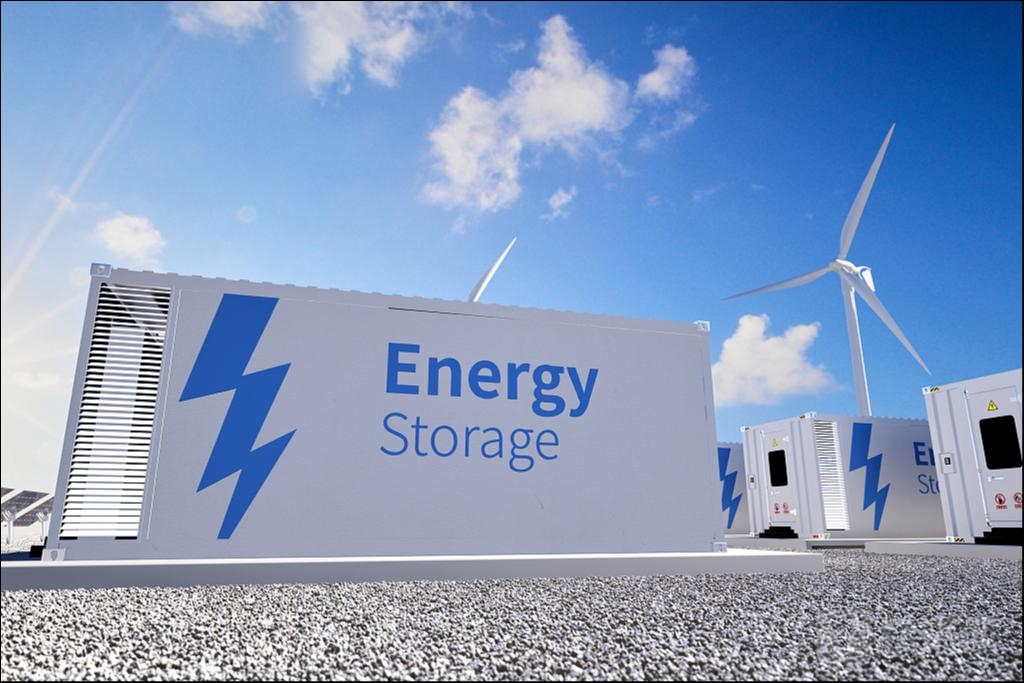
Credit: CFP
BEIJING, January 10 (TMTPOST) –The news of BYD selling more battery electric vehicles in the fourth quarter of 2023 than Tesla has sparked widespread attention, raising questions about whether these two automotive giants will engage in another competitive arena—energy storage.
Tesla, known for its aggressive pursuits in various technological domains, has embarked on the construction of a mega energy storage facility in Shanghai, officially commencing the project on December 22, 2023. The facility, scheduled to be Tesla’s first overseas energy storage battery super factory, is situated in the Lingang New Area, adjacent to Tesla’s electric vehicle super factory in Shanghai.
According to Tesla China’s announcements, the Shanghai Energy Storage Super Factory is expected to be put into operations in the first quarter of 2024, with full-scale production anticipated in the fourth quarter of the same year. The initial plans outline an annual production capacity of 10,000 units of Megapack, Tesla’s commercial energy storage battery. This ambitious project aims to supply the global market, with an estimated storage capacity of 40 GWh. However, considering Tesla’s track record of setting seemingly unrealistic goals and striving to achieve them under immense pressure, it remains uncertain whether this goal can be realized.
Among Tesla’s existing large-scale energy storage products, Powerpack and Megapack, designed for commercial facilities and utility applications, the Megapack stands out with its significant energy storage capability—storing over 3.9 MWh of energy per unit, meeting the electricity demands of approximately 3,600 households for an hour. While Tesla emphasizes the Megapack’s superior performance and lower operating costs compared to other products in the market, some industry insiders note that Tesla pricing, typically exceeding $2 million per set in the United States, might present challenges for competing with domestically produced lithium-ion energy storage products in China.
Tesla’s strategic move to establish a super factory in Shanghai is perceived as an effort to leverage China’s comprehensive and cost-effective industrial chain to cut production costs. The project echoes Tesla’s earlier venture in the energy storage sector with the California Gigafactory, which aimed at producing 40 GWh of energy storage but is yet to achieve its set targets.
Tesla’s foray into the energy storage business has proven to be financially rewarding. As disclosed in Tesla’s 2023 quarterly reports, energy storage installation volumes saw remarkable year-on-year increases of 360%, 222%, and 90% in the first quarter, second quarter and third quarter, respectively, contributing to year-on-year revenue growth rates of 148%, 74%, and 36%, in respective quarters. Although energy storage still accounted for less than 8% of the overall business revenue, the third-quarter gross profit margin reached 24.4%, surpassing Tesla’s overall gross profit margin of less than 18% for the same period.
By comparision, BYD began exploring the energy storage sector as early as 2008. While it initially focused on the Chinese market, the company has gradually shifted its energy storage business emphasis to overseas markets, particularly Britain, where BYD’s 325 MW energy storage capacity played a significant role in the sector.
However, as the domestic energy storage market has experienced explosive growth since 2020, BYD saw its market share being overtaken by CATL in China. Despite profitability challenges in the domestic market, BYD has continued to thrive overseas. In 2019, as the domestic energy storage market cooled due to policy restrictions, BYD remained composed, having already secured a substantial overseas market share, particularly in the fast growing British market.
In 2023, BYD signaled a renewed focus on the Chinese market. The company anticipates shipping over 30 GWh of energy storage batteries domestically, marking a staggering year-on-year growth rate of over 150%. BYD secured key projects with major entities like China Huadian Corporation, China Datang Corporation, China National Nuclear Corporation, and China Energy Construction Group. Additionally, BYD established an energy storage industrial park in Shenzhen, introducing new products such as the Peidao battery energy storage system and the MC-1 integrated commercial and industrial energy storage solution.
On December 25, 2023, media reported that BYD’s subsidiary, Shenzhen Pingshan FinDreams Battery Co., Ltd., was officially renamed Shenzhen BYD Energy Storage Co., Ltd. Alongside the name change, the company expanded its business scope to include energy storage technology services. This strategic move signifies BYD’s strengthened commitment to expanding its presence in the energy storage sector.
As Tesla and BYD intensify their efforts in the energy storage market, the industry faces problems associated with overcapacity and cut-throat price wars. While the sector witnessed a tenfold increase in new energy storage installations in 2023, market prices for 2-hour and 4-hour energy storage systems fell by over 50% by the year-end.
Despite the growing demand for energy storage solutions, the sector is experiencing increased pressure on profit margins. Many companies are resorting to price wars, sacrificing profits to secure contracts and gain market share. Observers note that the industry may undergo significant restructuring in the coming years, with a substantial number of companies expected to exit the market.
Looking ahead into 2024, industry analysts predict an uphill battle for energy storage manufactures. China’s lithium battery inventory has surged to 322 GWh, encompassing both power and energy storage batteries. The prices of key battery materials, such as lithium carbonate, remains depressed. Industry experts caution that while the domestic energy storage installation is expected to grow rapidly, the market will witness fiercer competition, further exacerbating industry consolidation.
Both companies are strategically positioning themselves to capture a larger share of the market, with Tesla’s Shanghai Super Factory and BYD’s renewed focus on the domestic market. While the competition unfolds, industry participants are set to enter an increasingly competitive and tumultuous era.

 快报
快报
根据《网络安全法》实名制要求,请绑定手机号后发表评论