






BEIJING, May 29 (TMTPost) – With the growing popularity of self-pleasing and an inclination towards enhanced consumption experiences, flowers have emerged as a popular daily staple across China.
Recent data shows that in 2022, nearly 60% of flower consumers in China fell within the age range of 27-39. Additionally, 16.3% of flower consumers were 26 years old or younger, while 24.3% were over the age of 40. These statistics clearly indicate a diverse consumer base.
Furthermore, data indicate that approximately 50% of consumers who buy flowers online do so 3-5 times a year, with the proportion of female consumers going up significantly.
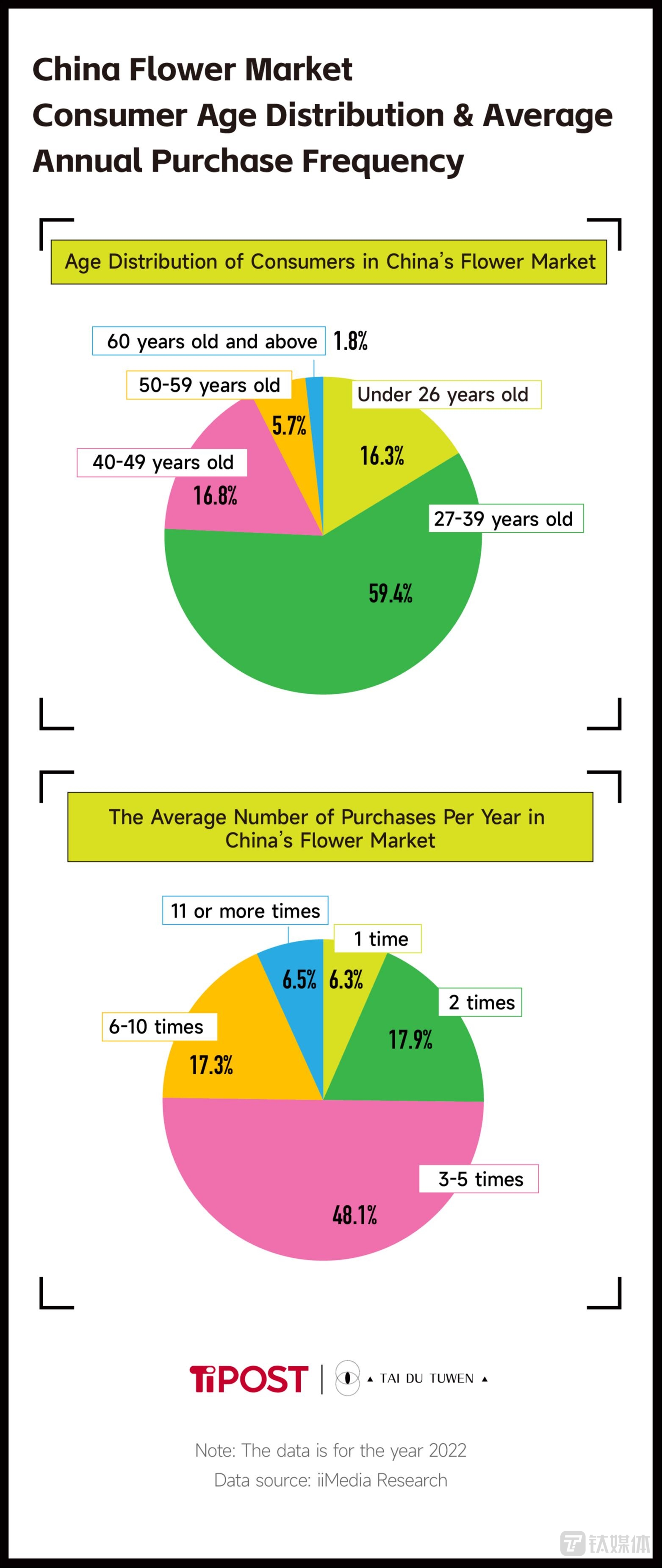
China Flower Market
With the increasing acceptance of the idea of incorporating flowers into daily life, the growth rate of daily expenditure on flowers is rapidly accelerating, leading to a gradual rise in its proportion. In 2022, daily flower consumption as a percentage of total daily expenditure reached 28.4%, and it is projected to increase to 44.2% by 2026.
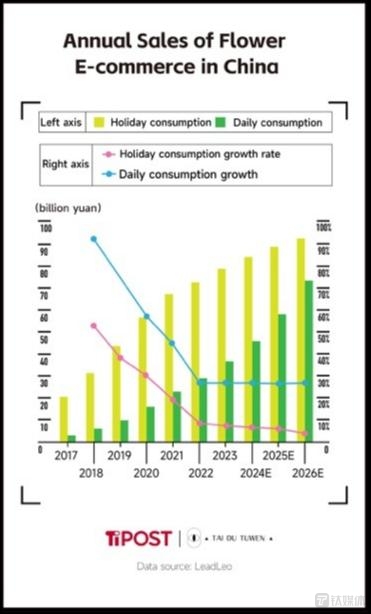
Annual Sales of Flower E-commerce in China
According to data from Qichacha, as of May 2023, there are over 420,000 flower-related enterprises in China. From 2013 to 2019, the number of registered flower-related enterprises consistently increased year after year. During the period of 2020 to 2022, there was a decline in the number of flower-related enterprise registrations in China. Nonetheless, there was a rebound in the first quarter of 2023, indicating an upswing in the registration of flower-related enterprises.
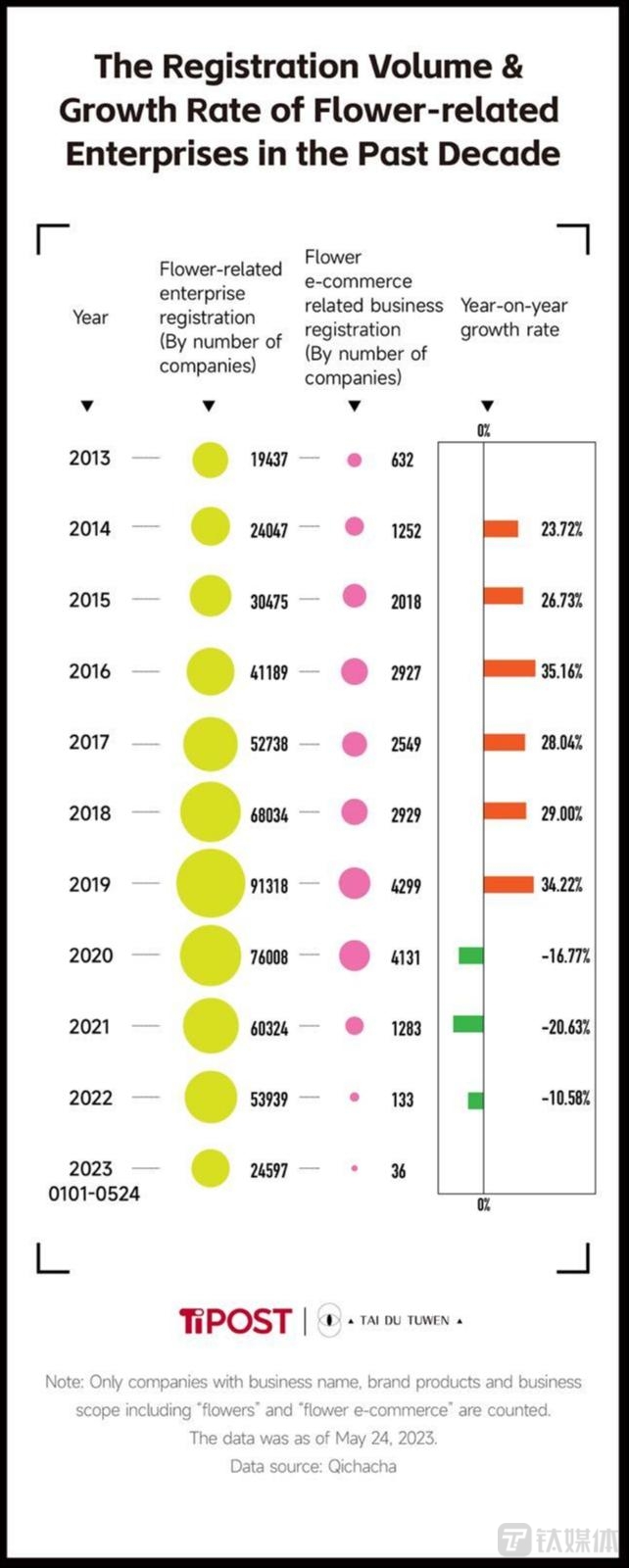
The Registration Volume & Growth Rate of Flower-related Enterprises in the Past Decade
The flourishing flower market has attracted significant capital market financing. Historical data indicates that the years between 2013 and 2015 marked a period of industry expansion, reaching its pinnacle in 2015 with substantial investments in flower e-commerce. Following a dull period, the flower e-commerce sector regained momentum after 2020, reigniting interest among investors.
In 2021, the total investment in flower e-commerce amounted to an impressive 763 million yuan, the second-highest annual investment on record and only after the 2015 figure.
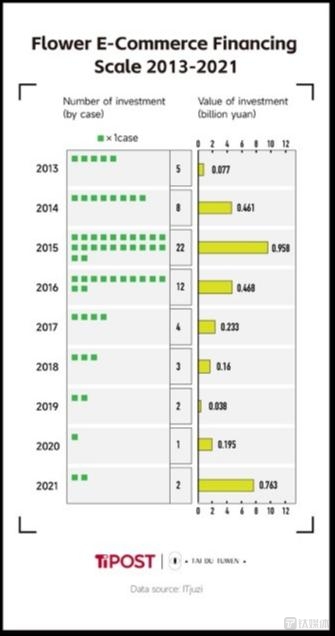
Flower E-Commerce Financing Scale
The rapid growth of the flower market has prompted the upstream flower industry to significantly expand their production. According to data, the flower-growing area witnessed remarkable growth, reaching an impressive 1.59 million hectares in 2022. This expansion represents an increase of over two times within a span of just 13 years.
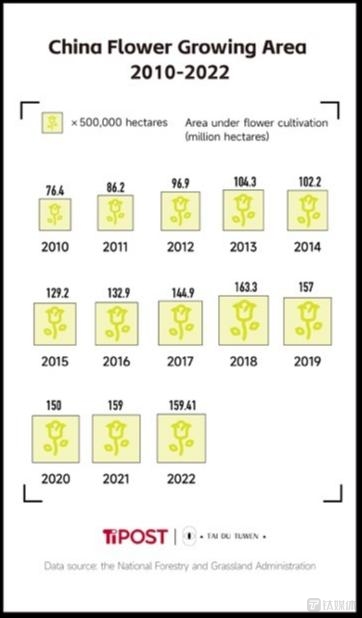
China Flower Growing Area
The surge in consumer demand for flowers has inevitably led to the emergence of new models across the entire industry chain. The rise of e-commerce channels has played a pivotal role in this transformation by connecting flower e-commerce platforms directly to consumers and flower farmers. This direct connection has significantly reduced intermediate transaction links, benefiting both upstream and downstream stakeholders.
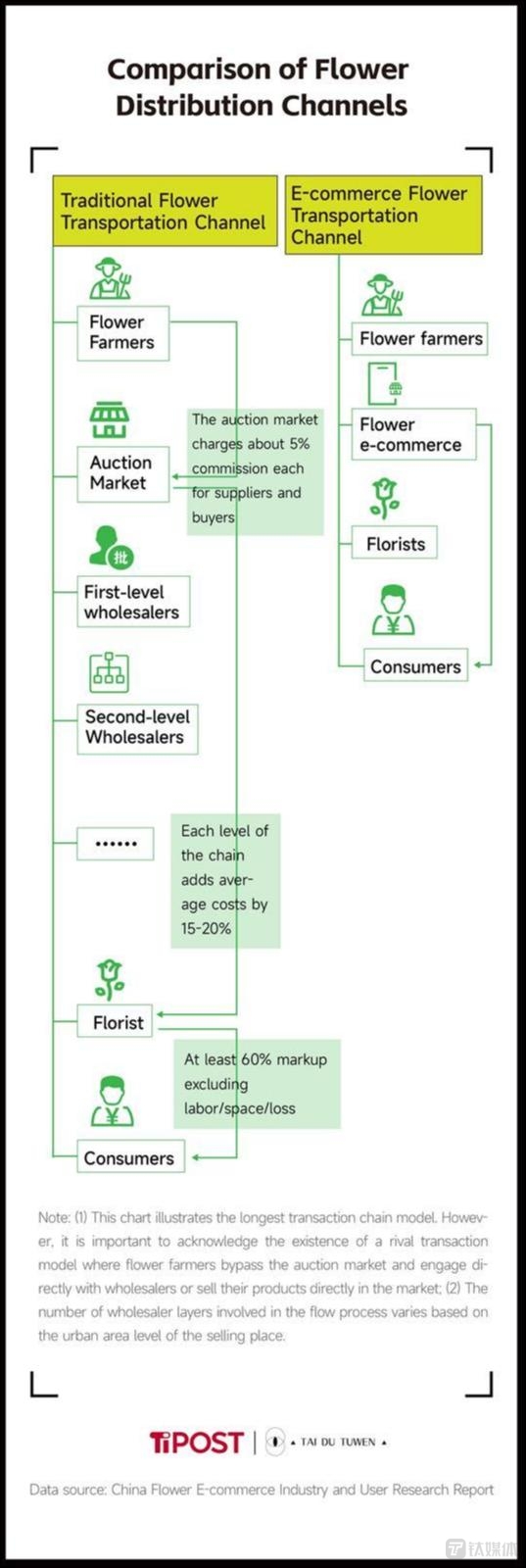
Comparison of Flower Distribution Channels
In recent years, there has been a noticeable expansion in the flower business within the e-commerce sector. One of the early entrants in the game was REFLOWER, representing the vertical flower e-commerce segment. Around 2019, traditional e-commerce platforms like Taobao and JD.com also ventured into the online flower business, establishing their own self-operated flower sections.
Following the trend, fresh food e-commerce platforms also diversified their offerings to include flowers after 2020. Live streaming of flowers in platforms such as TikTok has also gained popularity.
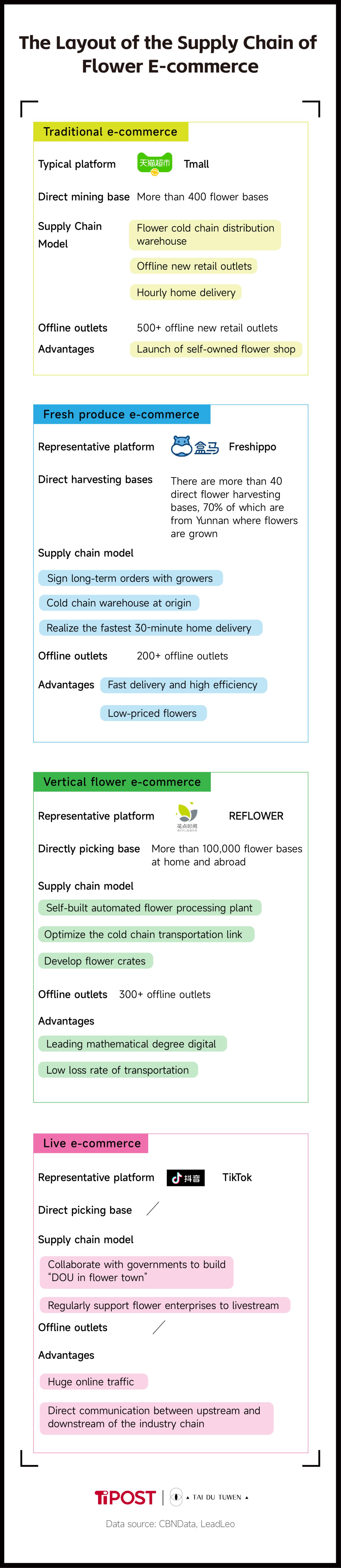
The Layout of the Supply Chain of Flower E-commerce
Within the vast billion-dollar flower industry, a loyal user base has been cultivated over time. The overall industrial chain of flower e-commerce has also been steadily advancing towards maturity.


 快报
快报
根据《网络安全法》实名制要求,请绑定手机号后发表评论