






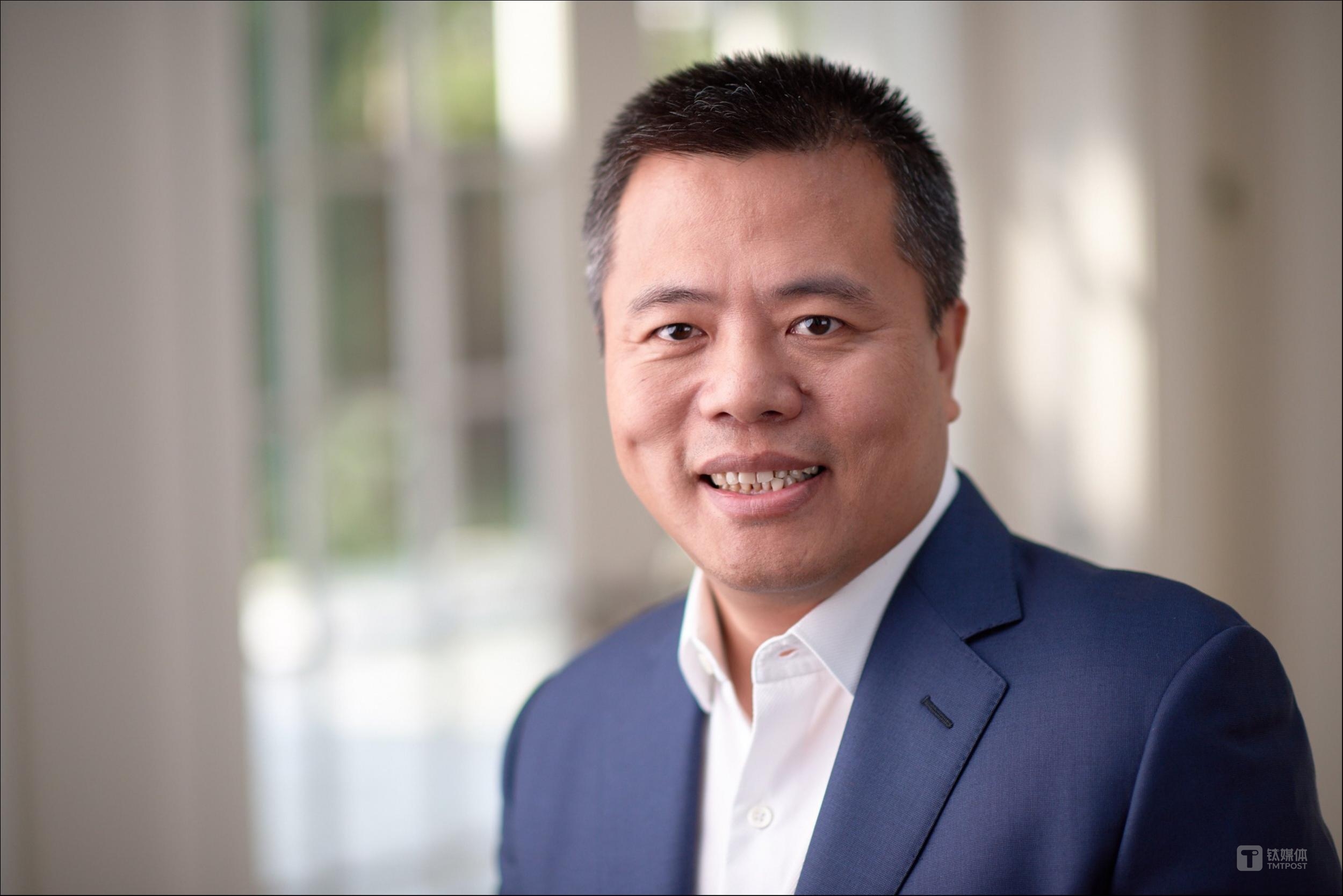
Tianqiao Chen, entrepreneur, philanthropist, and founder of the Tianqiao and Chrissy Chen Institute
TMTPOST -- Just over a month after its debut, MiroMind—created by entrepreneur and philanthropist Tianqiao Chen—has emerged as a global leader in predictive AI models.
The model on Sunday topped FutureX, the world’s first real-time, dynamic LLM benchmark for future prediction, for the second consecutive week. Chen’s MiroFlow agent framework, powered by GPT-5, led the rankings in both early September weeks, while MiroFlow running on the in-house MiroThinker model consistently placed in the top five, outpacing major international institutions and closed-source commercial AI systems.
Unlike generative models focused on text output, MiroMind adopts a memory-driven mechanism, specifically designed for prediction and decision-making, aiming to build the world’s best predictive large model.
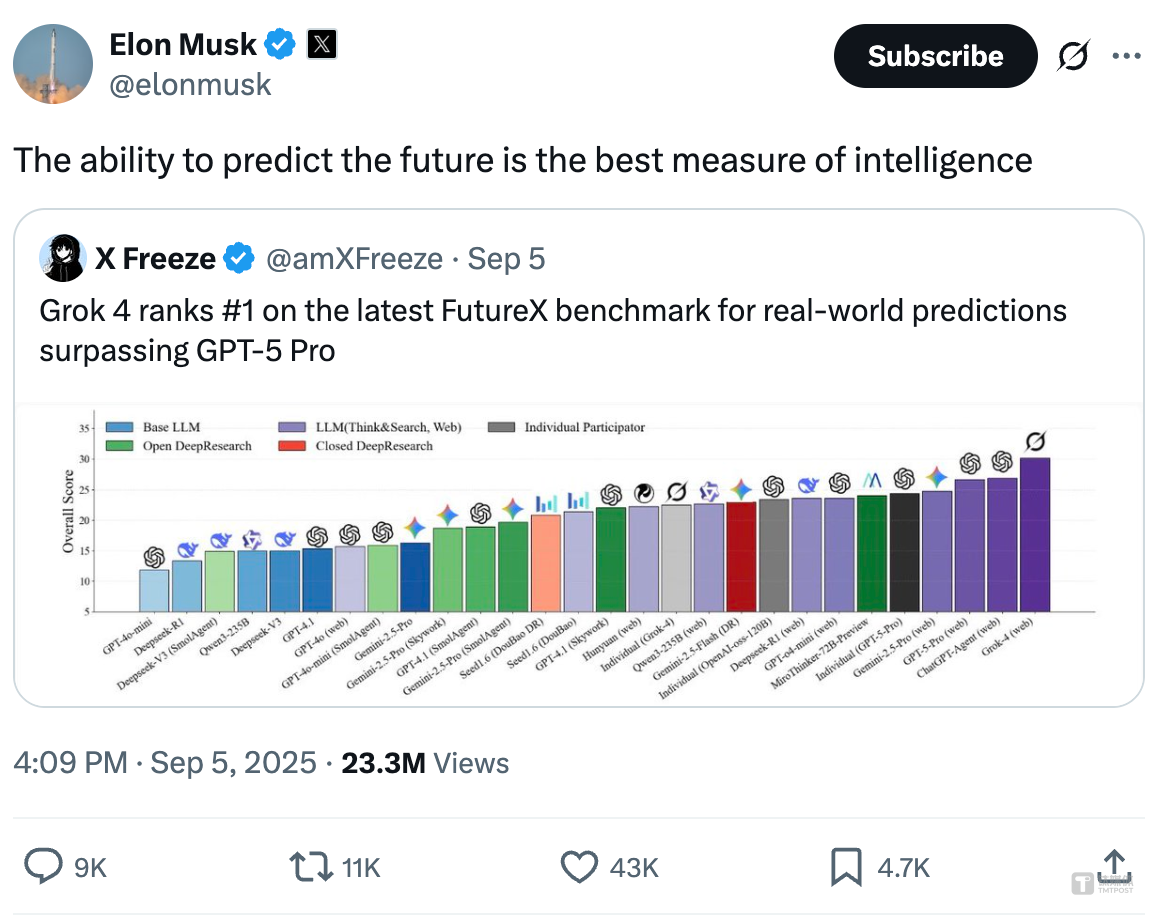
FutureX is the world’s first dynamic, real-time LLM (Large Language Model) agent benchmark for future prediction, jointly launched by ByteDance’s SEED team in collaboration with Stanford University, Fudan University, and Princeton University. The benchmark selects questions from over 200 high-quality global websites that will only have definite answers in the following week, challenging AI to directly confront future events and trends—such as the strategic directions of technology companies.
Elon Musk once said: “The ability to predict the future is the best measure of intelligence.” Equipping AI with human-like decision-making abilities in uncertain environments is a crucial step toward achieving AGI.
MiroMind’s triumph as the champion of the FutureX Benchmark Test marks a significant milestone. Reports indicate that during the evaluation, MiroMind accurately predicted the ATP men’s singles rankings for players placed 4th to 6th on September 9, 2025—a feat made particularly challenging by the tennis ranking system’s complexity, which involves points calculations, match outcomes, time windows, and numerous other variables.
Chen responded, “We are making a long-term, all-out investment to build the world’s best predictive large model, enabling AI to remember the past and foresee the future. We continuously welcome outstanding AI talent from around the globe to join us in creating the future together.”
Public records show that MiroMind is a newly established company focused on developing Artificial General Intelligence (AGI). It was co-founded by innovative entrepreneur and philanthropist Tianqiao Chen, founder of the Tianqiao Brain Science Institute, together with leading Chinese AI scientist Jifeng Dai, Associate Professor of Electronic Engineering at Tsinghua University. Their vision is to build the next OpenAI, emphasizing foundational AGI research, with their inaugural project being MiroMind Open Deep Research (Miro ODR).
Dai earned both his Bachelor’s and Doctoral degrees in Engineering from Tsinghua University’s Department of Automation in 2009 and 2014, respectively. Between 2014 and 2019, he worked in the Visual Computing Group at Microsoft Research Asia as Principal Researcher and Research Manager. From 2019 to 2022, he served as Executive Research Director at SenseTime Research. Since July 2022, Dai has been a full-time Associate Professor and PhD and Master’s advisor at Tsinghua University’s Department of Electronic Engineering. His research focuses on foundational models and core algorithms for visual information understanding.
According to reports, Chen has high expectations for this AI startup led by Dai and has pledged that half of the profits from all AI companies incubated within Shanda will be shared with the team.
In early August, the MiroMind team made its public debut, unveiling a high-performance, fully open-source, and collaborative deep research project—MiroMind Open Deep Research (Miro ODR). The V0.1 version achieved a GAIA test score of 82.4, surpassing numerous open-source and closed-source deep research models, including OpenAI’s DeepResearch and Manus, establishing it as one of the strongest open-source deep research models currently available.
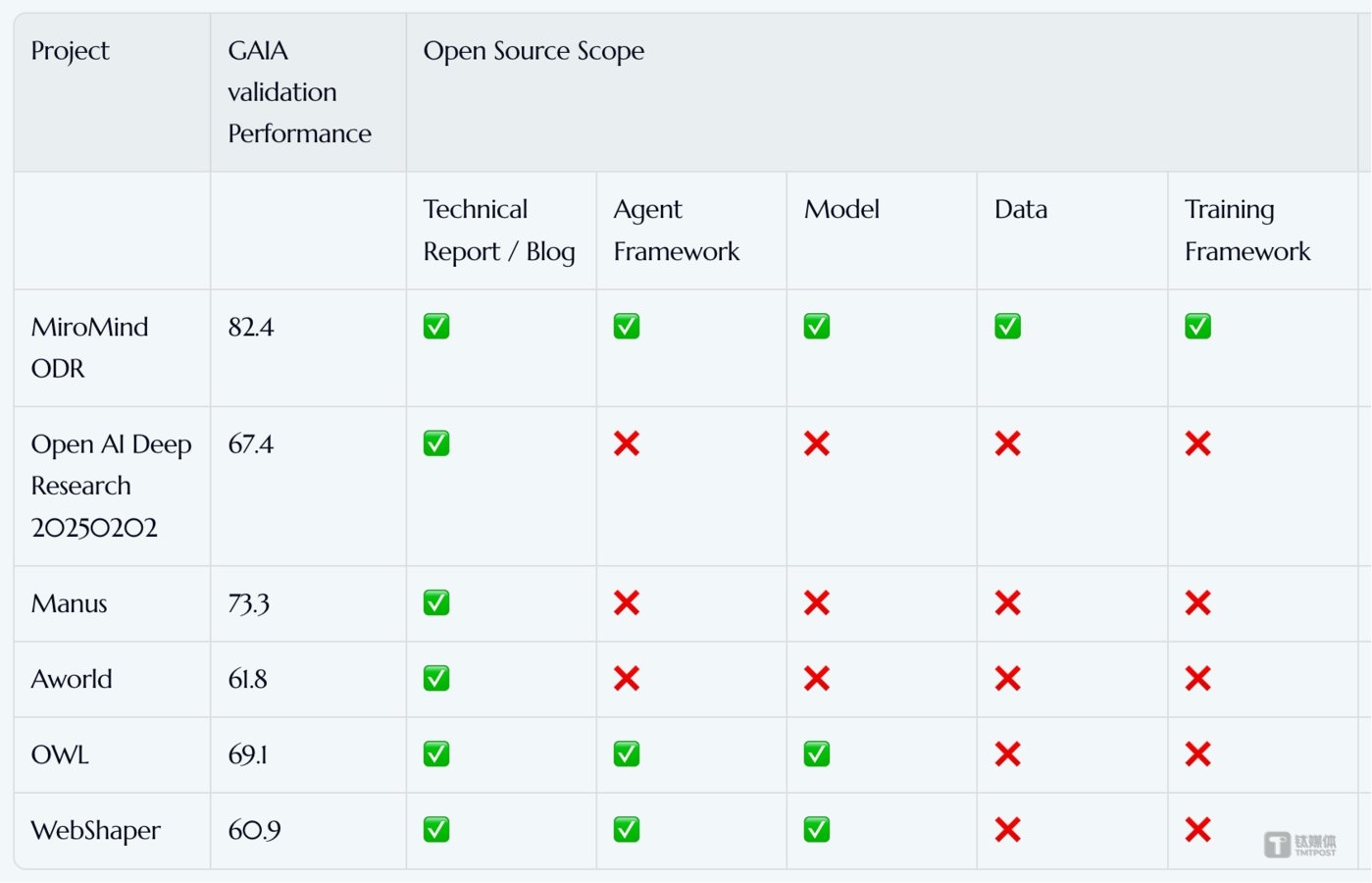
After a quarter of intensive development, MiroMind officially launched its major open-source project. “Miro ODR is fully open-source and reproducible—the core model, data, training process, AI infrastructure, and DR Agent framework are all openly available, making replication seamless,” said Dai. He added that the team plans to release monthly open-source updates, collaborating with the community to build the most powerful deep research model possible.
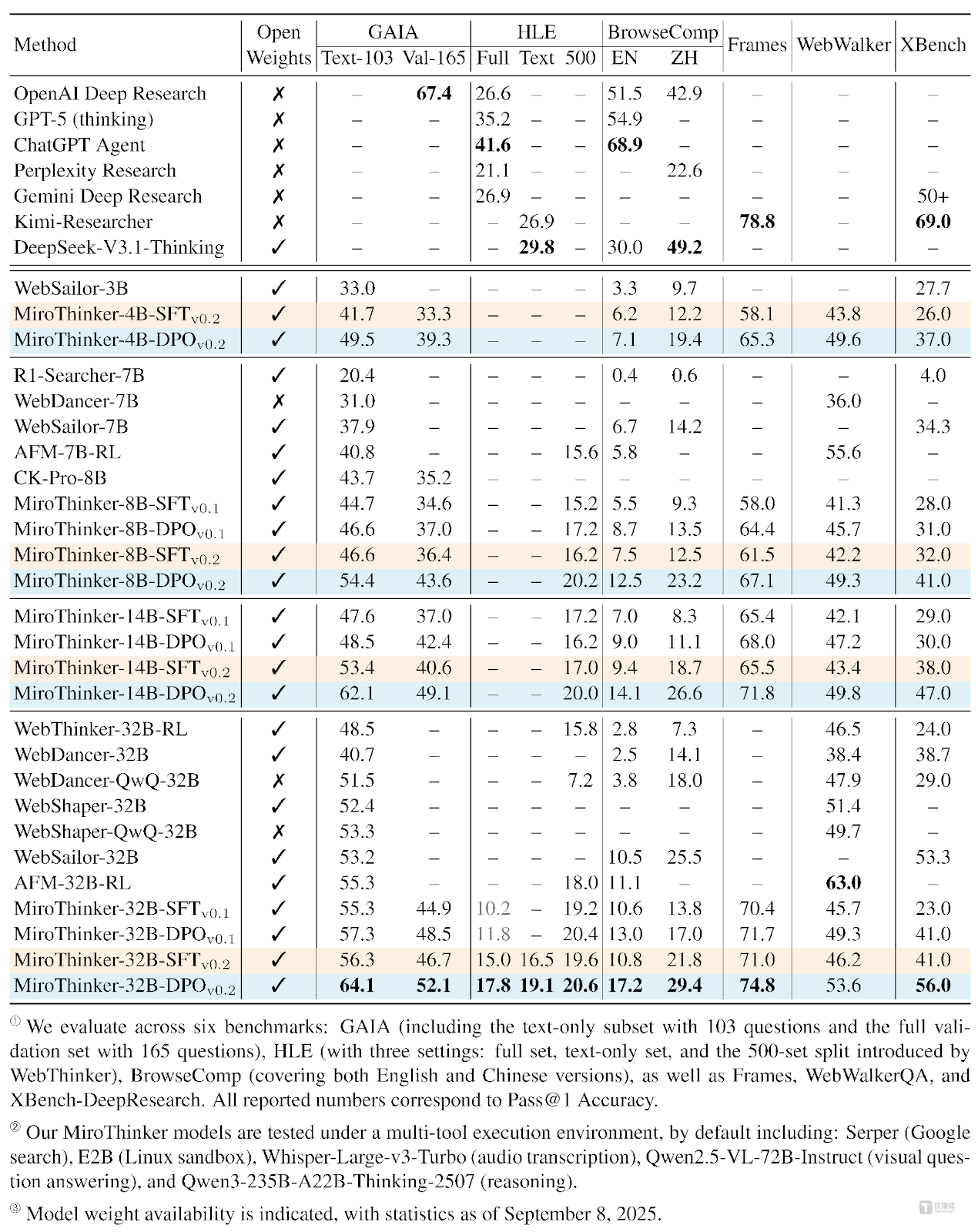
According to MiroMind’s technical report, the ODR project opens up every stage of the deep research process, setting it apart from existing approaches. It is composed of four sub-projects—MiroFlow, MiroThinker, MiroVerse, and MiroTrain—all of which can run on mobile devices.
The MiroFlow framework achieved an impressive 82.4% on GAIA-Validation, outperforming numerous international competitors across multiple benchmarks. Fully open-source and reproducible, MiroFlow is designed as a platform for innovators. Meanwhile, MiroThinker, the team’s self-developed flagship foundational agent model, combines advanced reasoning, decision-making, and multimodal understanding capabilities, and plays a key role in multi-agent collaboration.
It has become a leading open-source model across multiple rankings and is steadily closing the performance gap with closed-source commercial systems. Reports indicate that MiroThinker will soon be fully open-source for developers and researchers worldwide, providing reproducible models and experimental environments.
MiroMind’s ascent to the top of the global FutureX benchmark is no accident. Its success rests on core strengths in AI-driven future prediction, including information insight, logical reasoning, trend perception, probability and uncertainty management, and cross-disciplinary integration. In real-world forecasting, the model demonstrates systematic strategies and robust capabilities.
For instance, when predicting men’s tennis rankings, MiroMind employed a six-step strategy: it first formulated a detailed prediction plan, then retrieved the top 10 ATP men’s rankings as of September 1, 2025, to establish a baseline. Next, it analyzed the relationship between match results and ranking points, ensuring consistency by comparing the 2024 and 2025 point-drop rules. It then incorporated match outcomes post-September 1, updating rankings for completed matches and assessing ongoing matches’ impact.
Finally, the model conducted multi-scenario analyses—evaluating six possible outcomes for matches without results—and incorporated probability data as external validation to determine the most likely ranking outcomes. Similarly, when forecasting critical price levels for the cryptocurrency Solana on September 11, 2025, the model employed a comparable six-step approach, using cross-validation to optimize predictions and demonstrating its systematic modeling and risk management capabilities in volatile markets.
Dai once explained the ultimate goal of Miro ODR: “At MiroMind, we don’t just provide AI—we build AI together with you.”
In a rare public statement, Chen also addressed Chinese tech investors: “Don’t treat brain-computer interfaces as just another money-making trend.” Previously, in an article published on TMTPost and AsianFin, Chen emphasized that AI and machine learning can deliver results comparable—or even superior—to invasive methods, without harming patients.
Chen added: “We are not just investors, but active participants and drivers of this technological revolution. Hard-tech innovation cannot be measured by short cycles or quick returns like the internet industry. If you continue to apply that logic—bets, immediate validation, instant revenue, and rapid IPOs—it will be a lose-lose outcome for truly innovative tech companies.”
From Shanda Group to the Tianqiao and Chrissy Chen Institute, and now with a full-scale focus on AI, Chen has spent the past 25 years exploring the frontiers of human technology. Currently, MiroMind is embedding long-term memory modules into its models to enable more accurate, reliable predictions in complex, ever-changing environments—paving the way toward true intelligence across the dimension of time.
Chen believes that technological innovation urgently needs patient capital with a long-term vision, providing enterprises with stable support to bridge the gap from fundamental research to industrial application while navigating lengthy cycles of validation and market cultivation.
“We are willing to be patient capital,” said Chen.


 快报
快报
根据《网络安全法》实名制要求,请绑定手机号后发表评论