






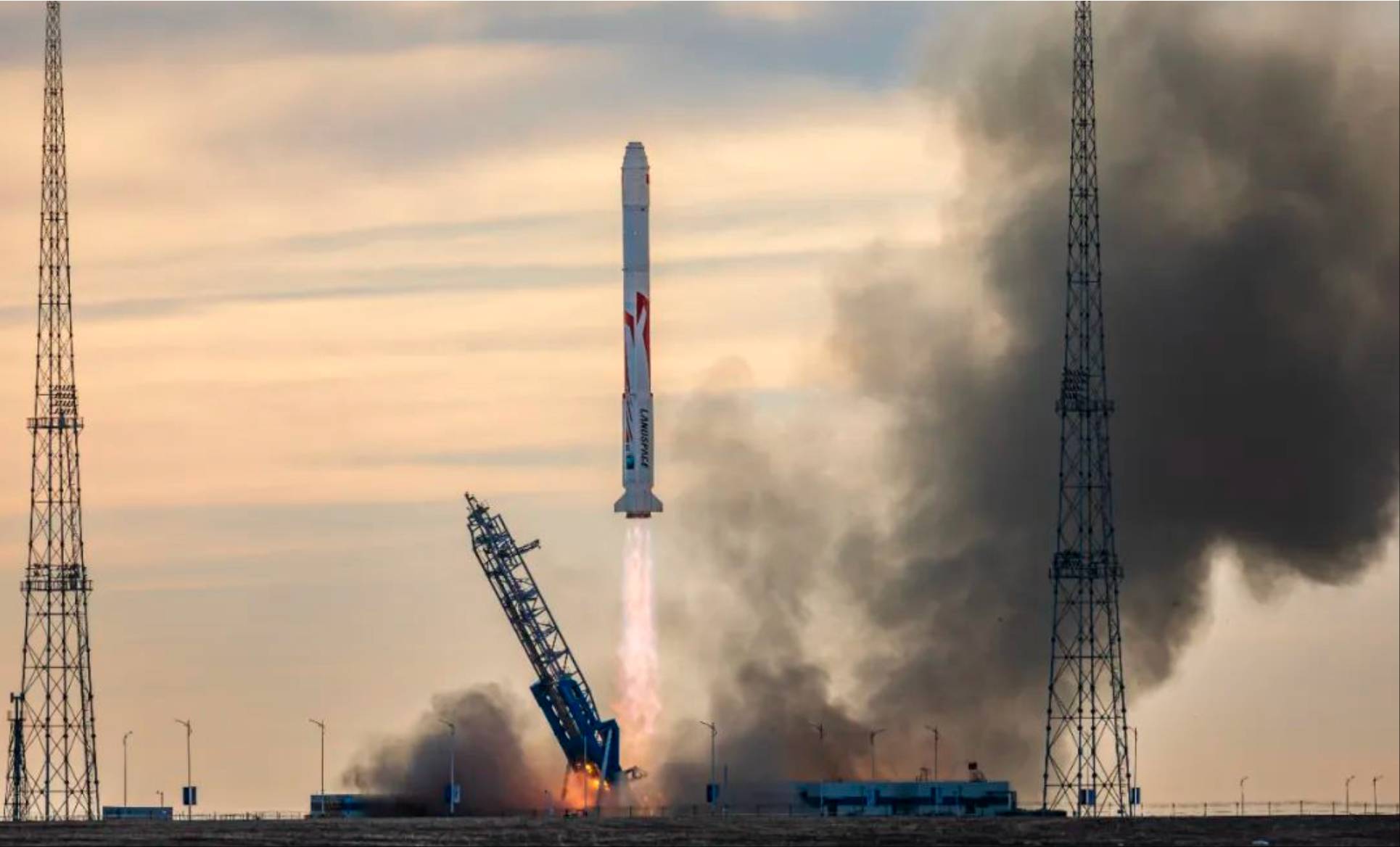
TMTPOST — 2025 is shaping up to be a landmark year for China’s commercial space industry, as domestic startups accelerate rocket development, satellite constellations expand, and capital continues to pour into the sector. Alongside global advances in robotics and artificial intelligence, China’s space ventures are emerging as a major frontier for both technology and investment.
According to publicly available data, China’s commercial space market reached 2.3 trillion yuan ($318 billion) in 2024 and is expected to grow to between 2.5 trillion and 2.8 trillion yuan ($345 billion–$387 billion) in 2025, with a compound annual growth rate exceeding 20%.
Investors are taking notice: the total amount raised by China’s commercial space sector surpassed 20 billion yuan ($2.8 billion) in 2024, setting a new record. By mid-August 2025, more than 120 financing events had already been disclosed, totaling over 5.2 billion yuan ($720 million), and industry analysts predict that annual financing could hit 25–28 billion yuan ($3.5–3.9 billion), a year-on-year increase of 23%–38%.
The growth trajectory is being fueled by a new generation of commercial rockets. In 2025, China expects maiden launches of the Suzaku-3, Tianlong-3, Gravity-2, Hyperbola-3, and Asteroid-1 rockets. Domestic satellite internet initiatives, such as the Qianfan Constellation and GW Constellation, will continue to deploy satellites into low Earth orbit, signaling China’s ambition to build its own “Starlink” network.
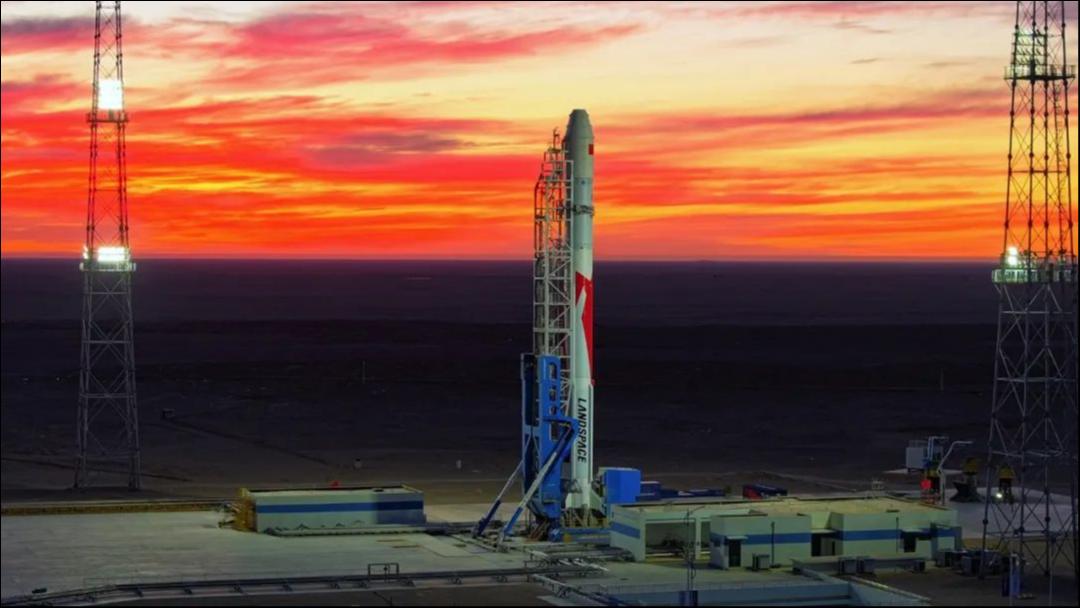
Capital Floods In
Emerging industries are often first recognized by capital, and China’s commercial space sector is no exception. The 2025 China Commercial Space Innovation Ecosystem Report highlighted 138 financing events in 2024, totaling 20.239 billion yuan ($2.8 billion), both records for the sector. Satellite applications, rocket manufacturing, and satellite production were among the most heavily invested areas.
Data from Ruishou Analytics shows that between 2024 and early 2025, the industry completed 50, 32, and 29 financing events in satellite applications, rocket manufacturing, and satellite manufacturing, respectively. Satellite operations and rocket manufacturing attracted the largest funding, at 8.7 billion yuan ($1.2 billion) and 6.71 billion yuan ($930 million), respectively.
Both government-backed funds and market-driven investors are key players. Jiangsu Province and the city of Nanjing jointly set up a 5 billion yuan ($690 million) Advanced Manufacturing Industry Fund, with commercial space as a focus. Other regions, including Hainan and Guangdong, have created dedicated funds to support local aerospace chains. Over the past three years, more than 20 provinces and municipalities have issued over 40 policies to promote innovation, industrialization, and ecosystem development in commercial space.
Prominent venture capital firms such as Sequoia China, Hillhouse Capital, IDG Capital, and Source Code Capital are also investing heavily. Startups like LandSpace, MinoSpace, Deep Blue Aerospace, iSpace, and CAS Space have emerged as potential unicorns, signaling the sector’s maturity and growth potential.
The secondary market is playing a complementary role. The China Securities Regulatory Commission (CSRC) issued guidance supporting frontier technology firms, including commercial space companies, to list on the STAR Market even if not yet profitable. Companies like LandSpace and CAS Space have already entered pre-listing counseling, giving them more financing options for their long-term development plans.
Despite surging capital, cost control remains a critical challenge for the industry, where R&D and validation costs are extremely high. Following SpaceX’s lead, domestic startups are focusing on reusable rocket technology to lower launch costs.
LandSpace, for example, developed the Zhuque-3 rocket using methane fuel, which is one-third the cost of aviation kerosene. Its stainless steel body reduces material costs by 80% compared with traditional aluminum alloys, and the maintenance cost per launch is only 10% of the manufacturing cost. The rocket’s TQ-12A/15A/15B engines allow for thrust adjustment from 50% to 110%, enabling precise hovering and vertical landings, surpassing early Falcon 9 capabilities. In September 2024, Zhuque-3 completed a ten-kilometer-class vertical takeoff and landing test, and by June 2025, its reusable propulsion system passed a full test at the Dongfeng Commercial Space Innovation Test Zone. LandSpace aims to achieve more than 20 reuses and reduce launch costs to 20,000 RMB per kilogram.
ArrowYuan Technology has also made breakthroughs with liquid oxygen-methane propulsion and offshore soft landing recovery. The company conducted China’s first joint swing hot test in July 2025 and aims for first-launch recovery later this year. China Rocket Co. completed a commercial launch delivering the Guoxing Yuhang space computing satellite constellation and plans its first Long March 12B reusable flight in 2026.
China’s “Starlink” Ambitions
Satellite internet remains a primary commercial application and revenue driver. SpaceX’s Starlink currently operates over 7,500 low Earth orbit satellites, providing broadband for individual, enterprise, and governmental users worldwide. China is rapidly developing its own low Earth orbit satellite constellations under the “Guowang” project, aiming to build a high-speed global internet network.
China has registered 51,300 satellites with the International Telecommunication Union. Key projects include the Qianfan Constellation with 15,000 satellites by 2030 and the GW Constellation with 12,992 satellites. Honghu Constellation, operated by LandSpace subsidiary Hongqing Technology, plans 10,000 satellites across 160 orbital planes. Smaller projects, like CAS Satellite’s AIRSAT constellation, have also begun launching SAR and AI-enabled satellites.
GalaxySpace is developing low-cost, mass-produced satellites with a “design—production line—supply chain” model, signaling China’s ability to build a domestic commercial satellite ecosystem.
From reusable rockets to large-scale satellite constellations, China’s commercial space sector is moving rapidly. Public data shows the number of Chinese commercial space companies grew from fewer than 100 in 2015 to over 500 by 2025, with domestic manufacturing of rockets and satellites becoming increasingly localized.
With continued government support, private investment, and technological innovation, China’s commercial space industry is poised to enter a new era—one that could reshape global satellite internet, aerospace manufacturing, and the future of interstellar ambitions.
As capital, technology, and policy align, 2025 may well mark the year China moves from commercial space aspirant to a formidable competitor in the global aerospace landscape.

 快报
快报
根据《网络安全法》实名制要求,请绑定手机号后发表评论