






Screenshot of Bing China homepage
TMTPOST -- In a stunning turn in the global search engine race, Microsoft’s Bing has quietly claimed the top spot in China’s desktop search market, outpacing Google and signaling a broader power shift in the AI-fueled future of search.
According to data from analytics firm Statcounter, Bing held a 40.23% share of China’s desktop search market in June 2025, maintaining its lead for 12 consecutive months. This milestone marks a defining moment for a search engine long viewed as a second-tier player globally.
A $100 Billion Bet Pays Off—In China
Despite years of lukewarm global traction, Microsoft’s long-standing investment in Bing—reportedly close to $100 billion—has found new life in China. The surge has been driven by several factors: a rising wave of AI adoption, enterprise digitalization, and Microsoft's broader ecosystem push.
Statista data from March 2025 shows China accounted for 28.25% of Bing’s global traffic, overtaking the U.S. (21.9%) as Bing’s largest market. Microsoft confirmed that Bing users in China have grown twelvefold over the past five years.
Bing's rise in China is more than a product win—it’s a redefinition of how users interact with search. Microsoft’s Copilot, deeply integrated into Bing since 2023, has transformed traditional query models into conversational, intent-driven experiences powered by OpenAI’s GPT-4.
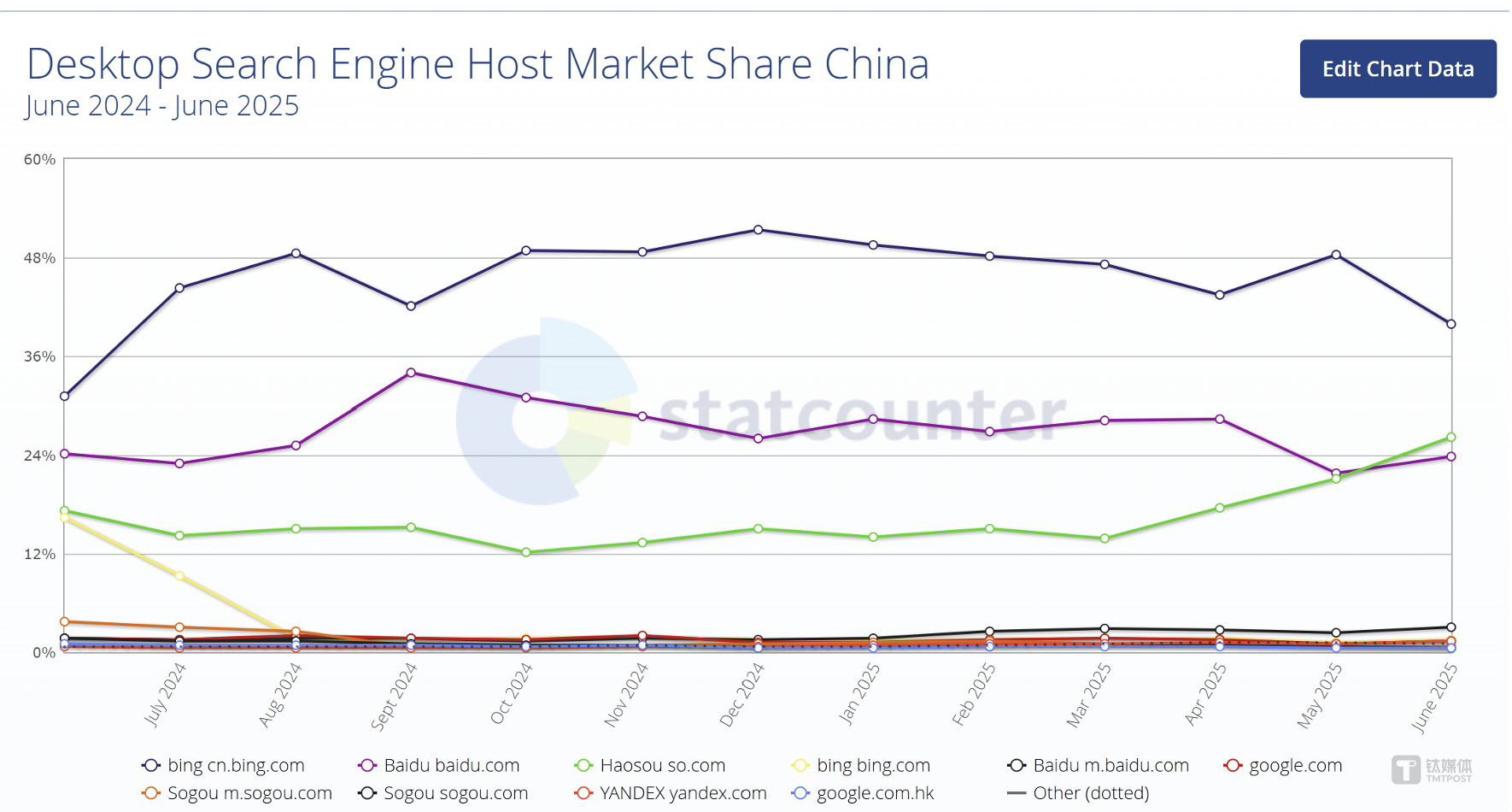
Over the past year, Bing China has consistently led the Chinese desktop search engine market. Image source: Statcounter
From Search Engine to Productivity Engine
Microsoft’s China strategy reflects a clear pivot toward enterprise productivity. The integration of Bing into Windows 11, Edge, and Microsoft 365 has made it a key gateway for office users. Bing Chat Enterprise, introduced in mid-2023, embedded AI capabilities into workplace tools, accelerating adoption across China’s massive corporate base.
This ecosystem synergy has created a “micro-economy” around search behavior. Features like Bing Rewards—where users earn points redeemable for groceries or electronics—have resonated with local professionals. A clean interface, minimal ads, and superior English-language search results further reinforce user stickiness.
Localization has also been a competitive edge. Bing’s weather forecast model, developed by its China team, was named the world’s most accurate by Forecast Watch in both 2023 and 2024. Special coverage hubs for events like China’s national college entrance exam (Gaokao) have further deepened Bing’s local relevance.
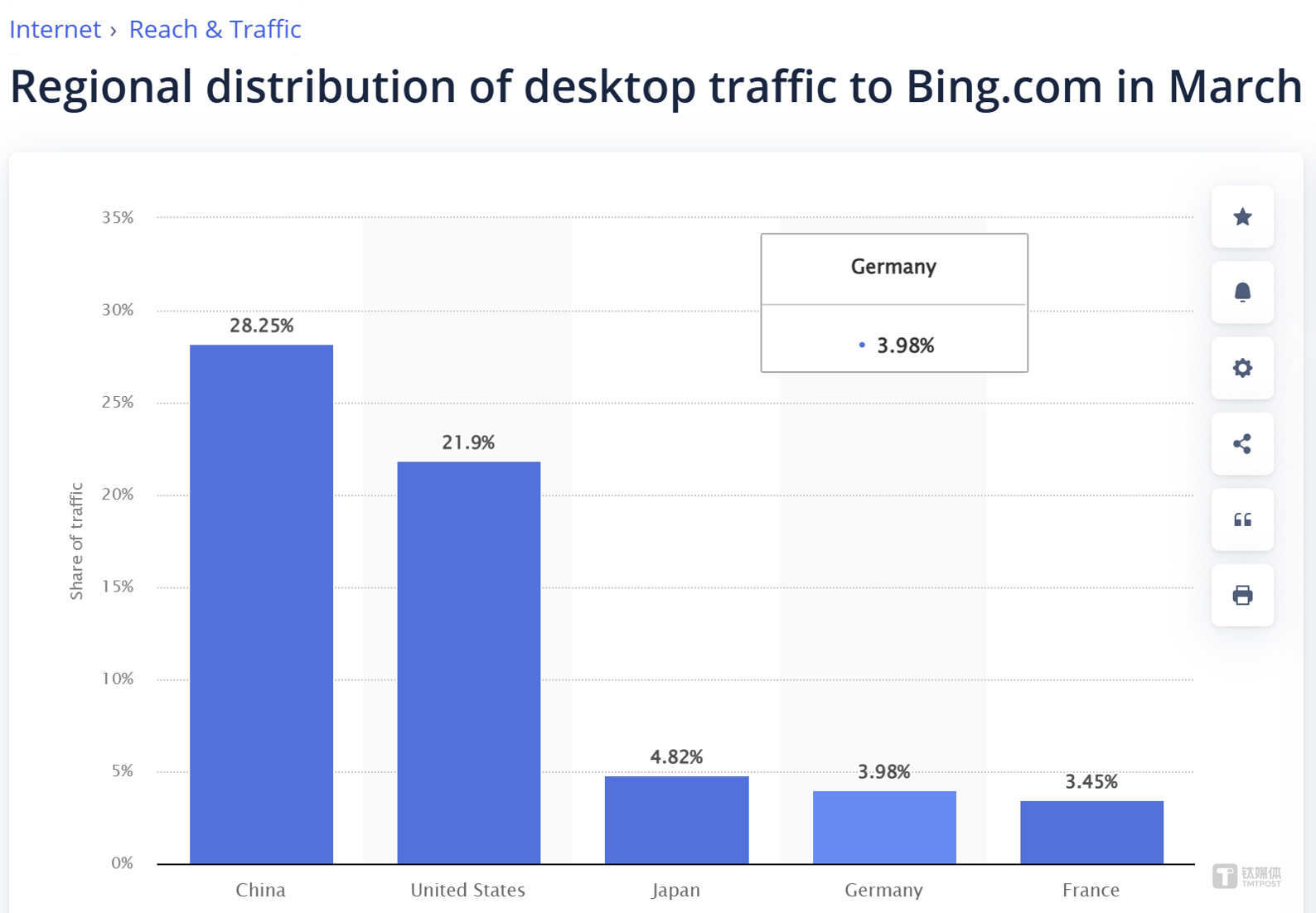
Over the past year, Bing China has consistently held the top spot in China’s desktop search engine market. Image source: statcounter
Bing’s AI-powered evolution is also driving commercial results. According to Microsoft’s FY 2024 report, Bing’s ad revenue reached $12.58 billion. Microsoft’s total advertising business surpassed $20 billion, up 59% year-over-year—driven largely by Bing.
AI is redefining how search advertising works. Instead of relying on keyword matching, Copilot uses real-time, multi-turn dialogue to understand user intent. This leads to significantly improved ad targeting, with cost-per-click for multimedia ads down 44% and responsive search ads down 25%.
In China, Microsoft Advertising has capitalized on this momentum. Opening Bing Ads to SMEs in early 2024 helped drive a 40x increase in local ad revenue over four years. As Chinese companies expand globally, Bing’s international reach and AI targeting have made it a go-to platform.
A Shifting Global Landscape
Bing’s gains come as the global search landscape undergoes its biggest disruption in two decades. Google, still dominant globally, has rolled out its own AI search overhaul powered by the Gemini 2.0 model. Its “AI Mode” replaces the traditional blue-link format with a chatbot interface that emphasizes reasoning and personalization.
Yet this shift has sparked concern among creators. Many publishers report plunging click-through rates as AI-generated summaries reduce the need to click through to original content. Industry insiders are now coining terms like “GEO”—Generative Engine Optimization—as the new SEO.
Despite Google’s push, Statista data shows a drop in its global market share—from 87% in 2020 to 79.1% in March 2025. Bing’s global share more than doubled in the same period—from 6.14% to 12.21%.
The next phase of the AI search war will be fought on ecosystem strength. Microsoft is betting big on the Copilot platform, offering APIs and development tools that allow companies to build AI agents and custom solutions—from marketing automation to customer support—on top of its infrastructure.
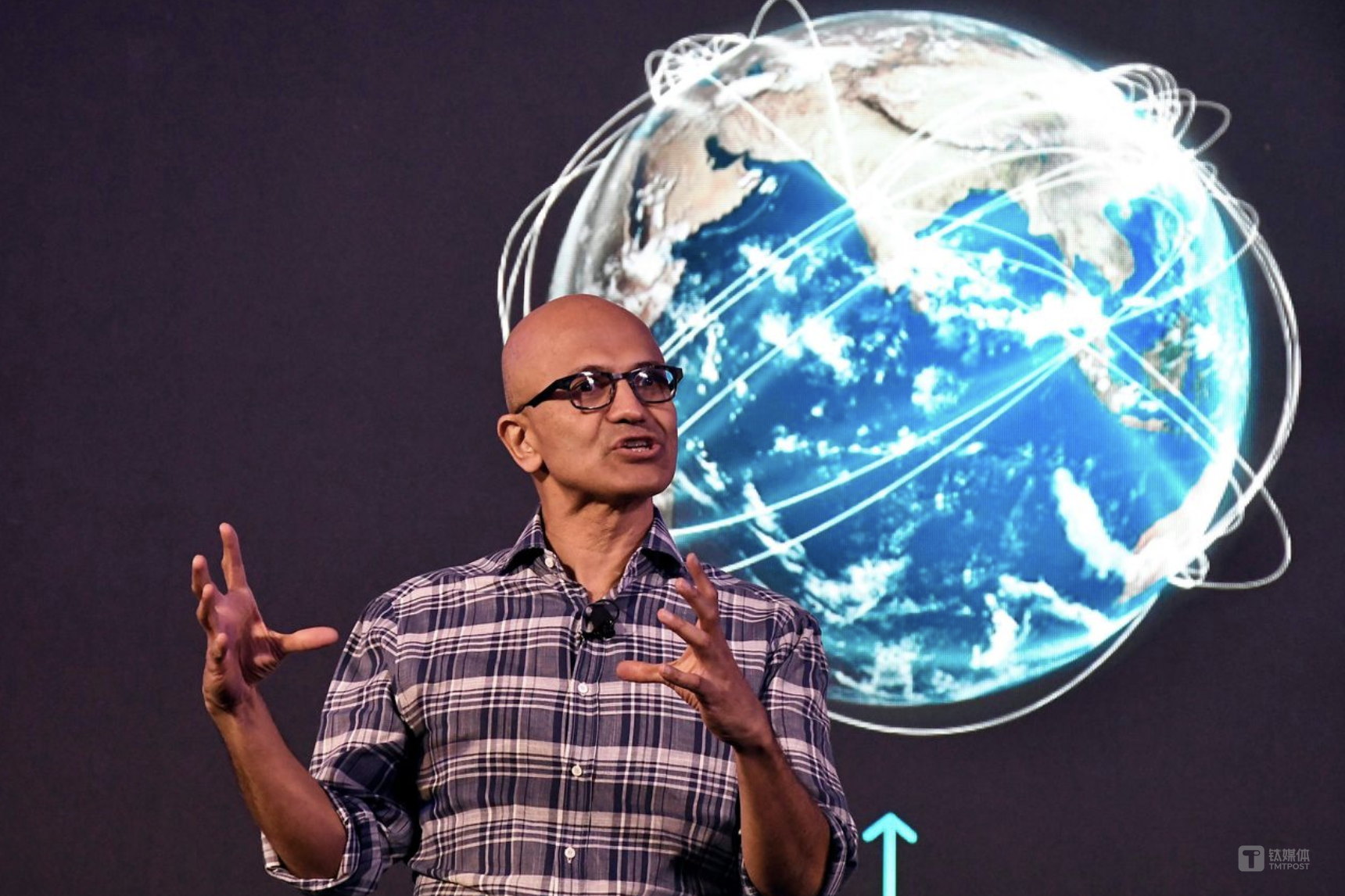
Microsoft CEO Satya Nadella, image source: Getty Image
Still, challenges remain. Bing’s dominance in China is limited to desktop—mobile remains a weak spot. And while Microsoft benefits from a strong enterprise presence, local policy and content compliance are long-term risks.
Yet Bing’s position in China highlights the enormous value of deep ecosystem integration, localized innovation, and user-centric AI. If Microsoft can extend these advantages to mobile and continue scaling AI monetization, Bing could evolve from a comeback story to a core driver of Microsoft’s long-term growth.
Bing’s surprise dominance in China’s PC search market is no fluke. It’s a signal that the AI race is real, the rules are changing, and Microsoft’s $100 billion bet on search is finally paying off—starting in the world’s most complex internet market.


 快报
快报
根据《网络安全法》实名制要求,请绑定手机号后发表评论