






TMTPOST — In a move reminiscent of the tectonic shifts that shaped the early PC era, Huawei is taking aim at the foundations of the global computer industry. The Chinese tech giant on Sunday unveiled two HarmonyOS-powered PCs, marking its most aggressive challenge yet to Microsoft's and Apple's longstanding operating system dominance.

The MateBook Pro, a lightweight business laptop, and the MateBook Fold Extraordinary Master, a bold foldable-screen PC, signal Huawei's ambition to redefine the PC value network through a natively AI-powered, cross-device ecosystem — and potentially trigger a paradigm shift not seen since IBM inadvertently catalyzed Microsoft's rise four decades ago.
"With HarmonyOS PC, Huawei is redefining productivity and giving the world another choice," said Richard Yu, Executive Director and CEO of Huawei's Consumer Business Group, during the product launch.
Déjà Vu: IBM's Mistake, Microsoft's Rise — And Huawei's Bet
In 1981, IBM, seeking to counter Apple, outsourced its PC's software and chips to Microsoft and Intel while making its BIOS open-source — a move that allowed clones to flourish. Microsoft, charging licensing fees on every machine, became the unintentional winner.
Fast-forward to today, Huawei is betting that AI-native, microkernel-based operating systems — like HarmonyOS — will upend today's hardware-centric model, much like software disrupted the IBM-led PC era.
"Microsoft transformed IBM's hardware-centric value network into one centered on software," Harvard Business School once wrote. Huawei now appears to be attempting a similar transformation — this time, around AI.
The HarmonyOS MateBook Pro is a sleek, sub-kilogram business machine with competitive specs and a price tag of 7,999 yuan (approximately $1,100), positioning it directly against Apple's MacBook Air.
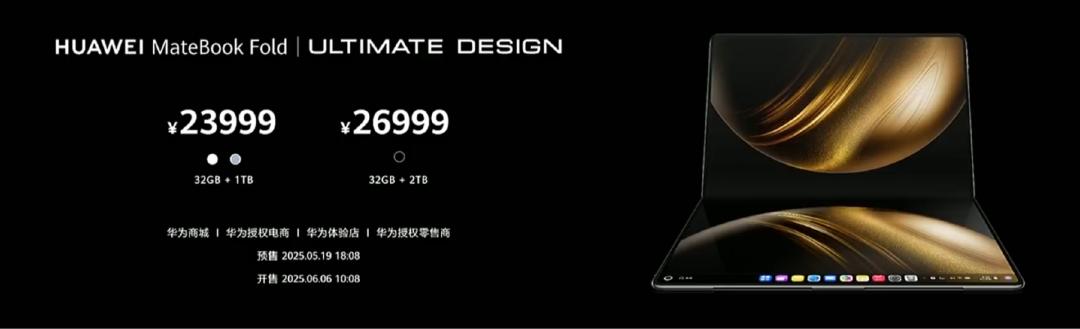
But the star of the launch was the MateBook Fold Extraordinary Master, a futuristic, 18-inch foldable-screen PC that morphs between modes — from tablet to laptop to a fully immersive screen — starting at 23,999 yuan ($3,300).
It's an ambitious product aimed at redefining how consumers interact with personal computers. Gesture controls, modular display modes, and Huawei's AI assistant "Xiaoyi" are baked in, delivering what Yu describes as "a computer experience designed for the future."
Unlike Microsoft's "Copilot" key or Apple's nascent on-device AI strategy, HarmonyOS PCs come with native AI integration across the system stack. Tasks like meeting transcription, document summarization, and cross-device collaboration are handled locally — often without the need for third-party tools.
"HarmonyOS achieves deep integration of AI capabilities with underlying hardware, the OS, and third-party ecosystems," Yu said.
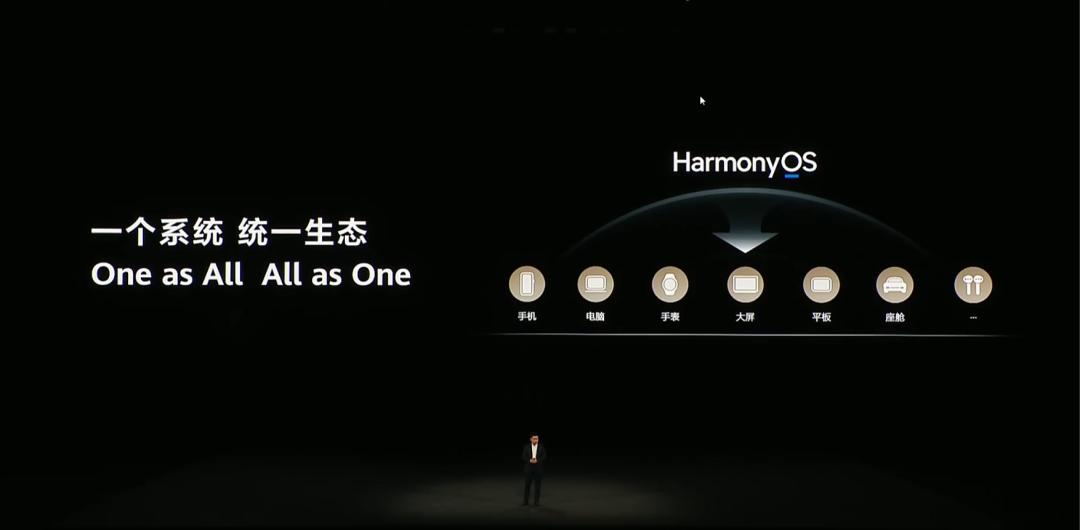
The system's microkernel architecture, introduced with HarmonyOS 4.0, allows Huawei to modularly scale AI services — something far more complex under Microsoft's monolithic kernel. HarmonyOS's distributed design also enables multi-device control from a single interface — a feat that has eluded Apple and Google despite years of effort.
Despite its polished hardware and integrated AI services, HarmonyOS PC faces key hurdles — most notably, software compatibility.
Major apps like WeChat remain unsupported, and gaming capabilities are virtually nonexistent. That said, adaptation is moving quickly: from 300 apps in early May to over 1,000 by launch, with more than 1,100 peripherals already integrated.
Virtual machines from third-party vendors are also helping bridge the gap for users transitioning from Windows.
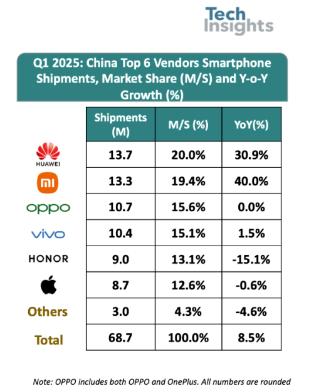
Huawei is already the third-largest PC maker in China, according to Canalys. Some estimates suggest its real ranking may be second due to supply partnerships. And the company's smartphone comeback has been dramatic: In Q1 2025, Huawei captured 20% of China's market, reclaiming the top spot just one year after returning to the fray.
Huawei's next move? A full-scale commercial push. Yu announced the "Qingyun Xinghe" initiative — a large-scale rollout of HarmonyOS commercial PCs, placing it in direct competition with domestic leader Lenovo.
In the age of AI, system architecture is the battleground. HarmonyOS's lightweight, distributed, AI-native design stands in stark contrast to legacy OS frameworks. Huawei is not just challenging Windows and macOS — it's proposing a new way of thinking about productivity, intelligence, and cross-device collaboration.
Just as Microsoft once built a software-centric empire atop IBM's hardware legacy, Huawei now aims to build an AI-driven ecosystem atop China's hardware manufacturing strength.
If the HarmonyOS vision succeeds, the next computing paradigm may not emerge from Silicon Valley — but from Shenzhen.


 快报
快报
根据《网络安全法》实名制要求,请绑定手机号后发表评论