









Wuchang Railway Station after the outbound travel was allowed on April 8(source:TMTPOST)
BEIJING, April 9 (TMTPOST) For the first time in months in Wuhan, where the coronavirus was first identified and spread across the world, buses and subway trains are once again in operation. Many stores have reopened. People are strolling in parks. An appointment app for marriage registration crashed on Wednesday due to too many visits following months of self-isolation.
As of noon April 8, nearly 60% of restaurants resumed takeout services, according to online takeout platform Meituan Waimai. A local custom in Wuhan– going out for breakfast – has also come back to life. From 7:30 am to 8:30 am on April 8, nearly 1,000 takeout doupi were delivered. From 6 am to noon on April 8, nearly 10,000 Wuhan hot-dry noodles with sesame paste were sold. Over 8,000 meals of spicy crayfish were ordered from 12 pm April 7 to 12 pm April 8.
After months of making great sacrifices to contain the spread of the virus, the life of inhabitants in the metropolis is gradually returning to normal.
Traffic jam on day 1
As the coronavirus died down in Wuhan, the “resume” button was pressed officially on April 8. Right after Wuhan reopened its borders, traffic got heavy quickly. A 100-meter congestion appeared on Jinghan Avenue, a welcome yet annoying signal for a normal life.
With the restart of outbound travel, the congestion index for roads near Wuchang Railway Station on the AMAP navigation system went up 14.81% in rush hours on Wednesday morning from a day earlier.
Jinghan Avenue, Huangpu Street, Gaoxin Avenue, Guyi Avenue and Wuhan Avenue (north of the Second Ring) were five most congested roads in rush hours on Wednesday morning, according to the AMAP navigation system.
On Wednesday, about 55,000 passengers left Wuhan via 276 train routes, 54 of which started from the city. Tickets for some high-speed train routes were sold out.
Online travel agency (OTA) platforms have been selling plane tickets and inter-city coach tickets since Wednesday.
On the same day,131 flights from Tianhe International Airport took off, with the flight to Sanya, a resort city in subtropical Hainan island, being the first to depart. On OTA site Qunar, Chengdu, Hangzhou and Haitou were top three destinations. 61 flight routes will be resumed in a month after April 8.
Wuhan, known as one of the most important transportation hubs, is regaining its status.
More pedestrians appear on Chuhehan Street in Wuhan(Source:TMTPOST)
Retaliatory spending
Even at the end of March when the virus spread slowed, consumer behavior started to change. Demand for river snails, live fish and other live seafood surged, in a contrast with a decline in demand for frozen food. Demand for live crayfish shot up 330% from a week earlier while demand for frozen dumplings fell by 100% week-on-week,according to statistics from Alibaba’s Hema Fresh.
“At the beginning of the coronavirus outbreak, consumers cared more about essential food like instant noodles, eggs and meat. Since late March, demand for crayfish and green vegetables is on the rise. The change in food consumption structure showed that people are shifting from ‘food security’ to ‘food quality’,” said Zhang Mengyuan, the General Manager of Wuhan Hema, a China-based online food delivery platform.
Residents in Wuhan also spent more on takeout food, the dining norm during the virus outbreak. In the first few days of April, a Wuhan household ordered takeout food 141 times in the week preceding the lifting of the shutdown, averaging 20 times a day.
Diners are eating Wuhan hot-dry noodles with sesame paste in an eatery at the intersection near Qiqing Street(Source:TMTPOST)
A milk tea shop in the neighborhood received over 200 orders a day, way higher than a day before the outbreak, said Zhu Biwen, director of Baoli Huayuan outlet of Meituan Waimai.
The revenue per order for a restaurant named Feifei Xiazhuang on April 8 was on average higher than before the onslaught of the coronavirus, the manager of the restaurant told TMT Post.
Many small businesses, which were hit worst by the Covid-19 pandemic, are struggling to get back on their feet.
The shortage of cash is the biggest hurdle to business resumption for 80% of small storeowners, according to a survey of over 20,000 respondents conducted by Alibaba-backed Mybank. However, the survey found that they don’t need a large amount of money and that 96 of storeowners can jump-start their business with an injection of less than one million yuan (about US$140,800).
On April 8, Mybank extended interest-free loans to 360,000 storeowners in Wuhan to facilitate their reopening. Qiu Mengyi, the owner of a beauty and wellness shop, became the first borrower to receive such a loan.
She told TMT Post that the spring festival was traditionally the peak season, with at least 200,000 yuan in monthly revenue. However, her store was closed for nearly 3 months and accumulated nearly 100,000 yuan in debt because of unpaid rent. She has survived with a loan from MYbank, which is assisting small businesses in Hubei province, where Wuhan is its capital city.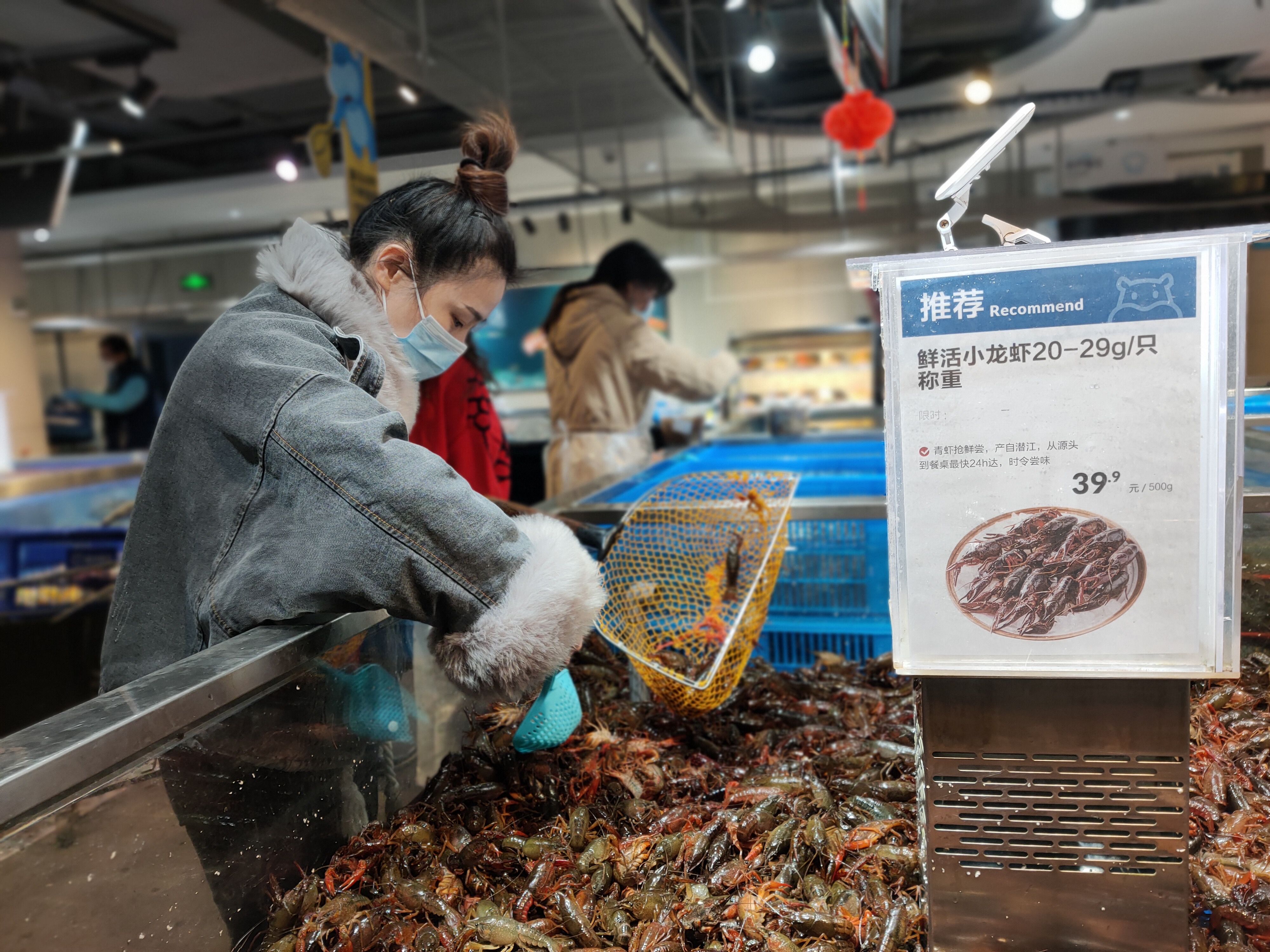
Consumers are picking crayfish for cooking(Source:TMTPOST)
Based on the data from MYbank and Alipay, the number of all stores that reopen went up 23% in the first week of April from the previous week. Meanwhile, the stores that received a loan are 26% more likely to reopen than those that did not. Turnovers for stores with credit support jumped by 33% from the previous week, according to the data.
The activity level of small stores, a hallmark of Wuhan, increased by 8 times in early April from early March, according to data from Gaode Maps.
Currently, businesses like department stores and shopping malls are open. Cinemas, bookstores, KTVs and gyms are still not allowed to reopen because a safe distance of 2 meters in these public places cannot be guaranteed.


 快报
快报
根据《网络安全法》实名制要求,请绑定手机号后发表评论